Sony Bravia 7II Hits India: A Deep Dive into XR Processing, True RGB LED, and the Gemini AI Pivot
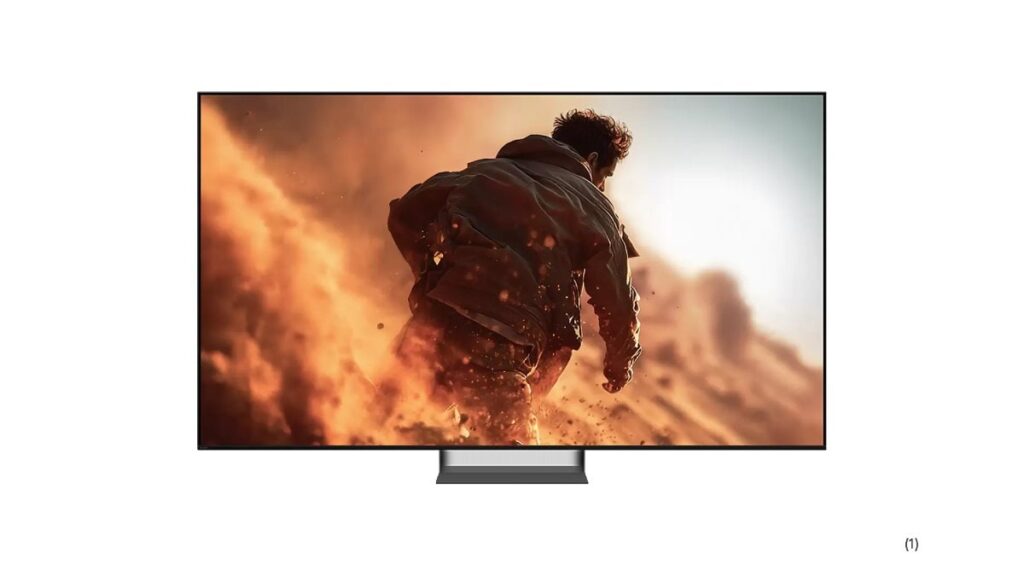
Table of Contents
Sony has officially expanded its high-end display portfolio in India with the introduction of the Sony Bravia 7II series. Positioning itself between the entry-level LED sets and the flagship QD-OLEDs, the 7II is designed for users who demand high brightness and color accuracy without the burn-in anxieties associated with organic LEDs. The series enters a competitive Indian market where premium buyers are increasingly shifting toward larger screens—specifically the 75-inch and 85-inch segments.
- AI Evolution: The Bravia 7II will receive an OTA update integrating Gemini for Google TV, shifting the interface from basic search to generative AI content discovery.
- Display Tech: Features Sony’s proprietary True RGB LED backlight system, designed to minimize the “blooming” effect common in traditional Full Array Local Dimming (FALD) panels.
- Pricing Strategy: The 55-inch model starts at ₹2,21,990, reflecting Sony’s positioning as a luxury hardware provider in the Indian electronics space.
- Scale: Available in 55, 65, 75, and 85-inch variants, with a massive 98-inch cinematic option arriving in late July.
The Engine Under the Hood: Cognitive Processor XR
At the heart of the Bravia 7II is the Cognitive Processor XR. Unlike standard processors that simply upscale resolution, the XR chip utilizes a database of visual elements to mimic how the human eye perceives focus. By identifying the focal point of a scene—such as a face in a crowd or a ball in a sports match—the processor dynamically adjusts contrast and brightness in the periphery.
For the Indian consumer, this manifests in better handling of high-brightness environments. Many Indian living rooms feature significant natural light; the XR processor’s ability to manage HDR (High Dynamic Range) highlights while maintaining shadow detail makes the 7II a strong contender for bright rooms where an OLED might struggle with reflections.
True RGB LED: Beyond Standard Backlighting
One of the most significant technical inclusions is the True RGB LED technology. Most LED TVs use white LEDs coated with yellow phosphor; Sony’s approach uses distinct red, green, and blue LEDs. This results in a wider color gamut and higher peak brightness. When paired with the 7II’s precision dimming zones, the result is a deeper black level that approaches OLED quality while maintaining the searing brightness required for a true HDR10 or Dolby Vision experience.
Pricing and Market Availability in India
Sony’s pricing reflects its status as a premium brand. The current market entry prices for the available models are significantly lower than the MRP, suggesting an aggressive push to capture market share from competitors like Samsung and LG.
| Screen Size | Current Price (INR) | MRP (INR) | Availability |
|---|---|---|---|
| 55-inch | ₹2,21,990 | ₹3,59,900 | Available/Pre-booking |
| 65-inch | ₹2,74,990 | ₹4,39,900 | Available/Pre-booking |
| 75-inch | TBA | TBA | End of Month |
| 85-inch | TBA | TBA | End of Month |
| 98-inch | TBA | TBA | End of July |
The TVs are being distributed through a multi-channel strategy, including Sony’s official ShopatSC portal, authorized retail stores, and major e-commerce platforms. This ensures that high-net-worth individuals in Tier 1 and Tier 2 cities have both online and physical touchpoints for installation and after-sales support.
The Gemini Shift: AI Integration in the Living Room
The most forward-looking aspect of the Bravia 7II isn’t the hardware, but the software roadmap. Sony has confirmed that the lineup will receive Gemini for Google TV. This is a pivot from the traditional voice-command system. Instead of simply launching an app, Gemini allows users to ask complex questions like, “Find me a sci-fi movie from the 90s with a twist ending that is available on Netflix,” and receive a curated recommendation based on actual plot data rather than just keyword matching.
This integration positions the Bravia 7II as a hub for the smart home. By utilizing the Google Assistant’s hands-free operations, the TV becomes a functional AI assistant that can control other IoT devices in the home while providing context-aware information about the content on screen.
What This Means for the Consumer
For the average buyer, the Bravia 7II represents a “safe” high-end investment. While OLEDs offer perfect blacks, the True RGB LED system in the 7II provides a longevity and brightness level that is more practical for the average Indian household’s usage patterns—which often include long hours of news or sports viewing in bright rooms.
From a technical standpoint, the inclusion of Dolby Vision and the XR processor ensures that the TV is future-proof for the next generation of 4K content. The gap between high-end LED and OLED has narrowed significantly, and the 7II is a testament to that convergence. Users no longer have to sacrifice significant picture quality to avoid the risks of permanent image retention.
Comparing the 7II to the Broader Ecosystem
When compared to the Bravia 9 series, the 7II offers a more balanced price-to-performance ratio. While it may lack some of the extreme peak brightness of the 9, it retains the core “Sony look’—natural skin tones and precise motion handling—that makes Sony the preferred choice for cinephiles and gamers using the PlayStation 5.
Technical Specifications Breakdown
The Bravia 7II isn’t just about a pretty panel; it’s about the synergy of components. The 4K resolution is supported by a sophisticated upscaling engine that can take 1080p content (common in Indian cable TV) and make it look remarkably close to native 4K without the “soapy” artificial look found in cheaper sets.
The inclusion of Google TV as the operating system ensures a vast app ecosystem, while the hardware’s compatibility with the latest HDMI 2.1 standards means 4K/120Hz gaming is fully supported, providing the low latency required for competitive gaming.
FAQ: Common Questions About the Sony Bravia 7II
Does the Bravia 7II support HDR10+?
The Bravia 7II primarily focuses on Dolby Vision and HDR10. While it provides industry-leading HDR performance, Sony has traditionally favored Dolby Vision over HDR10+ for its superior dynamic metadata handling.
When will Gemini be available on the Bravia 7II?
Sony has announced that Gemini for Google TV will be delivered via an upcoming software update. A specific date has not been disclosed, but it is expected to roll out globally in phases following the initial hardware launch.
Is the 98-inch model worth the wait?
For those with dedicated home theater rooms, the 98-inch model (arriving late July) offers an immersive experience that replaces the need for a projector. However, the price point is expected to be significantly higher than the 85-inch variant.
How does True RGB LED differ from Mini-LED?
While Mini-LED refers to the size of the LEDs, True RGB LED refers to the color of the light source. Sony’s system focuses on producing a more accurate spectral output of red, green, and blue, which improves color saturation and purity across the entire screen.
Is it compatible with PlayStation 5?
Yes, the Bravia 7II includes “Perfect for PS5” features, including Auto HDR Tone Mapping, which automatically optimizes the HDR picture for the console without needing manual calibration in the settings menu.
Ultimately, the Sony Bravia 7II is a strategic play. By blending the reliability of LED with the intelligence of the XR processor and the upcoming generative power of Gemini, Sony is attempting to redefine the “premium” television experience in India. It is less of a gamble and more of a refined evolution of the high-end home cinema.