Samsung Vision AI TVs Debut ‘Soccer Mode’: A Technical Deep Dive into AI-Driven Sports Viewing
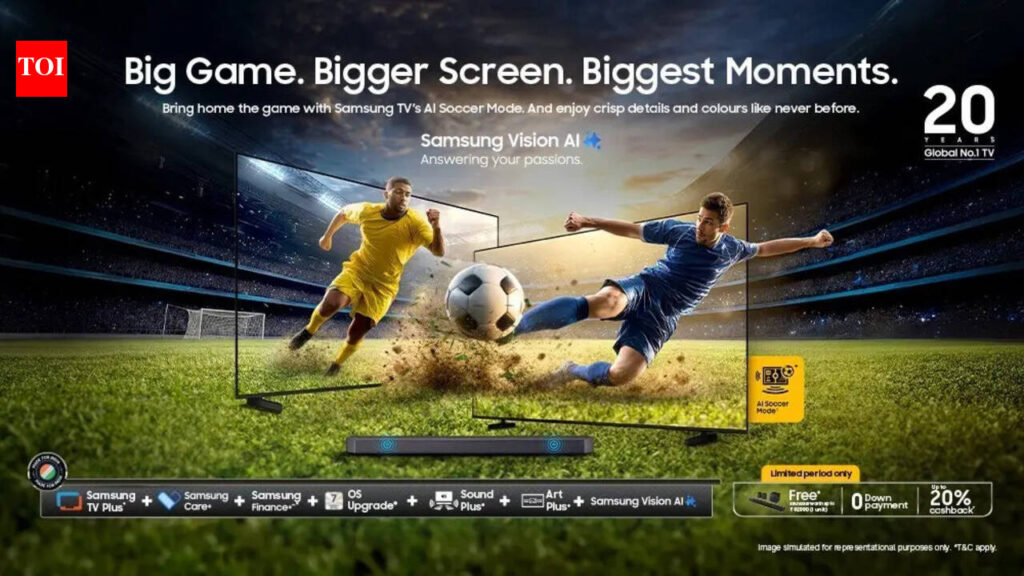
Table of Contents
The Shift Toward Context-Aware Viewing
For years, ‘Sports Mode’ on televisions has been little more than a preset of boosted saturation and aggressive contrast—a blunt instrument designed to make grass look greener and jerseys pop. However, Samsung’s latest rollout in India, the ‘Big Game, Bigger Screen, Biggest Moments’ campaign, signals a shift from static presets to dynamic, context-aware processing. The centerpiece is the new Samsung AI Soccer Mode, integrated into the Vision AI lineup, which attempts to solve the perennial problem of sports broadcasting: the struggle to maintain clarity during rapid pan-shots and high-motion gameplay.
The technology leverages the Neural Quantum Processor to analyze the frame in real-time, distinguishing between the pitch, the players, and the ball. Rather than applying a global filter, the TV adjusts local contrast and sharpness based on the action. For the viewer, this means a reduction in the ‘motion blur’ that often plagues fast-moving football matches, particularly on larger screens where every pixel’s imperfection is magnified.
- Dynamic Processing: AI Soccer Mode moves beyond presets to use real-time object recognition for optimized motion and color.
- Hardware Synergy: The feature is tied to the Vision AI Companion and paired with bundled soundbars to create a localized ‘stadium’ acoustic environment.
- Market Strategy: Samsung India is aggressively targeting the football demographic with cashback and hardware bundles (free soundbars) to push high-margin Vision AI units.
- User Experience: The Vision AI Companion provides a layer of personalized metadata and interaction, reducing the need to toggle through menus during live games.
How AI Soccer Mode Actually Works: The Technical Layer
To understand why this matters, we have to look at the physics of a football broadcast. A camera panning quickly across a pitch creates a specific type of motion artifact. Traditional motion interpolation (often called ‘soap opera effect’) can make the movement look unnatural. Samsung’s AI Soccer Mode utilizes a specialized set of algorithms trained on thousands of hours of sports footage to recognize the trajectory of the ball and the movement of athletes.
By identifying the ball as a primary entity, the processor can prioritize the rendering of that specific object, ensuring it remains a sharp sphere rather than a blurred streak. Simultaneously, the AI manages the ‘green-on-green’ problem—where a player’s jersey or the ball might blend into the grass—by dynamically adjusting the luminance and chrominance of specific sectors of the screen.
The Role of the Vision AI Companion
The Vision AI Companion acts as the intelligence layer sitting atop the hardware. While the processor handles the pixels, the Companion handles the experience. It integrates real-time data feeds, allowing users to access player stats or match updates without leaving the primary broadcast. This moves the TV from being a passive display to an interactive hub, effectively mimicking the ‘second screen’ experience (checking a phone for scores) directly on the glass.
The Acoustic Dimension: Why the Soundbar Bundle Matters
Visuals are only half the battle in immersive sports. Samsung’s decision to bundle free soundbars with these Vision AI TVs isn’t just a sales gimmick; it’s a technical necessity. Most thin-panel LED and OLED TVs lack the physical cabinet depth to produce the low-end frequencies required to simulate a stadium crowd.
The bundled audio systems utilize Object Tracking Sound (OTS), which synchronizes the audio output with the position of the action on screen. If a striker moves from the left wing to the center, the audio signature shifts accordingly. When combined with AI Soccer Mode, the TV can emphasize the ‘crack’ of the ball being hit or the roar of the crowd in a way that feels spatial rather than centered.
| Feature | Standard Sports Mode | Vision AI Soccer Mode |
|---|---|---|
| Color Tuning | Static saturation boost | Dynamic, object-based tuning |
| Motion Handling | Global frame interpolation | Entity-specific trajectory tracking |
| Audio | Standard Stereo | Object Tracking Sound (OTS) + AI Audio |
| Interactivity | None | Vision AI Companion Data Overlay |
What This Means for the Consumer
For the average buyer, this launch represents the transition of AI from a marketing buzzword to a functional tool. In previous iterations, ‘AI’ usually meant a simple brightness sensor. Here, we are seeing computational cinematography applied to live broadcasts.
Practically, this means that if you are purchasing a TV for a dedicated ‘fan cave’ or a large living room, the value proposition has shifted. The inclusion of cashback deals and free hardware (soundbars) reduces the entry barrier for high-end Vision AI models, making the ‘stadium-at-home’ experience more accessible. However, the real value is in the longevity of the software; as Samsung updates the Vision AI Companion, the TV’s ability to recognize different sports or provide deeper analytics will likely improve via firmware updates.
Market Context: Samsung vs. The Competition
Samsung is not alone in this race. LG’s Alpha processors and Sony’s XR Cognitive Processor have similar goals: making digital images feel more ‘human’ and less ‘processed.’ However, Samsung’s strategy in India focuses heavily on the ecosystem bundle. By tying the TV, the AI software, and the audio hardware into a single promotional package, they are attempting to lock users into the Samsung SmartThings ecosystem.
Critics might argue that a high-quality 4K broadcast already looks excellent on any high-end panel. But the ‘AI Soccer Mode’ isn’t targeting the 1% of viewers with perfect viewing angles and calibrated rooms; it’s targeting the reality of the living room—where glare, suboptimal seating, and mediocre built-in speakers often degrade the experience. By automating the optimization, Samsung is removing the need for users to dive into complex ‘Expert Settings’ menus.
Frequently Asked Questions
What exactly is Samsung AI Soccer Mode?
Samsung AI Soccer Mode is a specialized software enhancement found in Vision AI TVs that uses machine learning to recognize football-specific elements (the ball, players, grass) and optimizes motion, contrast, and color in real-time to reduce blur and enhance clarity during live matches.
Do I need a specific TV model to use this?
Yes, these features are specifically integrated into the Vision AI series of TVs. While some older Neo QLED or OLED models may receive limited updates, the full suite of tracking and the Vision AI Companion require the Neural Quantum Processor found in the latest 2025-2026 lineups.
How does the Vision AI Companion differ from a standard remote?
The Vision AI Companion is an intelligence layer that provides personalized features, such as real-time match statistics, customized notifications, and AI-driven content recommendations, which can be overlaid on the screen without interrupting the broadcast.
Are the soundbars provided in the ‘Big Game’ campaign truly free?
According to the current promotional terms for the India market, selected Vision AI Big TV purchases come with a complimentary soundbar bundle. These offers are typically tied to specific screen sizes (usually 65″ and above) and are subject to availability during the campaign period.
Will AI Soccer Mode work on all sports, or just football?
While the specific ‘Soccer Mode’ is tuned for football, Samsung’s broader Vision AI system includes general sports optimization. However, the specialized ball-tracking and pitch-color algorithms are specifically designed for the visual characteristics of football.
Final Verdict on the ‘Big Game’ Strategy
Samsung’s approach is a calculated move to dominate the ‘event viewing’ market. By combining technical innovation (AI motion tracking) with aggressive consumer incentives (free hardware), they are addressing both the performance and the price barriers. For the football enthusiast, the combination of a Vision AI panel and a synchronized soundbar is a significant upgrade over the traditional TV experience. As long as the AI processing remains transparent—meaning it enhances the image without creating artificial artifacts—this represents a genuine step forward in home entertainment technology.