Samsung Galaxy Watch Ultra 2 Leaks: 800mAh Battery and Wear OS Endurance Push
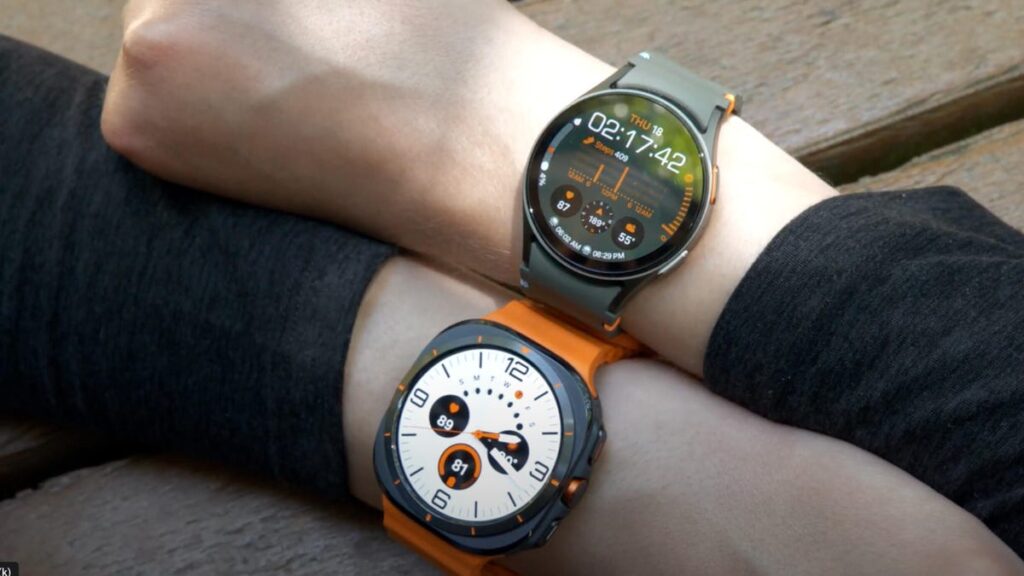
Table of Contents
The Endurance Gap: Samsung’s Bid for Wear OS Dominance
For years, the central tension in the smartwatch market has been a trade-off between intelligence and endurance. On one side, Apple and Google offer deep app ecosystems and seamless connectivity that typically drain a battery in 24 to 48 hours. On the other, Garmin and Whoop provide multi-week longevity by stripping away the ‘smart’ in favor of specialized athletic metrics. Samsung’s latest strategy, evidenced by emerging leaks for the Galaxy Watch Ultra 2, is to bridge this divide by sheer hardware force.
- Battery Breakthrough: Rumors point to a massive 800mAh cell, a ~30% jump over the previous Ultra model.
- Regulatory Confirmation: Chinese 3C filings suggest a summer launch for both the standard Watch 9 and the Ultra 2.
- Processing Power: Expectations are high for the Snapdragon Wear Elite chip to improve efficiency and on-device AI.
- Health Intelligence: Integration of advanced metabolic tracking and AI-driven recovery insights.
The most concrete evidence of the new hardware arrives via the Chinese 3C regulatory body. While these filings are often sparse on technical specs—listing only standard 10W charging support—the mere existence of two distinct model certifications confirms that Samsung is sticking to its tiered strategy: a versatile flagship (Watch 9) and a rugged, high-performance variant (Ultra 2).
The 800mAh Question: Why Battery Capacity Matters Now
According to reports surfaced by SamMobile and analyzed by 9to5Google, the Galaxy Watch Ultra 2 is expected to feature a rated battery capacity of 784 mAh, which Samsung will likely market as 800 mAh. To put this in perspective, the current Galaxy Watch Ultra houses a 590 mAh battery. A 30% increase is not merely an iterative update; it is a fundamental shift in the device’s power profile.
Wear OS Power Dynamics
The current Wear OS ecosystem struggles with power management. Even the high-end OnePlus Watch 3 and the Google Pixel Watch 3 often require daily or every-other-day charging when the Always-On Display (AOD) and continuous heart rate monitoring are active. By pushing toward 800 mAh, Samsung is attempting to move the ‘real-world’ battery life from the current two-day average toward a consistent three-to-four-day window.
| Model | Battery Capacity (mAh) | Estimated Real-World Life | Charging Speed |
|---|---|---|---|
| Galaxy Watch 8 (40mm) | 325 mAh | 1-2 Days | 10W |
| Galaxy Watch 9 (40mm – Rumored) | 382 mAh | 2 Days | 10W |
| Galaxy Watch Ultra (Gen 1) | 590 mAh | 2.5 Days | 10W |
| Galaxy Watch Ultra 2 (Rumored) | 800 mAh | 3-4+ Days | 10W |
However, raw capacity is only half the story. The hardware’s actual endurance depends on the SoC (System on Chip). Industry insiders expect the Ultra 2 to debut the Snapdragon Wear Elite. If this chip delivers the promised efficiency gains, we could see a synergistic effect where a larger battery is paired with a more frugal processor, finally pushing Samsung into a territory that competes with the lower-end Garmin Forerunners.
From Biometrics to Metabolic Insights
Beyond the battery, the Galaxy Watch Ultra 2 is expected to evolve how it handles health data. Samsung has already begun deploying features like the Antioxidant Index, which uses skin-surface signals to infer nutritional markers. The next logical step is non-invasive glucose monitoring—the ‘holy grail’ of wearable tech.
While full medical-grade glucose tracking remains elusive due to sensor accuracy and regulatory hurdles, the Ultra 2 may introduce improved metabolic trend analysis. This would move the device from a reactive tool (telling you your heart rate is high) to a predictive tool (suggesting you are entering a state of fatigue or nutritional deficiency).
AI-Powered Health Coaching
Samsung’s recent preview of ‘Vitals,’ ‘Heart Health Score,’ and ‘Daily Cardio Load’ suggests a shift toward a centralized AI health hub. Rather than presenting a list of raw numbers—which often confuse the average user—the Ultra 2 will likely utilize on-device AI to synthesize these metrics into a single ‘Readiness Score.’ This mirrors the approach taken by Oura and Whoop, focusing on recovery and strain rather than just active calories burned.
Design Constraints and the ‘Rugged’ Identity
The Galaxy Watch Ultra’s 47mm chassis is a polarizing piece of engineering. It is intentionally oversized to accommodate the larger battery and more robust sensors, but this creates a challenge for those with smaller wrists. There is speculation that Samsung may introduce a rotating bezel back into the Ultra line, merging the utilitarian ruggedness of the Ultra with the tactile luxury of the Classic series.
Integrating a rotating bezel into a rugged chassis is a complex engineering task. A physical bezel introduces a potential point of failure for water and dust ingress, which could compromise the Ultra’s high-grade ingress protection (IP) and MIL-STD-810H certifications. If Samsung manages this, it would solve one of the primary criticisms of the current Ultra: the reliance on a digital crown/bezel that some users find less intuitive than the physical ring.
What This Means for the Consumer
For the end user, the shift toward the Ultra 2 represents a move toward ‘set-it-and-forget-it’ wearable tech. Currently, the anxiety of the ‘charging cable’ prevents many users from utilizing deep sleep tracking or multi-day hiking GPS. If the Ultra 2 hits the 4-day mark, the smartwatch becomes a tool for genuine adventure rather than a city-bound accessory that requires a power bank.
Addressing the Competitive Landscape
Samsung is not operating in a vacuum. The Apple Watch Ultra 2 remains the benchmark for build quality and app integration, while Garmin dominates the professional athlete segment. To win, Samsung must prove that Wear OS can be as stable and long-lasting as a proprietary sports OS without losing the ‘smart’ features that make it appealing.
The inclusion of satellite connectivity is the final piece of the puzzle. While not officially confirmed, the Ultra 2 is the prime candidate for an emergency satellite SOS feature, similar to the iPhone 14/15/16 series. This would solidify the ‘Ultra’ branding by providing a safety net for users in remote areas where cellular signals are non-existent.
Common Questions Regarding the Galaxy Watch Ultra 2
Will the Galaxy Watch Ultra 2 support non-invasive glucose monitoring?
While highly anticipated and a primary focus for Samsung’s R&D, it is unlikely to be a fully certified medical device at launch. Instead, expect ‘trend monitoring’ or ‘metabolic insights’ that provide a general idea of glucose fluctuations rather than precise millimol/L readings.
How does the 800mAh battery compare to other smartwatches?
An 800mAh battery would be among the largest in the Wear OS ecosystem. It significantly outperforms the Apple Watch Ultra 2 and the Pixel Watch 3 in raw capacity, though actual longevity depends on the efficiency of the software and the screen’s power draw.
Is the Galaxy Watch 9 still worth buying if the Ultra 2 is coming?
The Watch 9 will likely be the choice for users who prefer a traditional aesthetic and a smaller footprint. The Ultra 2 is a specialized tool for athletes and outdoor enthusiasts. If you don’t need 4 days of battery or rugged durability, the Watch 9 will offer the same core AI health features at a lower price point.
When will the Galaxy Watch Ultra 2 be released?
Based on 3C certification timings and Samsung’s historical release patterns, a summer launch (July or August) is highly probable, likely coinciding with the Galaxy Z Fold and Flip series unveiling.
Will the Ultra 2 have a physical rotating bezel?
Rumors are mixed. While it would be a welcomed return, the rugged nature of the Ultra makes a physical bezel difficult to implement without sacrificing water resistance. A digital bezel or a refined crown is more likely, though a physical ring would be a massive selling point.
Final Analysis: The Convergence of Health and Hardware
The transition from the first-generation Ultra to the Ultra 2 is not just about a bigger battery; it is about the maturation of the wearable as a health diagnostic tool. By increasing the energy density and improving the processing efficiency with the Snapdragon Wear Elite, Samsung is removing the technical barriers that have kept smartwatches from becoming truly indispensable health monitors.
If the leaked specifications hold true, the Galaxy Watch Ultra 2 will likely be the most capable Wear OS device ever released, challenging the dominance of Garmin in the ‘rugged’ category while maintaining the connectivity and intelligence of the Samsung ecosystem. The real test will be whether the 800mAh battery translates into actual days gained, or if the increased AI processing requirements will simply swallow the extra power.