Inside the FBI’s Kinetic Cyber Range: The 22,000 Square-Foot Replica Town Training Digital Detectives
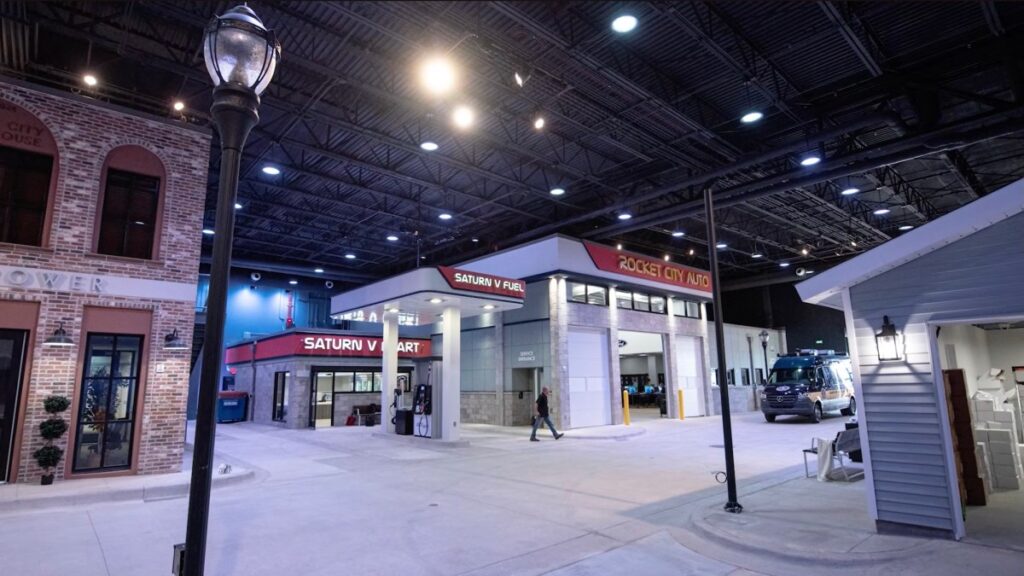
Table of Contents
The Physicality of Digital Warfare
Cybercrime is rarely a sterile event occurring solely on a screen. In the real world, a ransomware attack on a municipal power grid manifests as dark streets and failing traffic lights; a breach at a regional hospital means diverted ambulances and inaccessible patient records. To bridge the gap between classroom theory and the visceral chaos of a live incident, the Federal Bureau of Investigation (FBI) has constructed a massive, 22,000 square-foot physical manifestation of a digital battlefield in Huntsville, Alabama.
Known as the Kinetic Cyber Range, this purpose-built replica town allows investigators to move beyond virtual machines and sandboxes. It provides a tactile environment where the consequences of a cyberattack are mirrored in physical reality, forcing agents to navigate the logistical and psychological pressures of a crisis while simultaneously performing complex digital forensics.
- Physical Scale: 22,000 square feet of simulated urban infrastructure.
- Key Facilities: Includes a hospital, power company, courthouse, gas station, and hotel.
- Target Audience: FBI personnel and partners from federal and local law enforcement.
- Operational Goal: Simulating the “kinetic” impact of cyber threats on critical infrastructure.
The Scale of the Threat: Why a Physical Town?
The impetus for the Kinetic Cyber Range is found in the staggering growth of digital crime. According to the FBI’s 2025 Internet Crime Report, which synthesized data from over one million complaints, U.S. cybercrime losses hit a record $20.9 billion. This represents a 26% increase over the previous year, signaling that neither the sophistication of the attacks nor the efficacy of current defenses is keeping pace with the adversary.
Ransomware remains the primary threat to critical infrastructure. When a utility provider is hit, the investigator isn’t just fighting a piece of code; they are operating in an environment where the lights might be flickering and the communication systems are failing. The Huntsville facility mimics this friction. By integrating functioning devices—from smart traffic lights to industrial control systems (ICS)—the FBI is training its agents to maintain operational clarity under extreme stress.
The Architecture of the Range
The Kinetic Cyber Range is not merely a movie set; it is a fully networked environment. Every building in the replica town—the grocery mart, the courthouse, the residential homes—is wired with consumer and enterprise technologies that behave exactly as they would in a live city. This includes IoT devices, routers, and server architectures that are frequently exploited by state-sponsored actors and criminal syndicates.
A critical component of the facility is its dedicated data center. Containing over 200 physical servers running a mix of Windows and Linux environments, this area simulates the cramped, noisy, and often miserable conditions of a corporate server room. Dave Beachboard, the range’s program manager, notes that the physical discomfort of these environments is a deliberate part of the training. Real-world forensics often happen in suboptimal conditions, and the ability to execute a search warrant or image a drive while sweating in a loud, dark room is a skill that cannot be learned in a climate-controlled office.
The Forensics Friction: Exploits and Ethics
One of the most sophisticated applications of the Kinetic Cyber Range is the training of agents in digital forensics. This process involves extracting data from encrypted modern devices—smartphones, tablets, and laptops—to build criminal cases. However, this area of law enforcement is fraught with technical and ethical tension.
To defeat the encryption used by companies like Apple and Google, investigators often utilize tools that exploit undisclosed vulnerabilities (Zero-days). While these tools are essential for cracking the defenses of a suspect’s device, they are controversial within the cybersecurity community. The practice of withholding these vulnerabilities from manufacturers means that the general public remains exposed to the same flaws that the government uses for forensics. The Kinetic Cyber Range provides a secure, isolated environment where these tools can be tested and deployed without risking the integrity of live public networks.
Simulating High-Stakes Decision Making
The true value of the range lies in the high-pressure decision loop. In a traditional simulator, if a hospital system goes dark, the student simply sees a notification. In the Kinetic Cyber Range, the lights actually go out. The sound of sirens, the pressure of “victims” in the simulated hospital, and the urgency of restoring power to a grid create a psychological load that forces agents to prioritize tasks in real-time.
Investigators must decide: Do they prioritize the preservation of digital evidence for a future trial, or do they prioritize the immediate restoration of services to prevent loss of life? This tension is the core of the “kinetic” experience, transforming a technical exercise into a leadership and crisis management simulation.
What This Means for the Future of Law Enforcement
The transition toward physical simulation marks a shift in how the U.S. government views cybersecurity. It is no longer treated as a purely software-based problem, but as a matter of national physical security. By training over 1,400 students since its February 2025 opening, the FBI is acknowledging that the next generation of cyber-detectives needs to be as comfortable with a screwdriver and a flashlight as they are with a command line.
Furthermore, the collaboration with local and federal partners suggests a move toward a more unified response framework. When a small-town gas station or a rural hospital is hit by ransomware, the local police are usually the first on the scene. Providing those local officers with training at the Kinetic Cyber Range ensures that the initial response—often the most critical phase for evidence preservation—is handled according to federal standards.
Comparing Virtual vs. Kinetic Training
| Feature | Virtual Simulations (Sandboxes) | Kinetic Cyber Range (Physical) |
|---|---|---|
| Environmental Stress | Low/Controlled | High/Realistic |
| Hardware Interaction | Emulated/Software | Physical Servers & IoT |
| Psychological Impact | Theoretical | Visceral/Stress-Inducing |
| Scope of Impact | Digital only | Digital and Physical (Lights, Locks, etc.) |
| Logistical Training | None | Search warrants, physical evidence seizure |
Addressing the Technical Hurdles
Building a 22,000 square-foot facility that can simulate attacks without allowing them to “leak” into the real world is a massive engineering feat. The range uses air-gapped networking and strict virtualization boundaries to ensure that simulated malware—which may be highly destructive—cannot escape the Huntsville campus. This allows the FBI to use actual ransomware strains in a controlled environment, giving agents experience with the precise behavior of the malware they will face in the wild.
The Role of IoT in the Range
The inclusion of a gas station and grocery mart is not for aesthetics. These facilities represent the “edge” of the network, where insecure IoT devices often serve as the initial entry point for attackers. By simulating these environments, the FBI can train agents to identify the “patient zero” device in a complex network of smart sensors and automated payment systems.
FAQ: Understanding the FBI’s Kinetic Cyber Range
What is the Kinetic Cyber Range?
The Kinetic Cyber Range is a 22,000 square-foot replica town located on the FBI’s Huntsville, Alabama campus. It is designed to simulate the physical and digital effects of cyberattacks to train law enforcement agents in real-world investigation and forensics.
Why does the FBI need a physical town for cyber training?
Cyberattacks on critical infrastructure (like power grids or hospitals) have physical consequences. A physical town allows agents to experience the stress, noise, and logistical challenges of a real-world crisis, which cannot be replicated in a traditional classroom or virtual simulator.
Who is allowed to train at the facility?
The facility is used by FBI personnel as well as partners from other federal agencies and local law enforcement organizations to improve coordinated responses to cybercrime.
How does the range handle dangerous malware?
The facility is designed with strict isolation protocols and air-gapped networks to ensure that simulated cyberattacks and ransomware cannot spill over into public networks or external systems.
Does this facility help in solving real-world crimes?
Yes, by improving the skills of investigators in digital forensics and evidence collection, the range increases the likelihood that the FBI can successfully attribute attacks to perpetrators and secure convictions.
What is the connection between this range and the 2025 Internet Crime Report?
The 2025 report highlighted a record $20.9 billion in losses due to cybercrime. This surge in financial damage and the threat to critical infrastructure provided the operational justification for building a high-fidelity training environment like the Kinetic Cyber Range.