Lenovo IdeaPad Slim 3 Gen 11 Hits India: Intel Core Ultra Series 3 and the Push for Copilot+ Performance
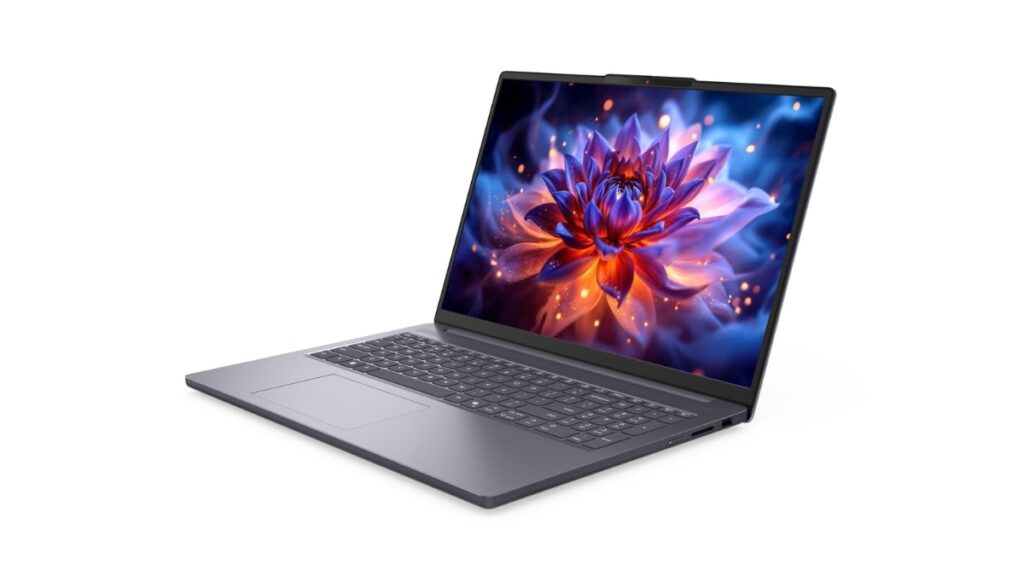
Table of Contents
A New Baseline for AI Productivity in India
Lenovo has officially expanded its thin-and-light portfolio in the Indian market with the debut of the Lenovo IdeaPad Slim 3 Gen 11. While the IdeaPad Slim series has long been positioned as the reliable, utilitarian choice for students and casual home users, the Gen 11 iteration marks a significant pivot. By integrating the Intel Core Ultra Series 3 processor, Lenovo is attempting to democratize the ‘AI PC’ experience, moving Copilot+ capabilities out of the premium Yoga and ThinkPad tiers and into the mainstream consumer segment.
- AI-Ready Hardware: Powered by Intel Core Ultra Series 3, designed for local AI execution and improved power efficiency.
- Versatile Form Factors: Available in both 14-inch and 15-inch displays to balance portability with screen real estate.
- Entry Point: Pricing starts at Rs. 1,09,990, targeting the upper-midrange student and professional market.
- Customization: Available via Custom-to-Order (CTO) on Lenovo’s official site to tailor RAM and storage.
The arrival of the Gen 11 coincides with a broader industry shift toward NPU-driven (Neural Processing Unit) computing. For the average user in India, this isn’t just about a faster clock speed; it is about how Windows 11 interacts with the hardware to handle background tasks, noise cancellation, and generative AI tools without draining the battery in two hours.
Breaking Down the Intel Core Ultra Series 3 Integration
The centerpiece of the IdeaPad Slim 3 Gen 11 is the Intel Core Ultra Series 3 processor. Unlike previous generations that relied solely on CPU and GPU performance, the Ultra series introduces a dedicated NPU. This is critical for the Copilot+ branding. When you run an AI-driven task—such as live captions, image generation, or complex document summarization—the NPU handles these workloads more efficiently than a traditional processor would.
In practical terms, this means the laptop can maintain a cooler chassis and longer battery life while performing tasks that previously would have caused the fans to spin at maximum RPM. For students multitasking between a Zoom call, a browser with twenty tabs, and a Word document, this architectural shift reduces the ‘stutter’ often felt in budget-friendly laptops.
The Memory and Storage Equation
Lenovo has equipped the base model with 16GB of RAM, which has effectively become the new minimum for any machine claiming to be ‘AI-ready.’ AI models, even those running locally, are memory-hungry. 8GB is no longer sufficient for a smooth Windows 11 experience when Copilot is active in the background. While the company hasn’t detailed the maximum ceiling for the CTO (Custom-to-Order) options, typical Slim 3 configurations allow for modest upgrades, though the thin profile often limits the number of available SO-DIMM slots.
The Display Dilemma: 14-inch vs 15-inch
Choosing between the two available sizes is a matter of use-case rather than performance. The 14-inch model is aimed at the ‘commuter’—someone who carries their laptop to a cafe or a lecture hall. It maintains the lightness that defines the Slim series.
The 15-inch variant, however, provides the necessary screen real estate for those who use their laptop as a primary workstation. In India’s market, where many users rely on a single device for both study and entertainment, the 15-inch screen offers a more comfortable experience for split-screen multitasking. Both options run Windows 11, which has been heavily optimized for the new Intel architecture to ensure that the transition between AC power and battery doesn’t result in a massive performance drop.
Evaluating the Battery and Thermal Management
Lenovo has integrated a 60Wh battery into the Slim 3 Gen 11. On paper, this is a respectable capacity for a thin-and-light device. However, real-world endurance depends heavily on the screen brightness and the intensity of AI workloads. Based on previous Gen iterations, a 60Wh cell combined with the efficiency of the Core Ultra chips should comfortably provide 7-9 hours of mixed-use productivity.
Thermal management in the Slim 3 series usually involves a single-fan setup. The challenge with AI PCs is that NPUs generate heat differently than CPUs. Lenovo’s AI-powered software features likely include intelligent power management that throttles certain background processes to keep the keyboard deck cool—a necessary feature for those using the laptop on their lap during long study sessions.
What This Means for the Indian Consumer
The starting price of Rs. 1,09,990 places the IdeaPad Slim 3 Gen 11 in a competitive bracket. It is no longer a ‘budget’ laptop in the traditional sense but is instead a ‘value-entry’ into the AI ecosystem. For a professional or student, this purchase represents a hedge against obsolescence. By buying a machine with a dedicated NPU now, users are ensuring their hardware can support the next three to five years of Windows updates and AI software integrations.
Compared to the premium Yoga line, the Slim 3 sacrifices some build materials—expect more high-grade plastics than CNC-machined aluminum—but it retains the core performance needed for 90% of daily tasks. It is a pragmatic choice for those who want the intelligence of a Copilot+ PC without paying the ‘luxury tax’ associated with high-end chassis designs.
Market Positioning and Competitive Landscape
Lenovo is facing stiff competition from HP’s Pavilion series and Dell’s Inspiron line, both of which are racing to integrate similar AI hardware. The ‘Luna Grey’ aesthetic is a safe, professional choice, but the real battle is happening under the hood. By offering CTO options, Lenovo is acknowledging that the Indian consumer is becoming more tech-savvy, wanting specific configurations of RAM and SSD space rather than accepting a pre-packaged retail box.
| Feature | IdeaPad Slim 3 Gen 11 | Typical Budget Laptop |
|---|---|---|
| Processor | Intel Core Ultra Series 3 (NPU) | Intel Core i3/i5 (Standard) |
| AI Integration | Copilot+ Ready | Basic Software AI |
| Base RAM | 16GB | 8GB |
| Battery | 60Wh | 45-50Wh |
| Target User | AI-focused Students/Pros | General Casual Use |
Frequently Asked Questions
Is the Lenovo IdeaPad Slim 3 Gen 11 suitable for gaming?
The IdeaPad Slim 3 is designed for productivity and AI tasks, not gaming. While the Intel Core Ultra graphics can handle light indie games or very low settings on older titles, it lacks a dedicated GPU. It is not a replacement for a Lenovo LOQ or Legion laptop.
What is a Copilot+ PC?
A Copilot+ PC is a category of Windows laptops that feature hardware specifically designed for AI, including a Neural Processing Unit (NPU) capable of 40+ TOPS (Trillions of Operations Per Second). This allows AI features to run locally on the device rather than in the cloud, increasing speed and privacy.
Can I upgrade the RAM on the IdeaPad Slim 3 Gen 11?
Typically, the Slim series has some soldered memory. You should check the specific Custom-to-Order (CTO) options on Lenovo’s website to see if there is an open slot for expansion, as this varies by screen size and regional configuration.
How does the battery life hold up during AI tasks?
Using the NPU for AI tasks is significantly more power-efficient than using the CPU. While heavy generative AI work will drain the 60Wh battery faster than web browsing, it is much more efficient than previous generations of laptops attempting the same tasks.
Where can I buy the Lenovo IdeaPad Slim 3 Gen 11 in India?
It is available through Lenovo’s official online store, Lenovo Exclusive Stores, and major e-commerce platforms like Amazon and Flipkart, as well as various offline retail electronics stores.
Final Verdict on Value
The Lenovo IdeaPad Slim 3 Gen 11 is a calculated move by Lenovo to capture the emerging AI PC market in India. By combining 16GB of RAM with the Intel Core Ultra Series 3, they have eliminated the primary bottlenecks that plagued previous ‘entry-level’ laptops. While the price point is higher than the old Slim 3 models, the addition of dedicated AI hardware justifies the increase for anyone looking toward the future of computing. It is a solid, dependable machine that prioritizes longevity and intelligence over raw gaming power or luxury aesthetics.