Lenovo MWC 2026: Foldable Gaming Handhelds and Modular AI PCs Signal a Shift in Hardware Design
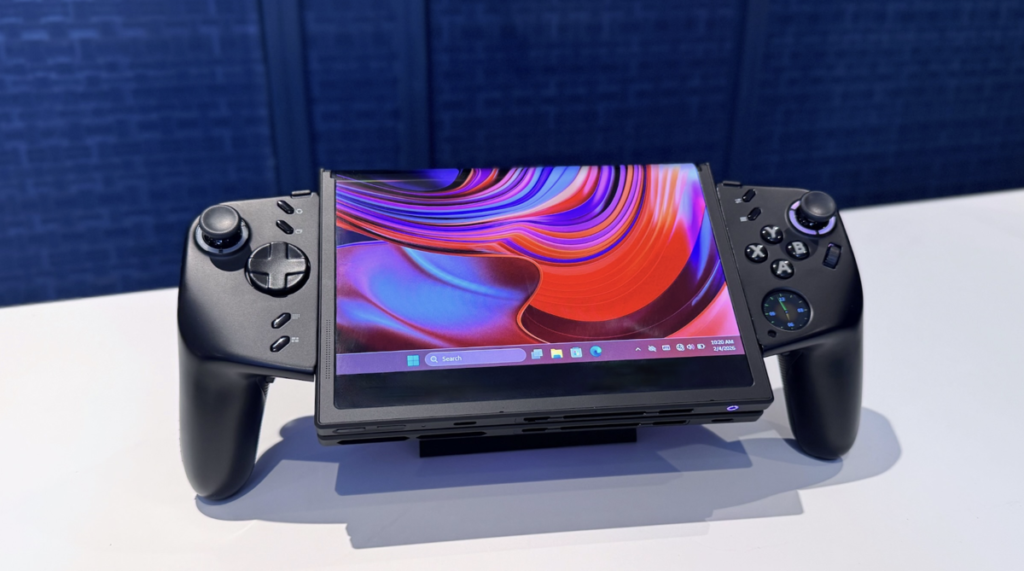
Table of Contents
A Pivot Toward Adaptability
At Mobile World Congress (MWC) 2026 in Barcelona, Lenovo didn’t just announce a new batch of laptops; they presented a manifesto for the next era of personal computing. While the industry has largely settled into a predictable cycle of incremental spec bumps, Lenovo is betting on structural transformation. From a gaming handheld that unfolds into a workstation to a modular PC designed to combat electronic waste, the company is moving away from the ‘static slab’ philosophy of the last decade.
- Legion Go Fold Concept: A 7.7-inch handheld that expands to 11.6 inches, combining gaming portability with laptop productivity.
- Modular AI PC: The ThinkBook concept introduces swappable ports and detachable displays, challenging the industry’s trend toward soldered components.
- Repairability Pivot: A concerted effort across the ThinkPad T-Series to make internals more accessible, following the success of the X1 Carbon Gen 14.
- AI Integration: The Qira AI agent is expanding to 20+ devices, moving from a standalone feature to a system-wide ecosystem.
The scale of these announcements reflects a strategic pivot. By blending high-end silicon—like Intel’s Lunar Lake and Nvidia’s RTX 50-series—with experimental form factors, Lenovo is attempting to define what a ‘post-laptop’ world looks like. Whether through the tactile flexibility of modularity or the immersive potential of glasses-free 3D, the goal is clear: hardware must adapt to the user, not the other way around.
The Legion Go Fold: Bridging the Handheld-Laptop Gap
The standout of the show is undoubtedly the Legion Go Fold Concept. For years, the gaming handheld market has been split between ultra-portable devices (like the Steam Deck or ROG Ally) and tablets that require clumsy keyboard attachments. The Legion Go Fold attempts to merge these identities.
The device features a 7.7-inch POLED display that unfolds into a massive 11.6-inch canvas. In our hands-on time, the hinge felt robust, and the transition between handheld and tablet modes was seamless. However, the real engineering feat is the detachable wireless keyboard. When attached, the device transforms into a clamshell-style Windows laptop, with one of the controllers cleverly doubling as a vertical mouse.
Under the hood, the prototype is powered by an Intel Lunar Lake chip paired with 32GB of RAM. The choice of Lunar Lake is strategic; its focus on power efficiency is critical for a device that must balance the high energy demands of a foldable POLED screen with the thermal constraints of a handheld chassis. While Lenovo has not confirmed a retail date, the inclusion of specific internal specs suggests the concept is closer to production than a mere design exercise.
Modular Computing: The ThinkBook AI PC Challenge
While the foldable attracts the headlines, the ThinkBook Modular AI PC Concept is the more intellectually significant announcement. In an era where ‘thin and light’ often means ‘impossible to repair,’ Lenovo is experimenting with a Framework-inspired approach to hardware.
The Modular AI PC allows users to swap physical ports in and out based on their immediate needs—a critical feature for professionals who may need an HDMI port one day and an extra USB-C or Ethernet port the next. Even more ambitious is the detachable secondary display and keyboard. This isn’t just about aesthetics; the screen includes a built-in kickstand, allowing it to function as a dedicated second monitor when detached from the main unit.
“Integrated pogo-pin connectors enable reliable power and data transfer between modules, creating a self-contained, highly flexible system built for modern laptop users who need adaptable performance,” according to Lenovo’s official press release.
From a sustainability perspective, this is a major win. By allowing the replacement of individual modules rather than requiring a full motherboard swap for a broken port, Lenovo is addressing the growing regulatory pressure regarding the ‘Right to Repair.’ This aligns with their recent work on the ThinkPad X1 Carbon Gen 14 Aura Edition, which utilized a ‘Space Frame’ design to simplify internal access.
Creative Immersion: The Yoga Book Pro 3D
Lenovo’s foray into glasses-free 3D technology has reached a new peak with the Yoga Book Pro 3D Concept. Aimed squarely at architects, engineers, and 3D artists, this dual-display model utilizes advanced eye-tracking sensors to render depth without the need for cumbersome peripherals.
The hardware is formidable: an Intel Core Ultra 7 processor paired with an Nvidia GeForce RTX 5070. This level of GPU power is necessary because rendering real-time 3D environments for the viewer’s specific perspective is computationally expensive. During the demo, the most impressive detail was the inclusion of snap-on pads on the lower touchscreen, which trigger context-specific 3D menus, effectively turning the laptop into a physical control surface for digital sculpting.
The Consumer Lineup: Yoga 9i Aura Edition
For those seeking a product they can actually purchase in 2026, the Yoga 9i 2-in-1 Aura Edition is the flagship. This isn’t a radical redesign, but a refinement of a winning formula. The update brings an Intel Core Ultra Series 3 chip, a reduced chassis weight, and—crucially—the return of the 3.5mm headphone jack, a move that acknowledges the persistence of professional audio needs in a wireless world.
The new Yoga Pen Gen 2 now attaches magnetically to the chassis, enabling a ‘Canvas mode’ that optimizes the screen for digital art. Priced at $1,949 and launching in May, the Yoga 9i represents the ‘safe’ side of Lenovo’s MWC strategy: a high-polish, high-performance machine that funds the riskier concept work.
The AI Ecosystem: Qira and Desktop Companions
Lenovo is moving beyond ‘AI as a feature’ and toward ‘AI as an ambient presence.’ The Qira AI agent, first teased at CES, is now expanding to over 20 devices. Rather than living in a single app, Qira is designed to operate across the OS, managing schedules and syncing tasks in the background.
This ambition extends to the tabletop with two new concepts: the AI Work Companion and the AI Workmate. The former is a minimalist desk clock that tracks screen time and manages burnout by suggesting breaks. The latter, the AI Workmate, is a more interactive, anthropomorphic device that can scan physical documents and project summaries onto nearby surfaces using local, on-device AI processing. This emphasis on local processing is a critical trust signal, ensuring that sensitive business documents are not uploaded to a cloud server for simple summarization.
Comparison: 2026 Consumer vs. Enterprise Focus
| Feature | Consumer (Yoga/Legion) | Enterprise (ThinkPad/ThinkBook) |
|---|---|---|
| Primary Goal | Immersive Experience & Gaming | Productivity & Longevity |
| Key Innovation | Foldable POLED / 3D Displays | Modular Ports / Repairability |
| AI Integration | Qira / AI Work Companion | AI Workmate / Local Processing |
| Hardware Focus | RTX 50-Series GPUs | T-Series Durability & Space Frame |
What This Means for the User
The shift toward modularity and foldables at MWC 2026 suggests that the ‘peak laptop’ era has arrived. We have reached a point where CPUs and GPUs are powerful enough that the limiting factor is no longer the silicon, but the physical interface. For the user, this means a transition from owning a device that does one thing well to owning a system that can be reconfigured.
If the ThinkBook Modular concept reaches production, it could end the cycle of buying a new laptop simply because a specific port failed or a new standard emerged. Similarly, the Legion Go Fold suggests a future where the boundary between ‘gaming’ and ‘working’ is completely erased by a single piece of glass. The practical implication is a reduction in the number of devices an average power user needs to carry, provided these experimental hinges and connectors can withstand the rigors of daily use.
Frequently Asked Questions
When will the Legion Go Fold be available for purchase?
Lenovo has not provided an official release date, as it is currently a concept product. However, the disclosure of specific internal specs (Intel Lunar Lake, 32GB RAM) often indicates that a company is moving toward a production-ready prototype.
Is the ThinkBook Modular AI PC compatible with Framework parts?
While it shares a similar philosophy of repairability and modularity, the ThinkBook Modular AI PC uses Lenovo’s proprietary pogo-pin connector system and is not currently compatible with Framework’s ecosystem.
How does the glasses-free 3D on the Yoga Book Pro work?
The device uses eye-tracking sensors and a specialized display layer to render different images for each eye based on where the user is looking, creating a sense of depth without requiring 3D glasses.
What is the Qira AI agent and which devices support it?
Qira is Lenovo’s personal AI agent designed for task management and system optimization. It is rolling out to over 20 Lenovo devices in the coming weeks of 2026.
What is the ‘Space Frame’ design in the ThinkPad X1 Carbon Gen 14?
The Space Frame design is a structural approach that makes internal components more accessible, allowing for easier replacement of parts and extending the overall lifecycle of the business laptop.
Reporting from the Floor
The overarching theme of Lenovo’s MWC 2026 presence is a refusal to be complacent. By simultaneously launching a refined flagship like the Yoga 9i and a radical experiment like the Legion Go Fold, Lenovo is hedging its bets. They are providing the stability the market demands today while prototyping the disruptions they want to lead tomorrow. As we see more ‘AI PCs’ hit the market, the winners won’t be those with the fastest chips, but those who figure out how to make that power useful in a physical form that actually fits the user’s life.