Insta360 Luna Ultra: A Leica-Tuned Hybrid That Aims to Disrupt the Gimbal Camera Market
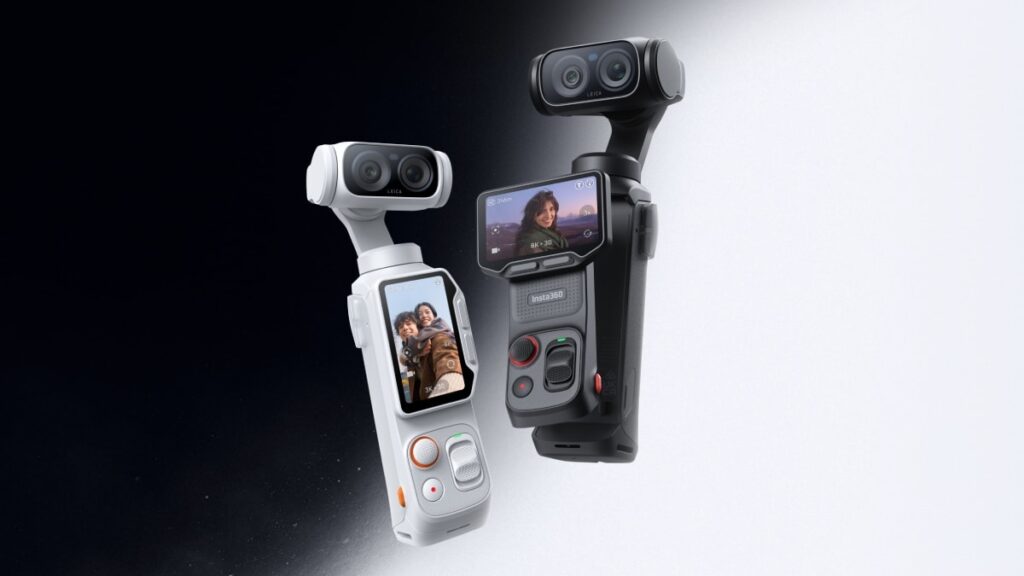
Table of Contents
The Convergence of Optical Precision and AI Stabilization
Insta360 has spent the last few years dominating the 360-degree and action camera niches, but the Insta360 Luna Ultra represents a calculated pivot toward high-end cinematic vlogging. By partnering with Leica, Insta360 isn’t just adding a prestigious logo to the chassis; they are attempting to solve the fundamental conflict in compact cameras: how to maintain a wide, cinematic field of view without sacrificing the shallow depth-of-field and low-light performance that only a larger sensor can provide.
The Luna Ultra is a three-axis gimbal camera that blends the form factor of a handheld stick with the optical power of a professional mirrorless setup. The centerpiece is a Leica Summicron main lens paired with a 1-inch sensor—a hardware combination that traditionally signals a leap in dynamic range and color accuracy. For creators who have found the DJI Osmo Pocket series too limited in focal range or the iPhone’s electronic stabilization too “warpy,” the Luna Ultra arrives as a hardware-first alternative.
- Optics: Features a 1-inch Leica Summicron main lens (f/1.8) and a dedicated 1/1.3-inch telephoto lens for 12x zoom.
- Processing: A triple-chip architecture combining dual imaging processors with a Qualcomm 4nm AI chip for real-time tracking.
- Versatility: Includes a detachable 2-inch OLED touchscreen, allowing for remote monitoring and flexible mounting.
- Pricing: Starts at $769.99 for the Standard Bundle, scaling to $969.99 for the Creator Bundle.
Deconstructing the Hardware: Leica Optics and the Dual-Lens System
To understand why the Luna Ultra matters, we have to look at the sensor physics. Most compact gimbal cameras rely on sensors that struggle in dim environments, leading to “noisy” shadows and crushed highlights. The Leica Summicron 1-inch sensor (20mm equivalent, f/1.8) changes this equation. A 1-inch sensor provides significantly more surface area to capture light, which is critical for the Dolby Vision recording the device supports.
However, the more interesting addition is the secondary telephoto camera. While most gimbal cameras are stuck with a wide-angle view that requires the user to physically walk toward the subject, the Luna Ultra integrates a 1/1.3-inch sensor with a 60mm-equivalent focal length. This allows for a 12x zoom capability that is electronically smoothed by the gimbal, bridging the gap between a vlogging camera and a modest cinema rig.
The Triple-Chip Architecture
Processing 8K video while simultaneously running AI-driven subject tracking requires immense computational power. Insta360 has avoided the overheating issues common in small 8K devices by implementing a triple-chip system. Two dedicated imaging processors handle the raw data stream from the Leica lenses, while a 4nm Qualcomm AI chip manages the gimbal’s movement and object recognition. This separation of tasks ensures that the tracking remains fluid even when the camera is pushing maximum resolution.
The Practicality of the Detachable OLED Screen
One of the most glaring pain points of gimbal cameras has always been the screen. If the screen is fixed, your viewing angle is limited; if it’s too small, you can’t accurately judge your composition. The Luna Ultra introduces a 2-inch detachable OLED touchscreen. This isn’t just a gimmick—it allows a creator to mount the camera on a tripod or a long extension pole and control the zoom, tracking, and recording from a distance.
From an editorial perspective, this feature addresses the “solo-creator’s dilemma.” When filming yourself, you often have to guess if you are in frame. By detaching the screen and placing it in your line of sight, the Luna Ultra effectively turns the device into a remote-operated cinema camera.
Technical Specifications Breakdown
| Feature | Standard Specifications | Performance Metric |
|---|---|---|
| Main Sensor | 1-inch Leica Summicron | f/1.8 aperture, 20mm equivalent |
| Telephoto Sensor | 1/1.3-inch | f/2.0 aperture, 60mm equivalent |
| Max Resolution | 8K Video | Dolby Vision support |
| Gimbal Speed | 3-Axis Mechanical | 210° per second max speed |
| Stabilization Accuracy | Hardware-level | ±0.005 degrees |
| Battery Life | Internal Cell | Up to 240 minutes |
What This Means for Content Creators
The launch of the Luna Ultra signals a shift in the “prosumer” market. For years, the choice was either a bulky mirrorless camera with a separate gimbal (which takes 10 minutes to balance and set up) or a pocket gimbal (which lacks professional optics). The Luna Ultra occupies the middle ground.
For the Travel Vlogger: The 12x zoom means you can capture architectural details or distant landscapes without walking into a restricted area or risking your gear on a cliff edge. The Leica tuning ensures that the colors are natural, reducing the amount of time spent in post-production color grading.
For the Tech Reviewer: The combination of 8K and a 1-inch sensor allows for “digital cropping.” You can film in 8K and crop into a 4K frame without losing significant detail, effectively giving you more focal length options than the hardware physically provides.
For the Professional Videographer: While this won’t replace an ARRI or a RED, it serves as an ideal “B-roll” machine. Its ability to track a subject with ±0.005-degree accuracy means you can get smooth, cinematic pans that would normally require a trained operator.
Analyzing the Value Proposition: Standard vs. Creator Bundle
At $769.99, the Standard Bundle is an entry point for those who already own a microphone and tripod setup. However, the Creator Bundle at $969.99 includes the Battery Handle and the Mic Pro Transmitter. Given that 8K recording is a massive drain on power, the Battery Handle isn’t just an accessory—it’s a necessity for anyone filming for more than an hour.
The inclusion of the Mic Pro Transmitter in the bundle is also critical. High-end visuals are useless if the audio is poor. By integrating a dedicated wireless mic system, Insta360 is acknowledging that the Luna Ultra is intended to be a complete production studio in a pocket.
The Competitive Landscape
The Luna Ultra enters a market currently led by the DJI Osmo Pocket 3. While the Pocket 3 is lauded for its simplicity and 1-inch sensor, it lacks the dedicated telephoto lens and the detachable screen of the Luna Ultra. Insta360 is betting that creators are willing to pay a premium for more versatile optics and a more flexible monitoring system. The real test will be how the Luna Ultra’s software handles the transition between the wide and telephoto lenses—a process that can often feel jarring in hybrid cameras.
Frequently Asked Questions
Is the 8K video on the Luna Ultra usable for professional work?
Yes, provided you have the storage and computing power to edit it. The use of a 1-inch sensor ensures that the 8K footage has genuine detail rather than being an AI-upscaled image. The Dolby Vision support further enhances this by preserving highlight and shadow detail.
How does the detachable screen connect to the camera?
The screen communicates via a high-speed wireless protocol, allowing for near-zero latency monitoring. This is essential for adjusting the gimbal tilt or zoom in real-time while the camera is mounted out of reach.
Does the 12x zoom use digital or optical magnification?
The Luna Ultra uses a hybrid approach. It leverages the dedicated 60mm telephoto lens for an optical jump, and then uses the 4nm AI chip to provide a smooth digital zoom up to 12x, maintaining edge clarity through AI sharpening.
Can I use the Luna Ultra for low-light photography?
The f/1.8 aperture of the Leica Summicron lens combined with the 1-inch sensor makes it significantly more capable than standard action cameras. It is designed to handle twilight and indoor environments with minimal noise.
How long does the battery actually last when recording 8K?
While the official rating is 240 minutes, 8K recording and active AI tracking consume power rapidly. Users can expect significantly less than the maximum rating when pushing the device to its limits, which is why the Battery Handle in the Creator Bundle is highly recommended.
The Insta360 Luna Ultra is an ambitious piece of engineering that refuses to compromise on optics. By integrating Leica’s glass and a sophisticated triple-chip brain, it moves the needle for what we expect from a gimbal camera. Whether it becomes the new gold standard for vloggers or remains a niche tool for high-end creators depends on the stability of its software ecosystem and its real-world endurance.