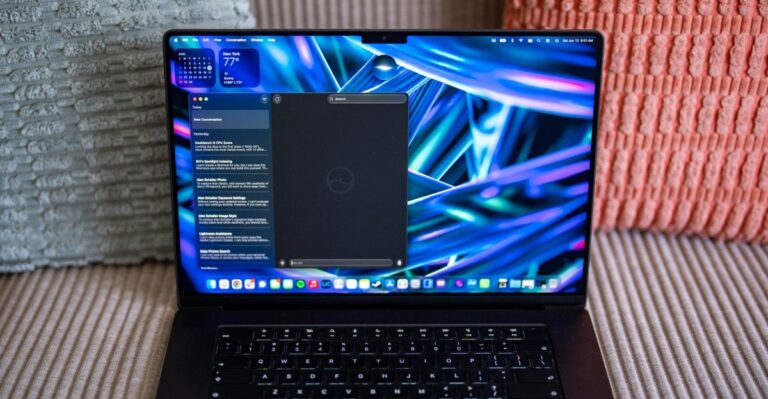
Microsoft Surface Laptop 8 Leak: Intel Panther Lake and OLED Displays Signal a Major Pivot
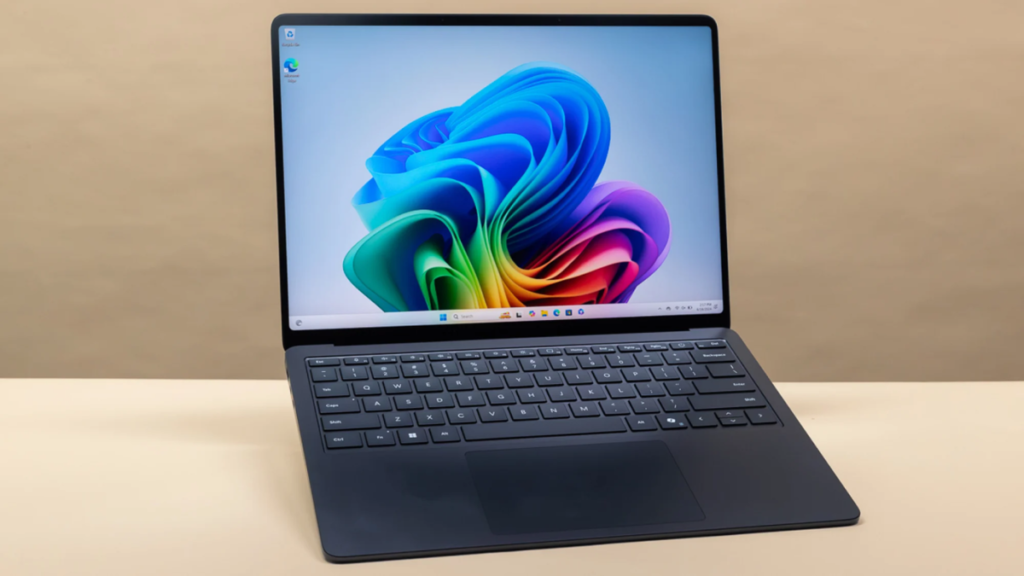
Table of Contents
A Slip in the Benchmarks: The Surface Laptop 8 Emerges
The delicate dance between hardware leaks and official announcements has hit a new beat. This week, the digital footprints of an unreleased Surface Laptop 8 appeared briefly in Geekbench 6 listings, offering a rare glimpse into Microsoft’s 2026 hardware roadmap. While the listings were scrubbed by Thursday morning, the data captured by Notebookcheck and Mashable provides a technical blueprint of a machine that suggests Microsoft is doubling down on Intel’s next-generation architecture to reclaim performance crowns.
- Processor Leak: The device is powered by the Intel Core Ultra X7 368H (Panther Lake) with Arc B390 graphics.
- Target Segment: The leak specifically identifies a “Surface Laptop for Business 13.8in 8th Ed,” suggesting an Intel-first enterprise push.
- Performance Parity: Early multi-core scores put the device in direct competition with the M5 MacBook Air in productivity workflows.
- Hardware Upgrades: Rumors point toward an optional OLED panel, improved haptic feedback, and refreshed colorways.
Breaking Down the Hardware: The Panther Lake Architecture
At the heart of this leak is the Intel Core Ultra X7 368H. For those unfamiliar with Intel’s shifting nomenclature, Panther Lake represents a critical transition in silicon design, aiming to bridge the gap between raw wattage and the extreme efficiency demanded by modern “AI PCs.”
The Geekbench 6 results indicate a machine equipped with 32GB of RAM, a necessity for the heavy NPU (Neural Processing Unit) workloads Microsoft is integrating into Windows 11. The inclusion of Arc B390 graphics suggests a significant jump in integrated GPU performance, potentially allowing the Surface Laptop 8 to handle light creative work and AI-accelerated rendering without the need for a discrete GPU, which would otherwise compromise the laptop’s thin profile.
Technical Performance Analysis
Comparing the leaked data to existing benchmarks, the X7 368H shows high efficiency in multi-core scenarios. When mirrored against the Core Ultra X7 358H, the 368H exhibits a slight but measurable edge in clock stability and thermal management. Most interestingly for the consumer market, the multi-core performance appears to rival the M5 MacBook Air. This is a pivotal battleground; while Apple’s silicon has dominated in watts-per-performance, Intel’s Panther Lake is designed to claw back that territory through a more aggressive hybrid-core architecture.
The Enterprise Strategy: Why ‘For Business’ Matters
The specific naming convention in the leak—“Microsoft Corporation Surface Laptop for Business 13.8in 8th Ed Intel”—is not an accident. It reveals a strategic bifurcation in how Microsoft is deploying its silicon partners.
In May 2024, the Surface Laptop 7 leaned heavily into the Qualcomm Snapdragon X series for the consumer market, prioritizing battery life and NPU-driven AI features. However, the enterprise sector remains wary of ARM-based Windows due to legacy software compatibility and specific corporate security stacks. By earmarking the 8th Edition Intel models for business first, Microsoft ensures that its highest-paying corporate clients have stable, x86-compatible hardware before rolling out the broader consumer line.
This creates a tiered release cycle. Industry reports from Windows Central suggest that Intel-based Surface Laptops and Pros may arrive as early as Spring 2026, with Snapdragon X2 variants following in the summer. This staggered approach likely mitigates supply chain risks associated with Qualcomm’s high-end chips while satisfying the immediate demand for Intel-based stability in the boardroom.
What This Means for the User
For the average buyer, this leak confirms that the “AI PC” transition is moving from a novelty to a standard. If you are choosing between a Surface Laptop 7 and waiting for the 8th Edition, the primary incentives to wait are OLED technology and Intel’s Panther Lake efficiency. While the Snapdragon X chips offered a leap in battery life, Panther Lake promises a more seamless compatibility experience without sacrificing the “instant-on” feel that ARM users enjoy.
The OLED Transition and Industrial Design
Beyond the silicon, the Surface Laptop 8 is rumored to finally embrace OLED as an optional upgrade. For years, Microsoft has stuck to high-quality LCDs with high peak brightness, but the industry tide has shifted. OLED offers infinite contrast and deeper blacks, which is critical for the creative professionals and executives who use the Surface line for presentation and media consumption.
Combined with reported improvements to the haptic trackpad, Microsoft is attempting to move the Surface Laptop from a “reliable tool” to a “premium experience” that rivals the MacBook Pro’s build quality. The 13.8-inch form factor remains the sweet spot for portability, but the shift toward a more sophisticated display and tactile interface suggests Microsoft is responding to feedback about the ‘flatness’ of previous generations.
Market Context: Pricing and Component Costs
The timing of these leaks coincides with a troubling trend for Surface buyers. Earlier this month, Microsoft implemented price hikes across its current lineup. The company officially attributed these increases to “recent increases in memory and component costs.”
From an industry perspective, this is a signal that high-bandwidth memory (LPDDR5x) and advanced NPU silicon are becoming more expensive to procure. This likely means the Surface Laptop 8 will enter the market at a higher baseline price point than its predecessors. When you combine the cost of OLED panels and Panther Lake chips, the “entry-level” Surface Laptop may soon feel like a mid-range luxury item.
Addressing the ‘ARM vs. x86’ Divide
The most compelling narrative surrounding the Surface Laptop 8 is the coexistence of Intel and Qualcomm. For a decade, the Windows ecosystem was an Intel-only shop. The arrival of the Snapdragon X series in the Surface Laptop 7 was a gamble on efficiency. Now, with the Surface Laptop 8 returning to a strong Intel focus for business, Microsoft is admitting that a one-size-fits-all chip strategy doesn’t work.
Intel’s Panther Lake is specifically designed to compete with ARM’s low-power states. By integrating the AI processing directly into the CPU die and optimizing the GPU (Arc B390), Intel is attempting to eliminate the main reason users switch to Mac: the ability to get 15+ hours of battery life while maintaining high performance. If the Surface Laptop 8 achieves this, the competitive landscape for Windows laptops changes entirely.
Comparison: Predicted Specs vs. Previous Gen
| Feature | Surface Laptop 7 (Current) | Surface Laptop 8 (Leaked/Predicted) |
|---|---|---|
| Processor | Snapdragon X Elite / Intel Ultra 2 | Intel Core Ultra X7 368H (Panther Lake) |
| Graphics | Adreno / Intel Arc | Intel Arc B390 |
| Display | PixelSense LCD | PixelSense LCD / Optional OLED |
| RAM | 16GB – 64GB | 32GB (Base Leak) – 64GB+ |
| Primary Focus | Battery Life / AI Integration | Enterprise Stability / Performance |
Verification and Transparency
It is important to note that these findings are based on Geekbench 6 listings, which are prone to human error. As is often the case with Primate Labs’ database, a developer or engineer likely failed to use a paid license key, causing the results to be uploaded publicly. Microsoft’s response—“Microsoft has nothing further to share at this time”—is a standard corporate non-denial. While this does not constitute an official launch, the specificity of the hardware IDs (the 368H chip) makes this leak highly credible.
Frequently Asked Questions
When will the Surface Laptop 8 be released?
While Microsoft has not provided an official date, industry reports and the timing of these leaks suggest a Spring 2026 launch for the Intel-based business models, with consumer variants potentially arriving in Summer 2026.
Will the Surface Laptop 8 have an OLED screen?
Leaks and reports from Windows Central indicate that an optional OLED display will be available, marking a significant upgrade over the standard LCD panels used in previous generations.
What is the Intel Panther Lake processor?
Panther Lake is Intel’s next-generation CPU architecture designed to improve power efficiency and AI processing capabilities, directly competing with ARM-based chips like Apple’s M-series and Qualcomm’s Snapdragon X.
Is the Surface Laptop 8 better than the Surface Laptop 7?
Based on the leaks, the Laptop 8 will offer superior raw performance and better display options (OLED). However, the Laptop 7’s Snapdragon models may still hold an advantage in pure battery endurance until Panther Lake is fully optimized.
Why is there a “For Business” version in the leak?
Microsoft often releases enterprise-grade hardware first to ensure compatibility with corporate software and security requirements before launching the same specs to general consumers.
The Verdict on the Leak
The appearance of the Surface Laptop 8 in benchmarks is more than just a spec leak; it’s a window into Microsoft’s attempt to balance the stability of Intel with the efficiency of the AI era. By integrating Panther Lake and potentially OLED, Microsoft is no longer just building a laptop—it’s building a high-end workstation designed to challenge the MacBook Air’s dominance in the premium ultra-portable market. For users currently on a Surface Laptop 5 or 6, the jump to the 8th Edition represents the first truly transformative upgrade in years.