Xiaomi TV FX Mini LED Series Hits India: High-End Visuals Starting at ₹29,999
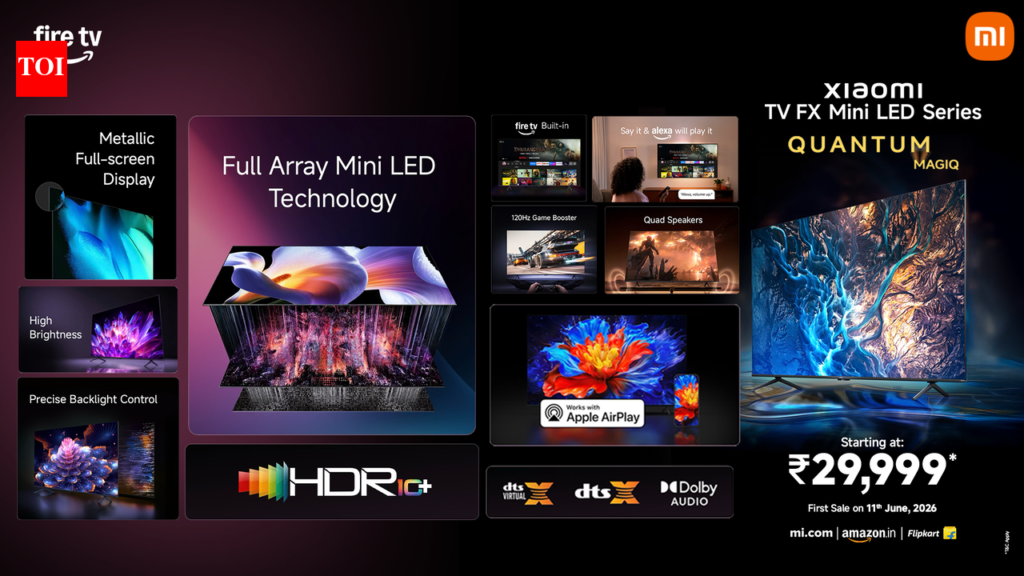
Table of Contents
A Bold Play for the Entry-Level Premium Segment
Xiaomi has officially expanded its display portfolio in India with the launch of the Xiaomi TV FX Mini LED series. Starting at a disruptive price point of ₹29,999, the company is attempting to bridge the gap between standard LED-backlit panels and high-end OLEDs by bringing Mini LED technology to a demographic that previously found it financially inaccessible. For years, Mini LED was reserved for flagship models costing upwards of ₹1 lakh, but Xiaomi is now pivoting this tech toward the mass market.
- Aggressive Pricing: The series starts at ₹29,999, making it one of the most affordable Mini LED options globally.
- Visual Leap: Mini LED offers significantly better contrast and brightness compared to traditional LED TVs by using smaller, denser LEDs for backlighting.
- Software Ecosystem: Ships with Google TV, ensuring a wide app library and seamless integration with the Android ecosystem.
- Market Strategy: A clear attempt to undercut competitors like Samsung and Sony in the mid-to-low range segment.
The move comes at a time when Indian consumers are increasingly upgrading from 32-inch HD sets to larger 4K screens, but often find the ‘washed out’ blacks of cheap LED TVs disappointing. By implementing Mini LED, Xiaomi is addressing the primary weakness of budget displays: light bleed and poor black levels.
The Technicality of Mini LED: Why It Matters
To understand why the Xiaomi TV FX series is a significant release, one must understand the difference between standard LED and Mini LED. In a traditional LED TV, a few large LEDs light up the entire screen or large sections of it. This often results in “blooming,” where bright objects on a dark background create a halo effect.
Mini LED technology uses thousands of tiny LEDs—much smaller than standard ones—which are grouped into hundreds or even thousands of local dimming zones. Because the LEDs are smaller, the TV can turn off specific clusters of lights with far greater precision. The result is a picture that approaches the deep blacks of OLED but maintains the high peak brightness that OLEDs often struggle to hit in brightly lit living rooms.
Performance Metrics and Display Quality
The FX series focuses on high dynamic range (HDR) performance. By utilizing a high number of dimming zones, Xiaomi claims a significant increase in contrast ratios. While the company hasn’t released the exact zone count for the base model, typical Mini LED implementations in this class aim for a balance between cost and performance to ensure a punchy, vivid image during HDR playback.
| Feature | Standard LED | Xiaomi TV FX Mini LED |
|---|---|---|
| Backlight Size | Large LEDs | Miniature LEDs |
| Contrast Control | Global or Large Zones | Precision Local Dimming |
| Peak Brightness | Moderate | High |
| Black Levels | Greyish Blacks | Deep, Inky Blacks |
What This Means for the Indian Consumer
The introduction of the FX series changes the value proposition for the average buyer. For a long time, the choice was simple: buy a cheap LED TV and accept mediocre contrast, or spend a fortune on a premium Sony or LG set. Xiaomi is creating a ‘middle path’.
For gamers, the increased contrast and brightness make a noticeable difference in atmospheric titles—think the dark corridors of a horror game or the neon lights of a cyberpunk city. For movie buffs, the HDR10+ and Dolby Vision support (depending on the specific model size) mean that the TV can better replicate the cinematic look of a theater.
However, there is a trade-off. Achieving this price point usually requires compromise in other areas. We expect the build quality to be primarily plastic and the internal processing power to be adequate rather than exceptional. But for the vast majority of users, the jump in image quality provided by Mini LED far outweighs the lack of a metal bezel.
The Ecosystem Integration: Google TV and Beyond
Beyond the hardware, the Xiaomi TV FX series leans heavily on the Google TV interface. This is a strategic choice. Unlike proprietary OS options, Google TV provides the most comprehensive app support in India, from Disney+ Hotstar and Netflix to regional streaming services.
The integration of Google Assistant allows for voice-controlled navigation, which has become a standard expectation for Indian households. Furthermore, the inclusion of Chromecast built-in ensures that users can cast content from their smartphones effortlessly, maintaining the ‘connected home’ philosophy that Xiaomi has championed since its inception.
Market Implications and Competitive Analysis
Xiaomi is not alone in the race for affordable displays, but they are often the first to push a premium technology down to a budget price point. This puts significant pressure on brands like Samsung and LG, who have traditionally guarded their Mini LED (QNED/Neo QLED) tech for their upper-tier models.
If Xiaomi successfully scales the FX series, we may see a ‘trickle-down’ effect where other manufacturers are forced to introduce budget Mini LED options to remain competitive. This benefits the consumer, as the baseline for what constitutes a ‘good TV’ shifts upward.
Commonly Asked Questions
Is Mini LED better than OLED?
It depends on the use case. OLED has per-pixel dimming, offering the absolute best blacks. However, Mini LED can reach much higher peak brightness and is entirely immune to ‘burn-in’, making it a safer choice for users who leave news channels or gaming HUDs on the screen for hours.
Does the Xiaomi TV FX support 4K gaming?
Yes, the series supports 4K resolution. While it may not have the 120Hz refresh rate found in high-end gaming monitors, its contrast and brightness make it a strong companion for consoles like the PS5 or Xbox Series S.
What is the warranty period for the Xiaomi TV FX series?
Xiaomi typically offers a one-year limited warranty in India, though extended warranty plans are often available during the launch phase on platforms like Mi.com and Amazon.
How does this TV handle bright rooms?
Because Mini LED is inherently brighter than standard LED and OLED, the FX series is particularly well-suited for Indian living rooms that receive a lot of natural sunlight, as it can ‘fight’ through glare more effectively.
Is the ₹29,999 price for all sizes?
No, the starting price of ₹29,999 is for the entry-level size of the series. Larger screen variants will be priced higher, though they are expected to remain competitively priced compared to other 4K Mini LED sets.
Final Verdict on the FX Series
The Xiaomi TV FX Mini LED series isn’t just another TV launch; it’s a strategic attempt to democratize high-end display technology. While it may not replace a professional-grade OLED for the most demanding cinephiles, it provides a massive leap in quality for anyone upgrading from a basic LED set. By combining a cutting-edge backlight system with the reliability of Google TV and a price tag that doesn’t break the bank, Xiaomi has set a new benchmark for the budget-premium segment in India.