Asus Expands 2026 Laptop Lineup in India: ROG Zephyrus Duo, G14, and ProArt PZ14 Hit Market
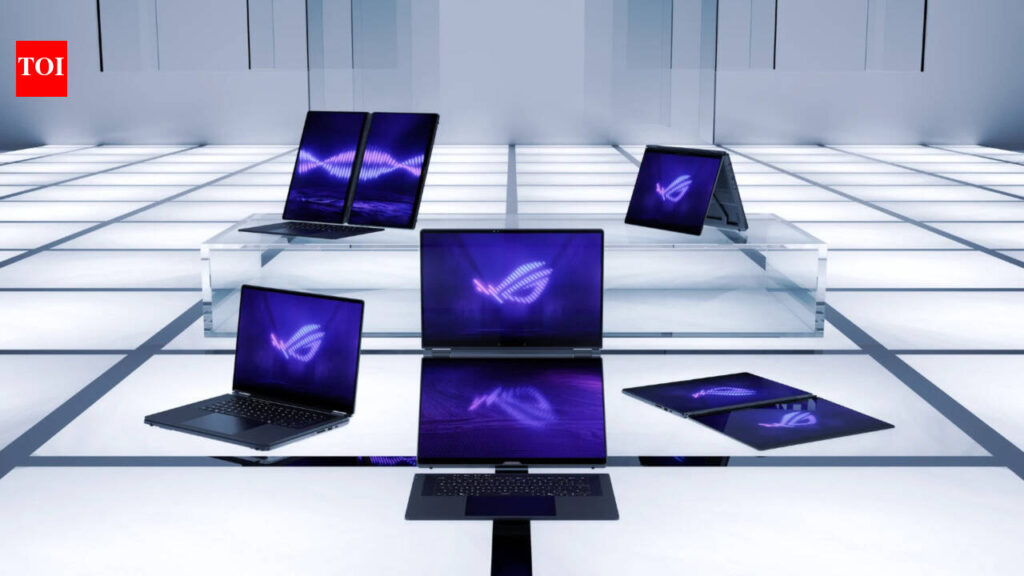
Table of Contents
A Strategic Pivot Toward Versatility
Asus has officially opened pre-orders for its 2026 laptop portfolio in India, deploying a diverse array of machines that signal a shift in how the company views the boundary between professional workstations and gaming rigs. The rollout includes the flagship ROG Zephyrus Duo, the highly portable Zephyrus G14 and G16, the creator-centric ProArt PZ14, and the budget-conscious yet powerful TUF A14.
For the Indian market, this isn’t just a routine hardware refresh. By introducing the ProArt PZ14 alongside the ROG gaming line, Asus is directly targeting the growing segment of ‘hybrid creators’—professionals who require the thermal headroom of a gaming laptop but the color accuracy and form factor of a studio device. The timing coincides with a significant uptick in demand for AI-accelerated hardware in the region, as local developers and digital artists move toward LLM-integrated workflows.
- Broad Spectrum: Asus is covering three distinct segments: ultra-premium dual-screen (Duo), enthusiast gaming (G14/G16), and professional creativity (ProArt).
- Portability Focus: The introduction of the TUF A14 marks a move toward smaller chassis for the entry-level gaming segment.
- AI Integration: All 2026 models leverage the latest NPU (Neural Processing Unit) architectures to handle on-device AI tasks.
- India Availability: Pre-orders are now live via Asus e-stores and major retail partners including Amazon India and Flipkart.
The ROG Zephyrus Duo: The Return of the Dual-Screen Powerhouse
The Zephyrus Duo remains one of the most daring designs in the laptop industry. For 2026, Asus has refined the ScreenPad Plus, the secondary touch-enabled display that sits above the keyboard. Unlike previous iterations that sometimes struggled with hinge stability, the new chassis utilizes a reinforced alloy frame that reduces wobble during heavy touch use.
From a technical standpoint, the Duo is designed for multitasking that transcends a second monitor. For a video editor, this means the primary OLED panel handles the timeline while the ScreenPad Plus hosts the playback window and color grading sliders. For a coder, it allows for a dedicated terminal window to remain visible while writing logic on the main screen. The 2026 model integrates the latest high-TGP (Total Graphics Power) variants of NVIDIA’s current GPU lineup, ensuring that the dual-screen overhead doesn’t throttle performance.
Comparing the Zephyrus G14 and G16: Size vs. Sustained Power
The G14 and G16 continue to be the gold standard for the ‘thin-and-light’ gaming category. However, the 2026 models emphasize a divergence in thermal philosophy.
The Zephyrus G14: The Mobility King
The G14 is built for the user who carries their laptop to cafes, universities, and flights. In 2026, the focus has been on battery efficiency. By optimizing the power draw between the integrated graphics and the discrete GPU, Asus has managed to extend the ‘productivity’ battery life, a historical pain point for 14-inch gaming laptops. The G14’s appeal lies in its ability to provide nearly 90% of the power of a full-sized rig in a chassis that fits in a standard backpack.
The Zephyrus G16: The Balanced Workhorse
The G16 offers a larger canvas and, more importantly, a larger surface area for heat dissipation. This allows the G16 to maintain higher clock speeds for longer periods without hitting the thermal ceiling. For users engaged in long gaming sessions or heavy 3D rendering in Blender, the G16 is the logical choice. The 2026 iteration features a refined keyboard layout and a vastly improved trackpad that minimizes ‘diving board’ flex.
ProArt PZ14: A New Contender for Creative Professionals
The ProArt PZ14 is perhaps the most intriguing addition to the India launch. Traditionally, ‘ProArt’ meant massive, heavy workstations. The PZ14 breaks this mold by offering a compact 14-inch form factor without sacrificing the color-critical requirements of a professional photographer or illustrator.
The PZ14 features a factory-calibrated OLED display with Delta E < 2, ensuring that what the user sees on screen matches the final printed output. It also introduces a specialized ‘Creator Dial’—a physical or haptic input that allows for seamless scrubbing through timelines or adjusting brush sizes in Adobe Photoshop. By positioning the PZ14 as a competitor to the MacBook Pro 14, Asus is betting that Windows users want an equivalent level of build quality and screen precision in a portable shell.
The TUF A14: Democratizing Gaming Power
For years, the TUF series was seen as the ‘rugged’ but bulky alternative to the Zephyrus line. The 2026 TUF A14 is a strategic departure. By shrinking the TUF footprint to 14 inches, Asus is acknowledging that not every gamer needs a 17-inch behemoth. The A14 focuses on durability—meeting MIL-STD-810H standards—while providing a viable entry point for students and casual gamers who need a machine that can survive a commute.
Technical Analysis: Hardware and Thermal Evolution
Across the board, the 2026 lineup sees a significant leap in NPU integration. The shift toward AI-PCs means that features like background noise cancellation, eye-tracking, and automated power management are now handled by dedicated AI silicon rather than taxing the CPU. This results in a measurable decrease in power consumption during light tasks.
| Model | Primary Target | Key Feature | Thermal Profile |
|---|---|---|---|
| Zephyrus Duo | Power Users/Streamers | Dual-Screen Setup | High-End Liquid Metal |
| Zephyrus G14 | Mobile Gamers | Ultra-Portability | Balanced/Compact |
| Zephyrus G16 | Enthusiast Gamers | Screen Real Estate | Sustained Performance |
| ProArt PZ14 | Digital Artists | Color-Calibrated OLED | Quiet/Optimized |
| TUF A14 | Students/Budget Gamers | Rugged Chassis | Air-Cooled Efficiency |
What This Means for the Indian Consumer
The arrival of these machines in India signifies a maturing market. We are seeing a move away from the ‘one size fits all’ gaming laptop. Consumers no longer have to choose between a ‘work laptop’ and a ‘gaming laptop’; the ProArt and Zephyrus lines blur these boundaries entirely.
Furthermore, the introduction of the TUF A14 suggests that Asus is eyeing the ‘campus’ market more aggressively. A 14-inch gaming laptop is far more practical for a student than the traditional 15.6-inch models. For the professional, the PZ14 provides a high-performance Windows alternative that doesn’t require the bulk of a traditional workstation, enabling a truly mobile creative studio.
Addressing Common Concerns
How do the 2026 models handle heat compared to 2025?
Asus has implemented updated vapor chamber technology in the G16 and Duo models, which allows for more efficient heat transfer from the GPU. Early benchmarks suggest a reduction in surface temperatures by 3-5 degrees Celsius during peak loads compared to the previous generation.
Is the dual screen on the Duo actually useful?
For most users, it is a luxury. However, for those in streaming, coding, or video production, it replaces the need for a portable monitor. The 2026 version is more useful because the software integration with Windows 11 is more seamless, allowing for better window snapping and app management.
Which model is best for a student on a budget?
The TUF A14 is the clear winner here. It provides the necessary GPU power for gaming and engineering software while remaining portable and durable enough to withstand the rigors of daily travel.
Does the ProArt PZ14 support stylus input?
Yes, the PZ14 is designed for creators and supports precision stylus input, making it a direct competitor to the high-end 2-in-1s and MacBook Pros in the creative space.
Where can I pre-order these in India?
Pre-orders are available through the official Asus India online store, as well as authorized retail partners including Amazon India and Flipkart. Local physical stores in major metros like Delhi, Mumbai, and Bangalore are also expected to have demo units shortly.
Final Reporting Note
While the specs on paper are impressive, the real-world value will depend on the localized pricing in India, which often fluctuates due to import duties. Asus has avoided a ‘one price fits all’ strategy, instead offering multiple configurations of RAM and Storage to hit different price brackets. Prospective buyers should pay close attention to the TGP of the GPUs in the G14 and TUF A14, as lower wattage versions may exist to preserve battery life, potentially impacting maximum gaming performance.