Samsung Launches 2026 Vision AI TV Lineup in India: Micro RGB Debuts Alongside Neo QLED and OLED
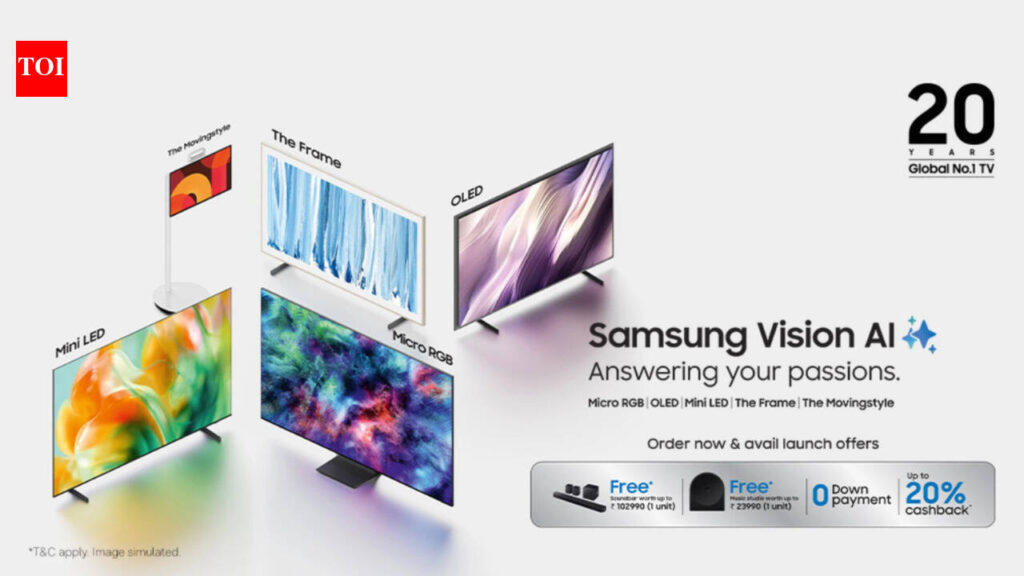
Table of Contents
A Massive Bet on AI and New Panel Tech
Samsung has officially expanded its footprint in the Indian home entertainment market with the launch of the 2026 Vision AI TV lineup. In a move that signals a strategic shift toward highly segmented pricing and advanced neural processing, the company has introduced a staggering 72 models across six distinct categories. The centerpiece of this rollout is the introduction of Micro RGB, a premium technology designed to bridge the gap between the extreme brightness of Mini LED and the perfect blacks of OLED.
- Broad Portfolio: 72 models spanning from budget-friendly entries at ₹36,990 to ultra-premium Micro RGB units exceeding ₹1,24,990.
- New Tech: The arrival of Micro RGB aims to offer superior contrast and longevity compared to traditional OLEDs.
- AI Integration: The “Vision AI” suite introduces real-time neural upscaling and dynamic sound mapping tailored for Indian living room acoustics.
- Diverse Ranges: Lineup includes Micro RGB, OLED, Neo QLED, Mini LED, and standard Crystal 4K options.
For the average consumer, this volume of choices can be overwhelming. However, for the industry, it represents Samsung’s attempt to maintain dominance in a market where Xiaomi and TCL are aggressively undercutting on price, while LG continues to challenge on OLED quality. By diversifying into Micro RGB, Samsung is attempting to create a new “gold standard” that avoids the organic degradation risks associated with OLED while surpassing the blooming issues often seen in Mini LED arrays.
Understanding the Micro RGB Breakthrough
To understand why Micro RGB is the headline act, we have to look at the physics of the display. While OLED (Organic Light Emitting Diode) uses organic compounds that emit light, they are prone to burn-in and have a limited peak brightness ceiling. Neo QLED (Mini LED) uses tiny LEDs for backlighting, offering immense brightness but occasionally struggling with “halos” around bright objects on dark backgrounds.
Micro RGB utilizes non-organic, microscopic LEDs that act as their own pixels. This allows for the pixel-level control of OLED—meaning true blacks—but with the inorganic stability and luminosity of LED. In practice, this means a Micro RGB panel can be placed in a sun-drenched living room in Mumbai or Delhi without worrying about glare or long-term pixel degradation, all while maintaining a cinematic contrast ratio.
Technical Breakdown: Vision AI Processing
The “Vision AI” branding isn’t just marketing fluff; it refers to a new NPU (Neural Processing Unit) embedded in the 2026 SoC (System on Chip). This processor handles three primary tasks:
- Real-time Texture Mapping: The AI analyzes the source material and injects synthetic detail into low-resolution streams, which is critical for the high volume of 1080p and 720p content still prevalent on Indian cable and satellite TV.
- Adaptive Ambient Lighting: Using integrated sensors, the TVs adjust color temperature and brightness based on the specific lighting conditions of the room, reducing eye strain.
- Object-Based Audio Scaling: The AI identifies a speaking person in a frame and steers the audio toward the center channel, while pushing atmospheric sounds to the periphery, simulating a Dolby Atmos experience even on mid-range models.
The Pricing Hierarchy and Market Segment
Samsung’s pricing strategy for 2026 is designed to capture every possible demographic in the Indian market. The range starts at ₹36,990, targeting first-time smart TV buyers moving up from budget brands. The mid-range is dominated by the Neo QLED and Mini LED series, which offer the best “bang for the buck” for gaming and sports enthusiasts.
| Series | Technology | Primary Target Audience | Starting Price (Approx) |
|---|---|---|---|
| Crystal 4K | LED / LCD | Budget-conscious households | ₹36,990 |
| Neo QLED | Mini LED | Gamers & Bright Room Users | ₹65,000+ |
| OLED | Organic LED | Cinephiles & Dark Room Viewing | ₹90,000+ |
| Micro RGB | Micro-LED Hybrid | Ultra-Luxury / Tech Enthusiasts | ₹1,24,990+ |
The high-end Micro RGB models, crossing the ₹1.25 lakh mark, are positioned not just as televisions, but as status symbols. These models likely feature the highest peak brightness (nits) in the lineup and the most aggressive AI processing capabilities.
What This Means for the Indian Consumer
The launch of 72 different models indicates that Samsung is moving away from a “one size fits all” approach. For the user, this means more granular choices regarding screen size (ranging from 43 to 98 inches) and specific feature sets. If you are a hardcore gamer, the Neo QLED’s 144Hz refresh rate and low input lag are the priority. If you are a movie buff, the Micro RGB or OLED’s black levels are the deciding factor.
Furthermore, the push toward AI content recommendations suggests that Samsung is trying to integrate its Tizen OS more deeply into the user’s daily habits. By analyzing viewing patterns, the Vision AI aims to reduce the “scroll fatigue” associated with having twenty different streaming apps installed on one device.
Comparison: Micro RGB vs. OLED
For those undecided between the two premium options, the choice comes down to environment. OLED remains the king of pure, ink-like blacks, but it suffers in bright rooms. Micro RGB offers 95% of that contrast but with 2x the brightness and no risk of permanent image retention. For a typical Indian home with multiple windows and high ambient light, Micro RGB is the objectively superior technical choice, provided the budget allows.
Industry Impact and Competitive Landscape
Samsung’s aggressive rollout in India puts immense pressure on LG and Sony. While Sony maintains a prestige hold on the high-end audio-visual market, Samsung’s ability to scale from ₹37k to ₹1.25L+ in one go creates a “ecosystem lock.” Once a consumer buys into the Samsung ecosystem via a budget Crystal 4K TV, the upgrade path to Neo QLED or Micro RGB becomes seamless.
Industry analysts suggest that the introduction of Micro RGB is a preemptive strike against the falling costs of QD-OLED panels. By introducing a non-organic alternative that performs similarly, Samsung protects its margins and offers a product with a potentially longer lifespan, which is a significant selling point in the value-conscious Indian market.
FAQ: Common Questions About the 2026 Lineup
Which Samsung TV is best for gaming?
For most gamers, the Neo QLED series is the best choice due to its high brightness, 144Hz support, and minimal input lag. However, the Micro RGB models offer the best visual fidelity if budget is not a concern.
What is the difference between Mini LED and Micro RGB?
Mini LED uses a backlight of many small LEDs to illuminate a screen. Micro RGB (Micro-LED technology) uses the LEDs themselves as the pixels. This means Micro RGB has no backlight, resulting in perfect blacks and higher contrast than Mini LED.
Is Vision AI available on all 72 models?
While the core AI upscaling is present across the range, the more advanced neural processing and adaptive ambient lighting are typically reserved for the Neo QLED, OLED, and Micro RGB tiers.
Do these TVs support Indian regional streaming apps?
Yes, the 2026 Tizen OS is optimized for the Indian market, featuring native support for Hotstar, JioCinema, Zee5, and other local platforms with AI-driven content discovery.
What are the early bird offers?
Samsung is currently offering bundled soundbars for specific premium models and cashback deals through major Indian retailers and e-commerce platforms for the initial launch window.
Final Verdict on the 2026 Portfolio
Samsung has not just released a new set of TVs; they have released a comprehensive map of where they believe the display market is heading. The shift toward Micro RGB is the most telling detail. It signifies the beginning of the end for the trade-off between brightness and contrast. While the entry-level models keep the lights on, the premium Vision AI range is where the real innovation lies. For the Indian consumer, the options have never been broader, and the technology has never been more capable of handling the diverse lighting and content conditions of the subcontinent.