Lenovo IdeaPad Slim 3 Gen 11 Hits India: A Pragmatic Bet on Intel Core Ultra Series 3 and Copilot+
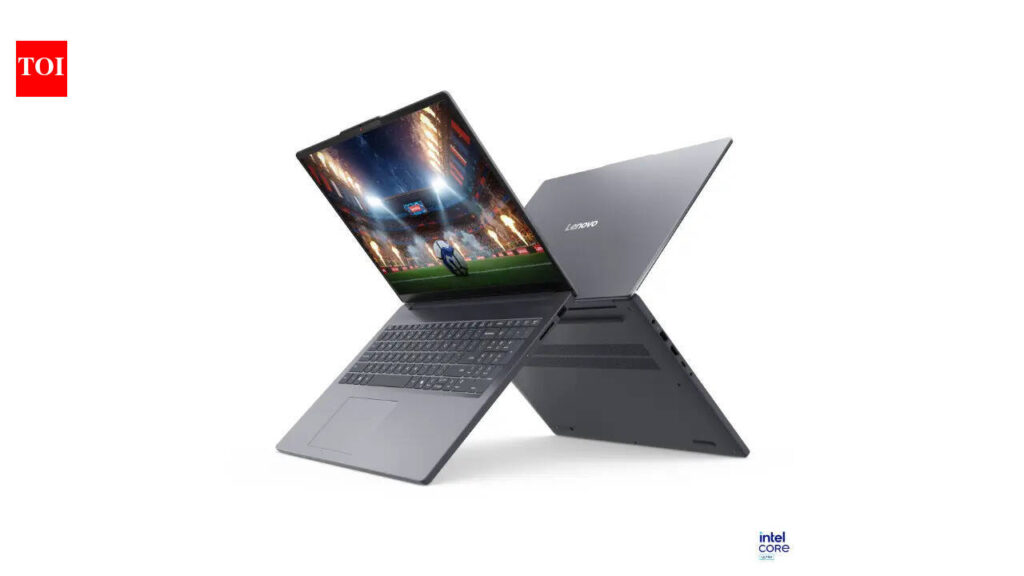
Table of Contents
The Mid-Range AI Pivot: Lenovo’s Strategy in India
Lenovo has officially expanded its AI portfolio in the Indian market with the launch of the IdeaPad Slim 3 Gen 11. While the ‘Slim’ branding typically suggests a lightweight experience for students and casual users, the Gen 11 iteration is a distinct departure from its predecessors. It isn’t just about a thinner chassis; it is a calculated attempt to democratize the ‘Copilot+ PC’ experience by leveraging the new Intel Core Ultra Series 3 architecture.
Starting at ₹1,09,990, the device enters a competitive price bracket where users are increasingly demanding more than just raw clock speeds. They want integrated Neural Processing Units (NPUs) that can handle local AI tasks—like live captions, background blur, and generative image creation—without draining the battery or relying entirely on the cloud. By positioning the IdeaPad Slim 3 Gen 11 as an accessible gateway to AI, Lenovo is betting that the Indian consumer is ready to move beyond the traditional ‘Core i’ mindset toward a more specialized AI-driven workflow.
- Processor: Powered by the latest Intel Core Ultra Series 3, emphasizing NPU efficiency over raw peak wattage.
- AI Integration: Fully compatible with Microsoft Copilot+ PC standards for on-device AI processing.
- Form Factors: Available in 14-inch and 15-inch displays to balance portability and productivity.
- Pricing: Entry price of ₹1,09,990, targeting the upper-mid-range segment of the Indian laptop market.
Under the Hood: Decoding the Intel Core Ultra Series 3
The heart of the IdeaPad Slim 3 Gen 11 is the Intel Core Ultra Series 3. To understand why this matters, we have to look at the shift from CPUs to SoC (System on a Chip) designs. Unlike previous generations that focused primarily on multi-core performance, the Series 3 is designed around a tripartite architecture: the CPU (Central Processing Unit), the GPU (Graphics Processing Unit), and the NPU (Neural Processing Unit).
The NPU is the critical component here. By offloading AI workloads from the CPU and GPU, Lenovo ensures that tasks like noise cancellation during a Zoom call or real-time language translation don’t cause the fans to ramp up to maximum speed. In our analysis of the current hardware landscape, this ‘distributed workload’ approach is the only way to maintain battery life in a thin-and-light chassis while running LLMs (Large Language Models) locally.
Performance Metrics and Expectations
While Lenovo has not released detailed benchmark sheets for the Indian variant, the architecture of the Ultra Series 3 typically prioritizes Performance-per-Watt. For the average user, this means the laptop will feel snappier when multitasking between Chrome, Slack, and a local AI assistant, but it isn’t intended to replace a workstation for 4K video rendering or heavy AAA gaming.
The Copilot+ Ecosystem: More Than a Chatbot
Labeling the IdeaPad Slim 3 Gen 11 as a Copilot+ PC isn’t just a marketing gimmick. It signifies that the hardware meets the minimum requirements set by Microsoft for specific on-device AI features. This includes 40+ TOPS (Tera Operations Per Second) of NPU performance and a minimum amount of dedicated RAM to hold AI models in memory.
Practical applications for the Indian user include Recall (the ability to find things you’ve seen on your PC using natural language), Cocreator in Paint, and advanced Studio Effects. For a college student in Bangalore or a corporate professional in Mumbai, this transforms the laptop from a passive tool into an active assistant that can summarize long PDF reports or draft emails based on fragmented notes.
If you are currently using a laptop from 2022 or 2023, you are likely relying on the cloud for AI. This means your data leaves your machine, and you need a constant internet connection for AI features to work. The IdeaPad Slim 3 Gen 11 moves those calculations locally. This results in three primary benefits: lower latency (no waiting for a server to respond), increased privacy (your data doesn’t leave the device), and offline capability.
Comparing the 14-inch vs 15-inch Variants
Lenovo offers the device in two sizes, which fundamentally changes the target demographic. The 14-inch model is clearly aimed at the ‘digital nomad’ and student crowd. It prioritizes the ‘Slim’ part of the name, fitting easily into backpacks and being manageable on small cafe tables. However, the 14-inch screen can feel cramped when utilizing the new AI side-by-side multitasking views.
The 15-inch variant is the productivity workhorse. It typically includes a more robust chassis and, crucially, often features a dedicated numeric keypad, which is indispensable for accounting and data entry tasks—a significant segment of the Indian corporate market. The trade-off is a slightly heavier footprint, though it remains competitive within the ‘Slim’ category.
| Feature | 14-inch Model | 15-inch Model |
|---|---|---|
| Primary Use | Portability / Students | Productivity / Office |
| Display Area | Compact / High PPI | Expansive / Multitasking |
| Keyboard | Standard QWERTY | Includes Numeric Keypad |
| Weight | Ultra-lightweight | Lightweight |
Market Positioning and the ‘Price-to-Value’ Ratio
At ₹1,09,990, the IdeaPad Slim 3 Gen 11 isn’t exactly ‘budget’ in the traditional sense, but in the context of AI PCs, it is priced aggressively. To put this in perspective, high-end AI workstations often cross the ₹2,00,000 mark. Lenovo is attempting to capture the middle ground—the user who wants the prestige and utility of AI without the cost of a gaming rig or a professional creative suite.
However, the competition is fierce. ASUS and HP have both launched NPU-equipped laptops in the Indian market, often undercutting each other by a few thousand rupees. Lenovo’s edge lies in its distribution network across India and its reputation for build quality in the IdeaPad line. The inclusion of launch offers further suggests that Lenovo is eager to move volume quickly to establish a dominant share of the AI PC segment.
Technical Caveats and Considerations
No launch is without its compromises. While the Intel Core Ultra Series 3 is an efficiency marvel, users should be aware of RAM limitations. AI models are memory-hungry. If the base model comes with 16GB of RAM, it will handle standard Copilot tasks with ease. However, those looking to run more complex local LLMs or heavy data sets may find the ceiling lower than that of the Yoga or ThinkPad series.
Additionally, the ‘Slim’ series often utilizes integrated graphics. While the Intel Arc graphics integrated into the Ultra chips are impressive, they will not compete with dedicated NVIDIA RTX GPUs. Users who expect to do heavy 3D modeling or professional video editing should look toward the Legion or Slim Pro lines instead.
Connectivity and Ports
In an era where some manufacturers are removing everything but USB-C, Lenovo has maintained a pragmatic approach. The Gen 11 continues to offer a balanced array of ports, ensuring that users don’t have to carry a dongle for every presentation or external drive. This is a critical detail for the Indian market, where legacy peripherals are still widely used in many office environments.
Frequently Asked Questions
Is the IdeaPad Slim 3 Gen 11 a gaming laptop?
No. While the Intel Core Ultra Series 3 has improved integrated graphics, this is a productivity and AI-focused laptop. It can handle light gaming (indie titles or older games), but it is not designed for modern AAA gaming.
What is a Copilot+ PC?
A Copilot+ PC is a category of Windows laptops that meet specific hardware requirements—most notably a powerful NPU (Neural Processing Unit)—allowing them to run advanced AI features locally on the device rather than in the cloud.
Does it support local AI offline?
Yes, thanks to the Intel Core Ultra NPU, many AI-driven tasks such as background noise removal and certain generative features can function without an active internet connection, though some Copilot features still require cloud connectivity.
Which version should I choose: 14-inch or 15-inch?
Choose the 14-inch if you travel frequently or are a student. Choose the 15-inch if you do extensive work in Excel, accounting, or prefer a larger screen for multitasking without an external monitor.
How does the price compare to previous generations?
The price is slightly higher than the non-AI Slim 3 models, reflecting the increased cost of the NPU-integrated silicon. However, the value proposition shifts from ‘raw speed’ to ‘AI capability.’
Final Verdict on the Gen 11 Launch
The Lenovo IdeaPad Slim 3 Gen 11 represents a shift in how we define ‘entry-level’ laptops. In 2026, an entry-level machine is no longer just about browsing the web; it’s about how efficiently it can assist the user through AI. By integrating the Intel Core Ultra Series 3 and aligning with Microsoft’s Copilot+ standards, Lenovo has provided a viable path for the average Indian consumer to enter the AI era without spending a fortune on a specialized workstation.
Whether this device will redefine the mid-range segment depends on how quickly AI software evolves to utilize the NPU. For now, it stands as a well-rounded, future-proofed machine for those who prioritize efficiency, portability, and the cutting edge of digital productivity.