Gigabyte’s Computex 2026 Strategy: AI-Driven Motherboards and the Push for Localized LLMs
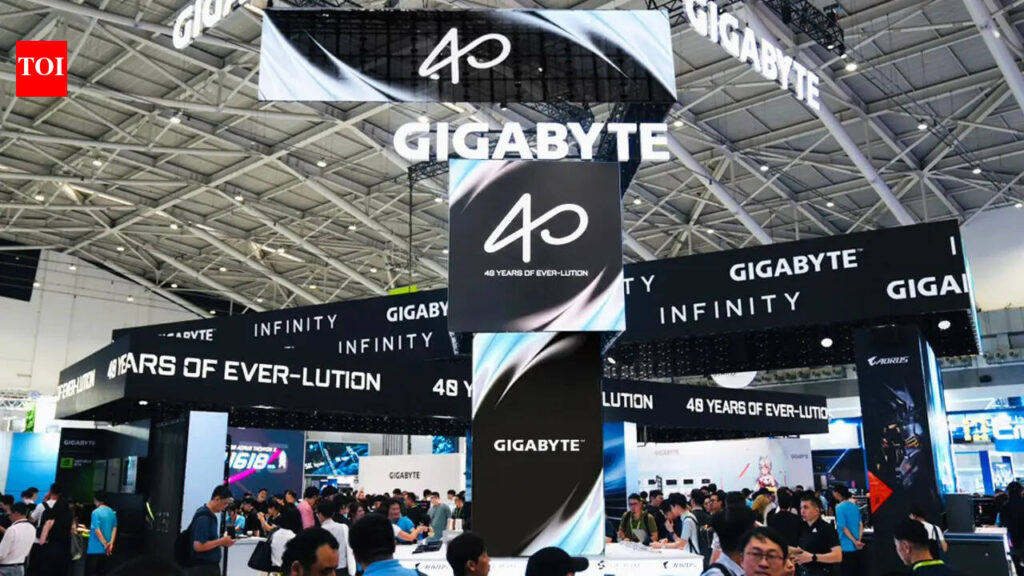
Table of Contents
The Shift Toward Local Intelligence
At Computex 2026, Gigabyte has pivoted from simply supporting AI software to building hardware specifically designed to run Large Language Models (LLMs) locally. While the previous era of computing relied heavily on cloud-based API calls to OpenAI or Google, the industry is shifting toward “Edge AI,” and Gigabyte’s latest motherboard and GPU lineup is designed to be the backbone of this transition.
- Hardware-Level AI Integration: Gigabyte is introducing dedicated AI-acceleration circuits on its new Z890 and X870 series motherboards to reduce latency in local model inference.
- Thermal Innovation: New AI-driven cooling systems now dynamically adjust fan curves based on neural network load rather than just CPU temperature.
- Enterprise Pivot: A significant push toward AI-ready server racks and workstations tailored for developers training smaller, specialized models (SLMs).
- Gaming Synergy: Integration with next-gen GPU architectures to optimize frame generation and AI-upscaling at the BIOS level.
The center-stage attraction at the Gigabyte booth is the new AI-Core Series of motherboards. Unlike traditional boards that merely provide power to an NPU (Neural Processing Unit), these boards feature an onboard AI-management chip that optimizes power delivery in real-time. This ensures that when a user triggers a local AI task—such as a local Llama 3 instance or a Stable Diffusion render—the system doesn’t suffer from the transient power spikes that often lead to instability in high-end gaming rigs.
Deconstructing the AI-Core Motherboard Architecture
To understand why this matters, we have to look at the technical bottleneck of current AI computing. Most consumer-grade PCs treat the GPU as the sole AI engine. However, data transfer between the RAM, CPU, and GPU creates a latency gap. Gigabyte’s new architecture implements a more aggressive Direct Storage approach and enhanced PCIe 5.0 lanes specifically tuned for the high-bandwidth requirements of AI weights being loaded into VRAM.
The Role of Onboard AI Management
The newly introduced AI-tuning chip operates independently of the OS. In practical terms, this means the motherboard can predict a heavy AI workload and pre-ramp the cooling systems before the CPU heat actually spikes. By analyzing the instruction sets being sent to the processor, the board can switch power profiles in milliseconds, a feature Gigabyte calls “Predictive Power Scaling.”
| Feature | Standard High-End Board | Gigabyte AI-Core (2026) |
|---|---|---|
| Power Management | Reactive (Based on Heat) | Predictive (Based on Workload) |
| AI Latency | Standard PCIe Bus | Optimized AI-Direct Lanes |
| Cooling Logic | Linear PWM Curves | Neural Network Fan Control |
| Local LLM Support | Passive Hardware Support | Active Hardware Optimization |
Gaming Innovation: More Than Just Faster Frames
While AI took center stage, gaming remained a core pillar of the Computex showcase. Gigabyte’s AORUS line has seen a refresh focusing on Hyper-Efficiency. The new GPU coolers utilize a redesigned vapor chamber that claims to reduce temperatures by 4-7 degrees Celsius compared to the previous generation, even under the sustained loads of 4K Ray Tracing.
The most intriguing development is the integration of AI into the AORUS Engine. Instead of a generic “Game Mode,” the system now analyzes the specific game engine being used and adjusts the RAM timings and GPU clock speeds on the fly. This isn’t a manual overclock; it’s a machine-learning-driven optimization that observes system telemetry to find the “sweet spot” between stability and performance.
“We are no longer looking at hardware as a static set of specs,” a Gigabyte lead engineer noted during the keynote. “The hardware must now be as dynamic as the software it runs. Whether it’s a generative AI project or a competitive eSports match, the board should adapt to the code.”
What This Means for the End User
For the average consumer, these advancements might seem like marginal gains, but for the power user, the implications are significant. We are moving toward a world where Privacy-First AI is possible. By running LLMs locally on Gigabyte’s AI-optimized hardware, users can process sensitive data without sending it to a third-party cloud server.
For gamers, the “Predictive Power Scaling” means fewer system crashes during intense sessions and a more consistent frame time delivery. The hardware is essentially doing the “tuning” that used to require hours of manual BIOS tweaking in the 2010s.
Enterprise and the AI Startup Ecosystem
Gigabyte’s presence at Computex 2026 also signaled a heavier investment in the startup sector. Their new rack-mount solutions are targeting “AI Factories”—small-to-mid-sized data centers that need to deploy clusters of GPUs for fine-tuning models. By offering a tighter integration between the chassis, the motherboard, and the thermal management, Gigabyte is attempting to lower the barrier to entry for companies that want to build their own proprietary AI models.
Technical Breakdown: Thermal Management in AI Clusters
AI workloads generate heat differently than gaming. While gaming is bursty, AI inference is often a sustained, high-intensity load across all CUDA cores. Gigabyte has introduced a new Liquid-to-Air Hybrid system for their enterprise boards, which uses a closed-loop liquid cooler for the VRMs (Voltage Regulator Modules) while maintaining high-airflow fans for the PCIe slots. This prevents the “thermal throttling” that often plagues multi-GPU setups during long training runs.
Frequently Asked Questions
Do I need a new motherboard to run local AI?
No, you can run local AI on most modern hardware with sufficient VRAM. However, the new AI-Core motherboards reduce latency and improve thermal stability, which allows for faster inference speeds and longer sustained workloads without throttling.
How does AI-driven cooling differ from standard fan curves?
Standard curves react to temperature: if the CPU hits 80°C, the fan spins faster. AI-driven cooling looks at the type of work being done. If it detects a massive AI tensor operation starting, it ramps up fans before the heat reaches the sensor, keeping the system cooler for longer.
Will these boards support future GPU generations?
Yes, the 2026 lineup is built on PCIe 5.0 (and in some cases, early PCIe 6.0 prototypes), ensuring compatibility with the latest and upcoming NVIDIA and AMD GPU architectures.
Is the AI-Core series only for professionals?
While the most advanced features target developers, the AORUS gaming line incorporates these efficiencies to provide a more stable and performant experience for gamers.
How do local LLMs benefit from this hardware?
Local LLMs require massive amounts of data to move quickly between storage and VRAM. The optimized lanes and predictive power delivery on these boards minimize the “stutters” that can occur during token generation in large models.
Final Analysis: The Hardware-Software Convergence
Gigabyte’s showcase at Computex 2026 proves that the “AI PC” is moving past the marketing buzzword stage and into actual silicon. By focusing on the motherboard as an active participant in AI processing—rather than just a passive circuit board—Gigabyte is setting a new standard for how high-performance computing will evolve. The success of this strategy will depend on how well software developers optimize their models to take advantage of this hardware-level acceleration. For now, the message is clear: the future of AI isn’t just in the cloud; it’s in the chassis.