Samsung Galaxy Book 6 Edge: Qualcomm Snapdragon X2 Elite Pushes ARM Windows Toward Mainstream
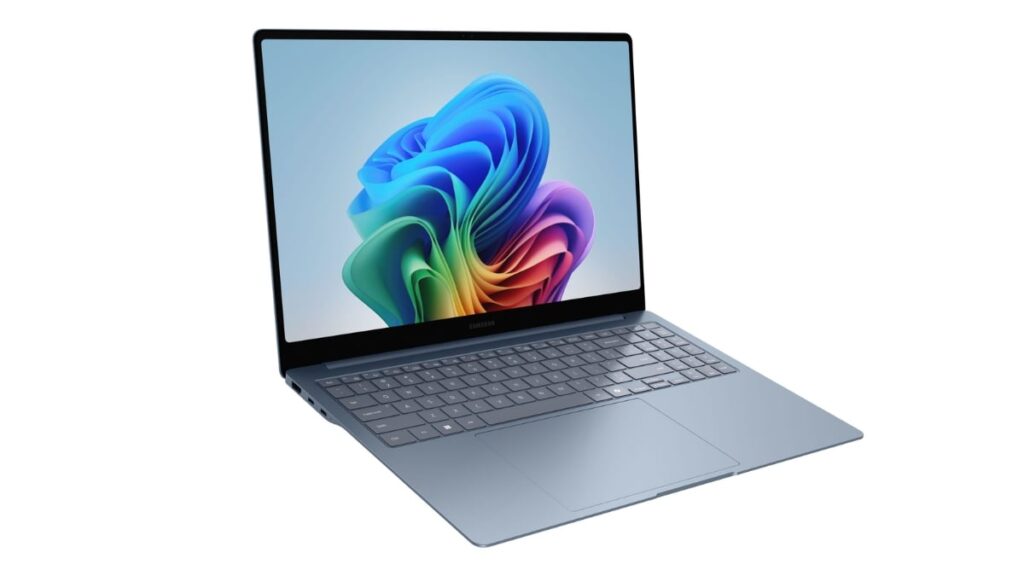
Table of Contents
A Pivot Toward the ARM Architecture
Samsung has officially entered the next phase of the Windows laptop evolution with the launch of the Samsung Galaxy Book 6 Edge. While the hardware looks familiar, the internals represent a fundamental shift. By opting for the Qualcomm Snapdragon X2 Elite platform, Samsung isn’t just launching a new laptop; it is betting on a transition from traditional x86 architecture (Intel/AMD) to ARM, a move designed to challenge the dominance of Apple’s M-series silicon in the premium ultrabook space.
The device arrives at a critical juncture for Microsoft’s Copilot+ PC initiative. For years, the ‘Windows on ARM’ experiment struggled with app compatibility and underwhelming performance. However, the Snapdragon X2 Elite aims to rectify this by integrating a powerful Neural Processing Unit (NPU) capable of handling massive AI workloads locally, reducing the reliance on cloud-based processing and significantly extending battery endurance.
- Silicon: Powered by the Snapdragon X2 Elite, focusing on NPU-driven AI performance.
- Display: 16-inch WQXGA+ AMOLED panel designed for high color accuracy and contrast.
- Endurance: Claimed video playback of up to 22 hours, reflecting the efficiency of ARM cores.
- Pricing: Starts at $2,099.99 for the 16GB RAM / 1TB SSD configuration.
Breaking Down the Snapdragon X2 Elite Platform
To understand why the Galaxy Book 6 Edge is significant, one must look at the Snapdragon X2 Elite. Unlike previous generations, the X2 Elite utilizes an Oryon CPU architecture. This is a custom-built core designed to deliver high single-thread performance—the traditional weak point of ARM-based Windows machines—while maintaining a thermal profile that allows for fanless or near-silent operation.
The standout feature is the Hexagon NPU. In the context of the Galaxy Book 6 Edge, this NPU allows the laptop to execute Copilot+ features like ‘Recall’ (the semantic search of your PC’s history) and real-time Live Captions without draining the battery. Most traditional laptops offload these tasks to the GPU, which consumes significantly more power. By moving these to a dedicated AI engine, Samsung claims a massive leap in efficiency.
Technical Specifications Table
| Component | Specification |
|---|---|
| Processor | Qualcomm Snapdragon X2 Elite |
| Memory | 16GB LPDDR5x (Soldered) |
| Storage | 1TB NVMe SSD |
| Display | 16″ WQXGA+ AMOLED (Dynamic AMOLED 2X) |
| Battery Life | Up to 22 Hours (Video Playback) |
| Audio | Quad Speakers with Dolby Atmos |
| OS | Windows 11 (Copilot+ Edition) |
Galaxy AI: More Than Just a Chatbot
Samsung has aggressively integrated Galaxy AI across its mobile and tablet ecosystem, and the Book 6 Edge is the centerpiece of this convergence. The integration focuses on three core pillars: seamless connectivity, intelligent productivity, and cross-device synchronization.
For users already entrenched in the Samsung ecosystem, the ‘Multi Control’ feature allows the laptop to act as a hub, controlling a Galaxy Tab or Galaxy S-series phone with a single mouse and keyboard. More importantly, the AI capabilities extend to Note Assist and Transcript Assist, which utilize the NPU to summarize long meetings or transcribe audio files with a level of accuracy that previously required a high-speed internet connection to a remote server.
“The goal isn’t just to add AI features, but to make the AI invisible by integrating it into the hardware level. The Snapdragon X2 Elite allows us to process these tasks on-device, which is a massive win for user privacy and speed.” — Industry Analysis of Samsung’s Hardware Strategy
What This Means for the End User
For the average consumer, the shift to the Galaxy Book 6 Edge represents a trade-off between raw compatibility and extreme efficiency. If you are a developer using niche legacy software or a hardcore gamer relying on x86-specific drivers, the ARM architecture may still present hurdles. However, for the ‘modern professional’—someone whose workflow exists primarily in browsers, Office 365, Slack, and Zoom—the benefits are tangible.
The 22-hour battery life claim is a direct challenge to the MacBook Air. In real-world scenarios, this means the end of ‘outlet anxiety.’ You can realistically leave your charger at home for a full workday and still have enough juice for a movie in the evening. Furthermore, the 16-inch AMOLED screen ensures that creative professionals getting into AI-generated art or video editing have a color-accurate canvas that outperforms standard IPS panels found in most business laptops.
The Price of Innovation: Is $2,099 Justified?
At $2,099.99, the Galaxy Book 6 Edge sits comfortably in the premium tier. When compared to the MacBook Pro 14 or the Dell XPS 13, Samsung is charging a premium for the integration of the X2 Elite and the superior AMOLED screen. However, the decision to offer only a 16GB RAM configuration is a point of contention. For a machine marketed as an ‘AI Powerhouse,’ 16GB may become a bottleneck as local LLMs (Large Language Models) become more complex and memory-hungry.
Current market data from early 2025 suggests a growing trend toward 32GB as the baseline for AI PCs. By limiting the Book 6 Edge to 16GB, Samsung may be playing it safe on margins, but it risks the device feeling dated within two years as AI software evolves.
Comparing the ARM Transition: Samsung vs. Apple
The transition we are seeing with the Galaxy Book 6 Edge mirrors the 2020 shift Apple made with the M1 chip. Apple succeeded because they controlled both the hardware and the operating system. Samsung and Qualcomm are in a more complex position; they must rely on Microsoft to ensure Windows 11 runs flawlessly on ARM.
While Prism (Microsoft’s emulation layer) has improved, it is not yet perfect. Users will find that native ARM apps—like Chrome, Edge, and Spotify—run with blazing speed, while older .exe files might experience a slight performance dip. Despite this, the efficiency gains in thermals (the laptop stays cool) and battery are the primary reasons to choose this machine over a traditional Intel Core Ultra laptop.
Common Questions About the Galaxy Book 6 Edge
Will all my Windows apps work on the Galaxy Book 6 Edge?
Most modern apps work perfectly. Apps that have ‘native ARM’ versions run at full speed. For apps that don’t, Windows uses a translation layer called Prism. While most apps work, some highly specialized software or drivers for old hardware may not be compatible.
How does the battery life compare to an Intel-based laptop?
The Snapdragon X2 Elite is significantly more power-efficient than x86 processors. While Intel laptops often struggle to hit 10 hours of actual productivity, the Book 6 Edge is designed for 15-20+ hours depending on the workload, putting it in direct competition with MacBook Air models.
Is 16GB of RAM enough for AI tasks?
For standard Copilot+ features and daily multitasking, 16GB is sufficient. However, for professional users running local AI models or heavy video editing, it may be a limiting factor since the RAM is soldered and cannot be upgraded.
What makes the WQXGA+ AMOLED screen better?
AMOLED technology allows for ‘true blacks’ because each pixel can be turned off individually. This results in infinite contrast and better energy efficiency when using dark mode, which further extends the battery life compared to traditional LCD screens.
Where can I buy the Galaxy Book 6 Edge?
Currently, the device is available exclusively through Samsung’s official online store in the US. Global availability, including markets like India and Europe, has not yet been detailed by Samsung.
Final Verdict on the ARM Gamble
The Samsung Galaxy Book 6 Edge is not a laptop for everyone. It is a flagship for the early adopter—the user who wants the absolute latest in AI hardware and is tired of carrying a power brick. By leveraging the Snapdragon X2 Elite, Samsung has created a machine that finally bridges the gap between the portability of a tablet and the power of a workstation.
Whether this marks the definitive end of the Intel era for premium ultrabooks remains to be seen, but the Book 6 Edge provides a compelling blueprint for the future: lean, AI-integrated, and exceptionally long-lasting.