Samsung Debuts AI Soccer Mode for 2026 Lineup: How Neural Processing is Changing the Matchday Experience
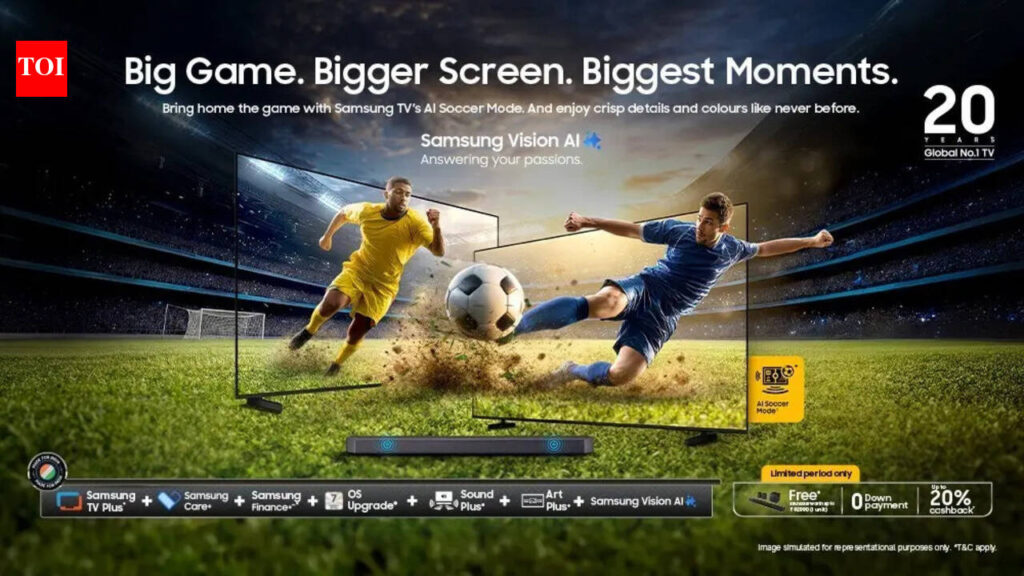
Table of Contents
The Shift Toward Algorithmic Sports Viewing
Samsung has officially unveiled its AI Soccer Mode for the 2026 television lineup, moving beyond simple image sharpening into the realm of real-time neural processing. The rollout coincides with a massive promotional push including bundled soundbars and aggressive cashback incentives, signaling Samsung’s intent to dominate the living room during the upcoming global tournament cycle.
- Real-Time Analysis: AI Soccer Mode uses neural networks to identify the ball and players, adjusting contrast and sharpness dynamically.
- Hardware Bundles: Qualifying 2026 models come with a complimentary soundbar to enhance the stadium atmosphere.
- Financial Incentives: Tiered cashback deals are available depending on the screen size and model series (Neo QLED vs. OLED).
- Focus on Latency: The new mode specifically targets motion blur, a long-standing issue in high-speed sports broadcasting.
For the average viewer, ‘AI’ in a TV often means a slightly brighter picture. However, the 2026 implementation focuses on what Samsung calls ‘contextual awareness.’ Instead of applying a global filter to the screen, the TV identifies the specific geometry of a soccer pitch and prioritizes the clarity of the ball’s trajectory and player jerseys, reducing the ‘ghosting’ effect common in fast-paced transitions.
Breaking Down the Neural Processing
At the heart of this experience is the latest iteration of the Neural Quantum Processor. Unlike traditional motion interpolation—which often creates the ‘soap opera effect’—the AI Soccer Mode utilizes a database of sports imagery to predict motion paths. When the processor detects a fast-moving object (the ball) against a consistent background (the grass), it applies targeted sharpening only to the object of interest.
pThis prevents the overall image from looking over-processed. By analyzing the frame-by-frame data, the TV can adjust the HDR (High Dynamic Range) mapping in real-time. For instance, if a game is played under harsh stadium floodlights, the AI reduces specular highlights to prevent glare while deepening the greens of the pitch to maintain a natural look.
Object Tracking Sound (OTS) Integration
The inclusion of free soundbars isn’t just a marketing gimmick; it’s a technical necessity for the full experience. The AI Soccer Mode integrates with Samsung’s Object Tracking Sound (OTS) technology. By syncing the visual position of the ball with the audio output of the soundbar, the TV creates a spatial audio map. If the action moves from the left wing to the center, the audio bias shifts accordingly, simulating the directional sound of a live stadium.
The Economics of the 2026 Rollout
Samsung is not just selling a feature; they are fighting for market share in a saturated OLED and Mini-LED market. The decision to bundle high-end audio equipment and offer cashback suggests a strategy to lock users into the Samsung ecosystem (SmartThings) before the peak viewing season.
| Offer Component | Neo QLED Series | OLED Series | Crystal UHD Series |
|---|---|---|---|
| Soundbar Bundle | Premium Q-Series | Premium Q-Series | Standard S-Series |
| Cashback Range | Up to $500 | Up to $600 | Up to $200 |
| AI Soccer Mode | Full Suite | Full Suite | Lite Version |
Industry analysts suggest that these bundles are designed to counteract the rise of budget-friendly competitors who offer similar 4K panels but lack the proprietary processing power to handle AI-driven motion optimization. By offering the soundbar for free, Samsung eliminates the primary barrier to upgrading the rest of the home cinema setup.
What This Means for the Consumer
For the enthusiast, this means a significant reduction in visual artifacts during high-bitrate sports streams. For the casual viewer, it simplifies the setup process—you no longer need to spend an hour in the ‘Expert Settings’ menu trying to find the right ‘Sports Mode’ preset. The AI handles the calibration based on the content it detects.
However, there is a trade-off. AI-driven processing inherently introduces a microscopic amount of input lag. While negligible for watching a broadcast, gamers using these TVs for FIFA or EA Sports FC may find a slight discrepancy if the AI Soccer Mode remains active during gameplay. It is recommended to toggle this off for interactive gaming while keeping it active for passive viewing.
Addressing the Limitations
It is important to distinguish between the TV’s capabilities and the broadcast signal. No matter how advanced the AI Soccer Mode is, it cannot ‘invent’ resolution that isn’t there. If a broadcaster sends a compressed 1080p signal, the AI can upscale it to 4K, but it will never match the native clarity of a true 4K broadcast. The ‘AI’ is essentially an advanced guessing engine, filling in the gaps of missing data using probability and pattern recognition.
Common Technical Questions
How does AI Soccer Mode differ from standard Sports Mode?
Standard Sports Mode typically increases brightness and saturates greens. AI Soccer Mode uses neural networks to identify specific objects on the screen and apply targeted processing, such as removing motion blur from the ball while keeping the background natural.
Will this work on older Samsung TVs?
No. The AI Soccer Mode requires the 2026 Neural Quantum Processor. While some 2025 models may receive limited software updates, the hardware-level neural processing is exclusive to the new lineup.
Does the free soundbar require a subscription?
No, the soundbar is a hardware bundle included with the purchase of qualifying TV models. It is a one-time physical addition to the purchase.
Is there a risk of ‘over-smoothing’ the image?
Yes, as with any AI upscaling, some users may find the motion too fluid. Samsung has included an ‘AI Strength’ slider in the settings to allow users to dial back the processing if it feels unnatural.
How do I claim the cashback offers?
Cashback is typically processed through Samsung’s official member portal. Users must register their product and provide proof of purchase within 30 days of delivery.
The Broader Impact on Home Entertainment
Samsung’s move signals a broader trend in the industry: the transition from ‘Hardware Specifications’ to ‘Software Experiences.’ We are reaching a plateau in panel technology—pixels can only get so small and blacks can only get so deep. The new battleground is the processor. By focusing on specific use cases like soccer, Samsung is attempting to create ‘vertical’ value, making their product the definitive choice for a specific demographic of users.
As we move toward 2026, the integration of AI into the living room will likely extend beyond sports. We can expect similar ‘AI Cinema’ or ‘AI Gaming’ modes that adapt not just to the genre, but to the specific scene playing out on screen. For now, the AI Soccer Mode represents a calculated bet that the world’s most popular sport is the fastest way to prove the power of neural processing in the home.