Infrastructure Collapse and Digital Blackouts: The Aftermath of Venezuela’s Century-Scale Earthquake
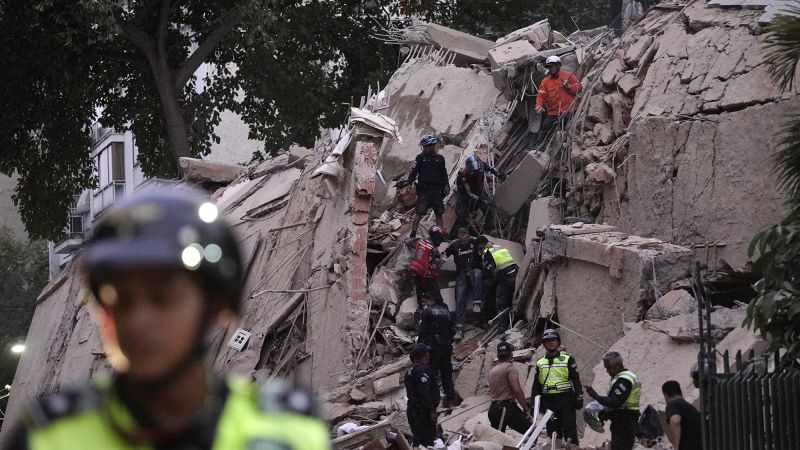
Table of Contents
A Double-Strike Catastrophe
Venezuela is grappling with a humanitarian and technical crisis after two massive seismic events struck its northern coast in rapid succession on Wednesday. The first, a magnitude 7.2 foreshock, hit near San Felipe in Yaracuy state at 6:04 p.m. ET. A mere 40 seconds later, a more powerful 7.5 magnitude quake struck 23 kilometers southeast of Yumare. This sequence represents the most significant seismic activity the country has experienced in over a century, leaving a trail of destruction that has crippled the nation’s already fragile infrastructure.
Acting President Delcy Rodriguez confirmed a death toll of at least 164 people and 971 injuries, though officials admit these numbers are likely conservative as rescue teams struggle to reach isolated pockets of the disaster zone. The state of La Guaira has been officially designated as a disaster zone, with the waterfront hotel in Macuto and numerous high-rises in Catia La Mar reduced to rubble.
The Digital Blackout: Telecommunications in Freefall
Beyond the physical debris, the earthquake triggered a systemic failure of Venezuela’s digital nervous system. According to data from NetBlocks, internet connectivity plummeted sharply immediately following the second quake. The collapse was not a result of intentional shutdowns, but rather the physical destruction of fiber-optic cables and the failure of power grids that sustain cellular towers and data centers.
This digital blackout created a critical gap in emergency response. When telecommunications fail during a mass-casualty event, the “golden hour” for rescue is severely compromised, as residents are unable to report trapped victims or coordinate evacuations. The loss of connectivity also obscured the initial scale of the tragedy, delaying the deployment of specialized urban search and rescue (USAR) teams.
Vulnerability by Design: The USGS Warning
The U.S. Geological Survey (USGS) issued two separate red alerts via its PAGER (Prompt Assessment of Global Earthquakes Response) system. The PAGER system, which uses historical data and population density to estimate impact, warned of “high casualties and extensive damage.” The severity of the loss is attributed to a lethal combination of seismic energy and structural vulnerability.
A significant portion of the region’s housing stock consists of non-reinforced masonry and aging concrete structures that lack the seismic dampening required for magnitude 7+ events. In Caracas, residents described a “horror movie” scenario where floors pancaked atop one another, trapping survivors in voids that required heavy machinery to penetrate. The failure of these buildings highlights a long-term lack of investment in building code enforcement and seismic retrofitting.
Logistical Paralyzes and the Path to Recovery
The disaster has effectively frozen the country’s transport logistics. Simon Bolivar Airport, the primary gateway for international aid, was forced to close temporarily due to structural damage. While acting President Rodriguez announced an initial $200 million fund for reconstruction, the economic reality of hyperinflation makes this figure precarious.
International aid is beginning to trickle in, with rescue teams from the U.S., France, Mexico, the Dominican Republic, El Salvador, and Qatar. However, the ability of these teams to operate depends entirely on the restoration of basic utilities. The Ministry of Communication and Information has proactively cut off gas supplies to damaged buildings to prevent secondary explosions, a move that highlights the volatile state of the urban environment.