DJI Osmo Pocket 4P Debuts With Dual-Camera System: A Direct Challenge to Insta360 Luna Ultra
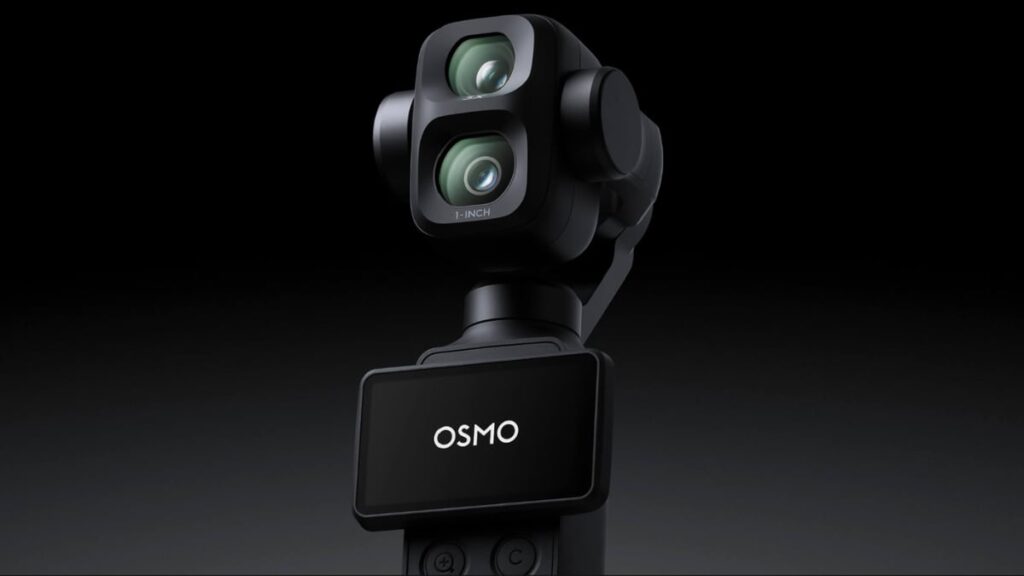
Table of Contents
A New Paradigm for Pocket Cinematography
DJI has officially shifted the goalposts for the compact camera market. With the release of the DJI Osmo Pocket 4P, the company isn’t just iterating on the Pocket 3’s success; it is fundamentally altering the hardware architecture. For the first time in the Pocket series, we are seeing a dual-camera setup—combining a massive 1-inch wide-angle sensor with a dedicated mid-telephoto lens—effectively eliminating the compromise between wide vlogging shots and detailed close-ups.
- Dual-Lens Setup: Combines a 1-inch wide sensor with a mid-telephoto lens for versatile framing.
- AI Tracking: Introduces Smart Follow 8.0, promising more reliable subject locking in crowded environments.
- Professional Grade: Supports D-Log 2 for high-dynamic range color grading, aimed at professional editors.
- Competitive Pricing: Starts at CNY 3,799 (approx. $520 USD) for the standard bundle.
This launch comes at a critical juncture. The recent entry of the Insta360 Luna Ultra into the market forced a shift in how manufacturers approach the ‘pocket’ form factor. While Insta360 has leaned heavily into modularity and AI-driven software stitching, DJI is doubling down on optical physics and mechanical stability. The addition of a second lens means creators no longer have to rely on digital zoom—which degrades image quality—but can instead switch to a native optical focal length for tighter shots.
Breaking Down the Dual-Camera Architecture
The technical core of the Osmo Pocket 4P is its dual-camera architecture. To understand why this matters, we have to look at the limitations of previous gimbal cameras. Traditionally, these devices used a single wide-angle lens to ensure the creator’s face and the background were both in frame. However, this often created “barrel distortion” at the edges and made it impossible to capture distant subjects without losing resolution.
The 1-Inch Wide-Angle Powerhouse
The primary sensor remains a 1-inch CMOS, a benchmark that allows for significantly better low-light performance and a more natural bokeh (background blur) than the smaller sensors found in smartphones. This sensor handles the bulk of vlogging and landscape work, utilizing the 3-axis mechanical gimbal to maintain a steady horizon even during aggressive movement.
The Mid-Telephoto Innovation
The secondary lens is where the 4P differentiates itself. By integrating a mid-telephoto camera, DJI allows users to transition from a wide 16mm-equivalent view to a tighter crop without the pixelation associated with digital cropping. In practical terms, this allows a vlogger to capture a “talking head” shot and then seamlessly switch to a product close-up or a detailed architectural shot without moving the camera physically closer to the subject.
Smart Follow 8.0: The AI Evolution
Hardware is only half the story. The software driving the gimbal is now Smart Follow 8.0. Based on internal testing and DJI’s technical documentation, the 8.0 version focuses on “occlusion recovery.” In previous iterations, if a person walked behind a pole or another person, the gimbal would often lose the target. The new AI-assisted shooting modes use predictive pathing to estimate where the subject will reappear, resulting in a smoother, more cinematic follow-shot.
“The goal with the 4P was to bridge the gap between a handheld tool and a professional camera crew. By combining optical zoom with AI tracking, we’ve removed the need for a dedicated camera operator for most social media content,” according to DJI’s official product briefing.
Pricing and Bundle Analysis
The DJI Osmo Pocket 4P enters the market with two primary tiers. The Standard Bundle is priced at CNY 3,799 (roughly Rs. 53,200). This includes the essential hardware: the camera, a flash attachment for low-light fill, a threaded grip for tripod mounting, and a carrying case.
For those looking for a complete production studio, the Vlog Kit is available for CNY 4,299 (roughly Rs. 60,200). The value proposition here lies in the DJI Mic Mini 2 transmitter. Audio is often the weakest link in vlogging; by bundling a dedicated wireless mic, DJI ensures that the high-quality 1-inch visuals are matched by professional-grade audio, bypassing the wind-noise issues common with built-in microphones.
| Feature | Standard Bundle | Vlog Kit |
|---|---|---|
| Price (CNY) | 3,799 | 4,299 |
| Camera System | Dual-Camera | Dual-Camera |
| Audio Hardware | Built-in Mics | DJI Mic Mini 2 |
| Accessories | Flash, Grip, Case | Fill light, Tripod, Remote |
What This Means for Content Creators
The release of the Osmo Pocket 4P signals a move away from the “everything-camera” toward the “specialized-pocket-tool.” For the average user, the 1-inch sensor means that nighttime city walks or indoor vlogs will no longer look grainy. For professional creators, the D-Log 2 recording is the real win. This allows for a flat color profile that preserves more detail in the shadows and highlights, providing the flexibility needed for a professional color grade in software like DaVinci Resolve or Adobe Premiere Pro.
When compared to the Insta360 Luna Ultra, the Pocket 4P takes a different philosophical approach. While the Luna Ultra focuses on the flexibility of 360-degree capture and “reframing” after the fact, the Osmo Pocket 4P focuses on the quality of the frame during the capture. If your priority is image fidelity and stable, targeted movement, the 4P is the superior tool. If your priority is capturing everything and deciding what to show later, the Luna Ultra remains a strong competitor.
Technical Breakdown: D-Log 2 and Color Science
D-Log 2 is a logarithmic gamma curve that allows the camera to record a wider dynamic range. In standard video, the camera “decides” where to clip the whites and crush the blacks. In D-Log 2, the image appears washed out and grey, but it retains the raw data. This is essential for creators who shoot in high-contrast environments—such as a bright window behind a subject—as it allows them to recover those details in post-production without introducing digital noise.
Addressing the Global Market
Currently, the Osmo Pocket 4P is limited to pre-orders in China. However, based on DJI’s historical release patterns, global availability usually follows within 4 to 8 weeks. We expect the US and EU pricing to be slightly higher than the direct currency conversion due to import taxes and regional distribution costs. Users should keep an eye on authorized retailers, as DJI typically manages its global stock carefully to avoid third-party scalping.
Frequently Asked Questions
Is the DJI Osmo Pocket 4P waterproof?
Like its predecessors, the Osmo Pocket 4P is not natively waterproof. To use it underwater, you will need the official DJI waterproof housing accessory, which is typically sold separately.
How does the dual-camera system differ from digital zoom?
Digital zoom simply crops into the existing image and enlarges the pixels, resulting in a loss of sharpness. The dual-camera system uses a separate physical lens with a different focal length, meaning the “zoom” is optical and maintains full resolution and clarity.
Can I use the DJI Mic Mini 2 with other devices?
Yes, the DJI Mic Mini 2 is designed for versatility and can typically be paired with other DJI products or smartphones via the appropriate receivers, though it is most seamlessly integrated into the Pocket 4P ecosystem.
What is the battery life of the Osmo Pocket 4P?
While official stress-test data is still pending, DJI indicates improvements in power efficiency. Based on the 1-inch sensor’s requirements, users can expect roughly 120-150 minutes of continuous recording, depending on the resolution and AI tracking usage.
Does it support 4K 120fps?
Yes, the 4P continues to support high-frame-rate recording for slow-motion content, leveraging the 1-inch sensor to maintain image quality even at higher speeds.
Final Editorial Perspective
The DJI Osmo Pocket 4P isn’t just another camera; it’s a response to the plateau of smartphone video. As mobile sensors hit physical limits, DJI is providing a dedicated piece of hardware that does one thing exceptionally well: stable, high-fidelity cinematography in a pocketable size. The addition of the telephoto lens finally solves the “too wide” problem that has plagued vlogging for a decade. For anyone serious about short-form content—TikTok, Reels, or YouTube Shorts—this is currently the most potent tool on the market.