Microsoft Doubles Down on Enterprise AI with New Surface Pro and Laptop Refresh
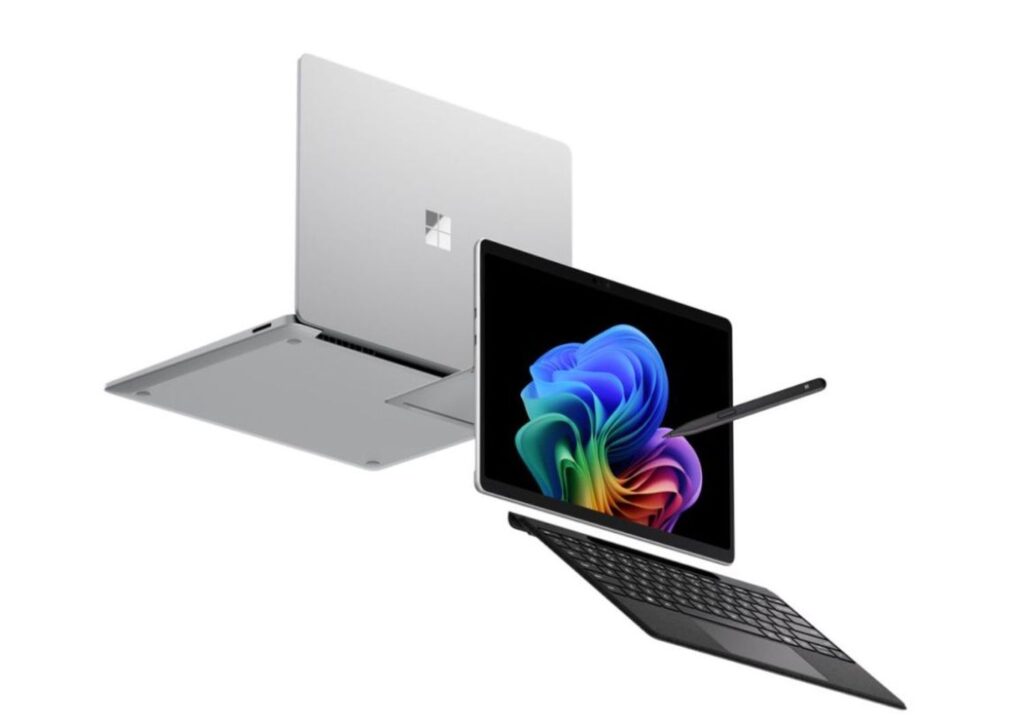
Table of Contents
A Pivot Toward the “AI-Ready” Office
Microsoft has quietly expanded its hardware ecosystem for the enterprise sector, unveiling a refreshed suite of Surface devices designed to act as the physical foundation for its aggressive AI software push. The updated lineup—comprising a 13-inch Surface Laptop, 13.8-inch Surface Laptop, 15-inch Surface Laptop, and a 13-inch Surface Pro—represents a calculated shift in how Microsoft views the “work PC.”
At the heart of this refresh is a heavy reliance on Intel’s latest Core Ultra Series 3 processors. While the tech industry has been buzzing about the shift toward ARM-based architecture, Microsoft is playing a hedging game. These Intel units provide the stability and legacy software compatibility that IT departments demand, though the company confirmed that Snapdragon X2-powered variants are slated for release later this year. The latter will likely target power users who prioritize local NPU (Neural Processing Unit) acceleration and the multi-day battery life that has become the new benchmark for ultraportables.
Privacy and Tactility: The New Hardware Nuances
The most intriguing hardware addition isn’t a processor, but a display feature on the 13.8-inch and 15-inch Surface Laptop models: an integrated privacy screen. Unlike third-party adhesive filters that often mute colors or reduce brightness, this is a built-in solution that narrows viewing angles on command. For the corporate world, the real value lies in the management; IT administrators can now push privacy settings remotely, ensuring sensitive data remains shielded in public environments without requiring the user to manually toggle a switch.
Microsoft is also attempting to bridge the gap in “premium feel” through a redesigned trackpad on the larger laptop models. By integrating Windows 11 haptic feedback, the touchpads now provide physical tactile responses during specific UI actions, such as snapping windows or dragging elements. It is a subtle move, but it brings the Surface closer to the haptic precision found in the MacBook Pro line, which has long been the gold standard for tactile feedback in a chassis.
The Ultraportable Equation
The 13-inch Surface Laptop serves as the fleet’s entry point, emphasizing mobility with Wi-Fi 7 support and a Gen 4 removable SSD. However, there is a clear tiered strategy here. The fully equipped model enters the market at $1,499, while a scaled-back 8 GB RAM version will be available for $1,299. Crucially, that cheaper model lacks Copilot+ functionality, signaling that Microsoft is effectively putting a price tag on the “AI experience.” If you want the full suite of on-device intelligence, you have to pay for the silicon that supports it.
Solving the Sustainability Paradox
For years, the Surface line was criticized for being nearly impossible to service, often requiring heat guns and precision probes to replace a simple battery. Microsoft is attempting to rewrite that narrative. The chassis for the larger laptops and the Surface Pro 13-inch are now crafted from 100% recycled aluminum, but the internal shift is more significant.
By reducing the use of adhesives and simplifying the internal layouts, Microsoft claims that IT departments can now perform repairs using standard tools. This move toward modularity is not just an environmental play; it’s a pragmatic response to the needs of enterprise fleets where downtime is measured in lost revenue. The Surface Pro 13-inch, while receiving a more conservative update focused primarily on the Intel chip refresh, shares this new commitment to repairability.
The Cost of Intelligence
These upgrades come with a premium. Flagship business configurations, starting with the Intel Core Ultra 5 and 16 GB of RAM, are priced at $1,949. When asked about the increase, Microsoft pointed toward the rising costs of AI-capable components and the expanded hardware overhead required to run complex local models.
As Microsoft prepares for the broader rollout of OLED variants later this summer, this current wave of hardware serves as a signal: the “AI PC” is no longer a conceptual category, but a tiered product strategy where performance and privacy are now inextricably linked to the bottom line.