Lenovo’s MWC 2026 Flex: Foldable Handhelds, 3D Screens, and the Push for Modular PCs
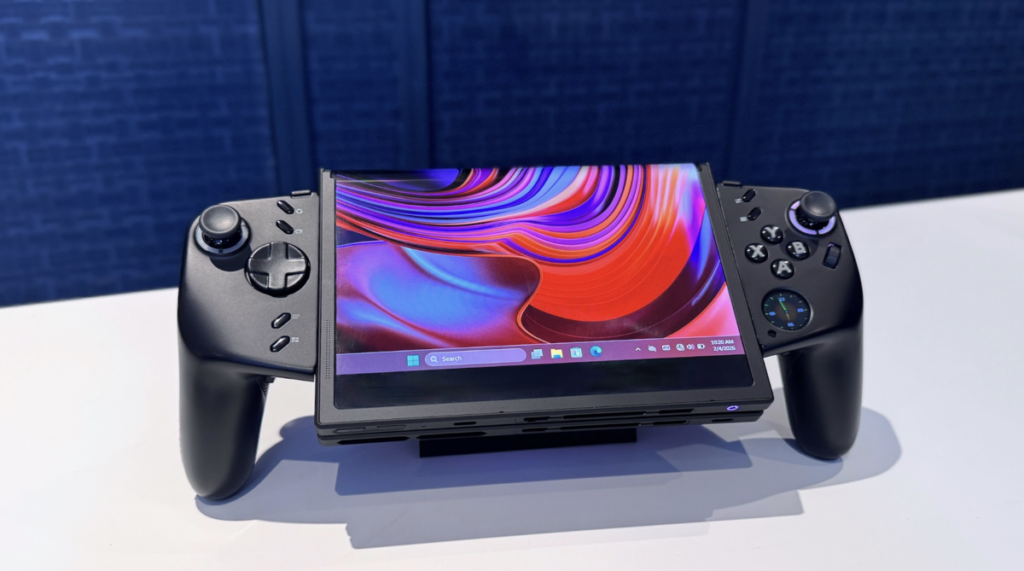
Table of Contents
The Convergence of Gaming and Productivity
Lenovo arrived at Mobile World Congress 2026 not just to update its catalog, but to signal a shift in how it views the boundary between handheld gaming and traditional computing. The centerpiece of this strategy is the Legion Go Fold Concept, a device that attempts to solve the eternal struggle of the gaming handheld: screen real estate.
The prototype features a 7.7-inch POLED display that unfolds into a massive 11.6-inch canvas. While the fold itself is the headline, the utility lies in the ecosystem; Lenovo has paired it with a detachable wireless keyboard that effectively transforms the handheld into a clamshell Windows laptop. Under the hood, the device runs on an Intel Lunar Lake chip with 32GB of RAM, suggesting that while it is a concept, the hardware targets are grounded in current production capabilities.
Betting on Modularly and Repairability
Perhaps more significant for the long-term health of the PC industry is the ThinkBook Modular AI PC Concept. Following the industry trend toward sustainability and right-to-repair—evidenced by the success of brands like Framework—Lenovo is experimenting with a system where ports and peripherals are no longer static.
The Modular AI PC utilizes integrated pogo-pin connectors to allow users to swap ports and detach secondary displays and keyboards depending on their immediate workflow. This isn’t just about convenience; it’s a strategic move toward extending the lifecycle of enterprise hardware. By allowing the hardware to evolve through modules rather than full replacements, Lenovo is addressing the growing corporate demand for ESG-compliant technology.
This philosophy extends to the production line as well. The new T-Series ThinkPads debuting at MWC have been redesigned for easier repair, mirroring the “Space Frame” design seen in the ThinkPad X1 Carbon Gen 14 Aura Edition unveiled earlier this year.
The 3D Frontier and AI Companions
For the creative market, Lenovo introduced the Yoga Book Pro 3D Concept. This dual-display machine utilizes eye-tracking technology to render glasses-free 3D imagery, powered by an Intel Core Ultra 7 processor and Nvidia GeForce RTX 5070 graphics. The addition of snap-on pads for the lower touchscreen suggests a deep integration between tactile input and 3D visualization, aimed squarely at architects and industrial designers.
Beyond the laptops, Lenovo is attempting to move AI off the screen and onto the desk. Two new prototypes, the AI Work Companion and the AI Workmate, represent different philosophies of AI interaction. The former is a minimalist desk clock designed to manage schedules and combat burnout by monitoring screen time. The latter, the AI Workmate, is a more anthropomorphic, lamp-like device capable of scanning physical documents and projecting content onto nearby surfaces using local on-device processing.
Consumer Flagships and Enterprise Updates
While the concepts capture the imagination, the Yoga 9i 2-in-1 Aura Edition is the practical star of the show. Updated with an Intel Core Ultra Series 3 chip, the new 2-in-1 is lighter and restores the headphone jack—a small but welcome nod to user feedback. It launches in May for $1,949, bundling a Yoga Pen Gen 2 that enables a new “Canvas mode” via a magnetic attachment.
The enterprise segment sees a broader refresh across the ThinkPad and ThinkBook lines. The T-Series models specifically have received hardware upgrades in audio and imaging, including an optional 5MP camera to satisfy the demands of high-fidelity remote collaboration. While specific launch dates for the commercial lineup remain fluid, Lenovo confirmed a rollout across the 2026 calendar year.
With the expansion of the Qira AI agent to over 20 devices in the coming weeks, Lenovo is clearly positioning itself as the hardware bridge for the AI software era, blending cutting-edge experimental form factors with a renewed commitment to device longevity.