Lenovo’s Tab Plus Gen 2 Bets on Audio and Ergonomics to Carve a Mid-Range Niche
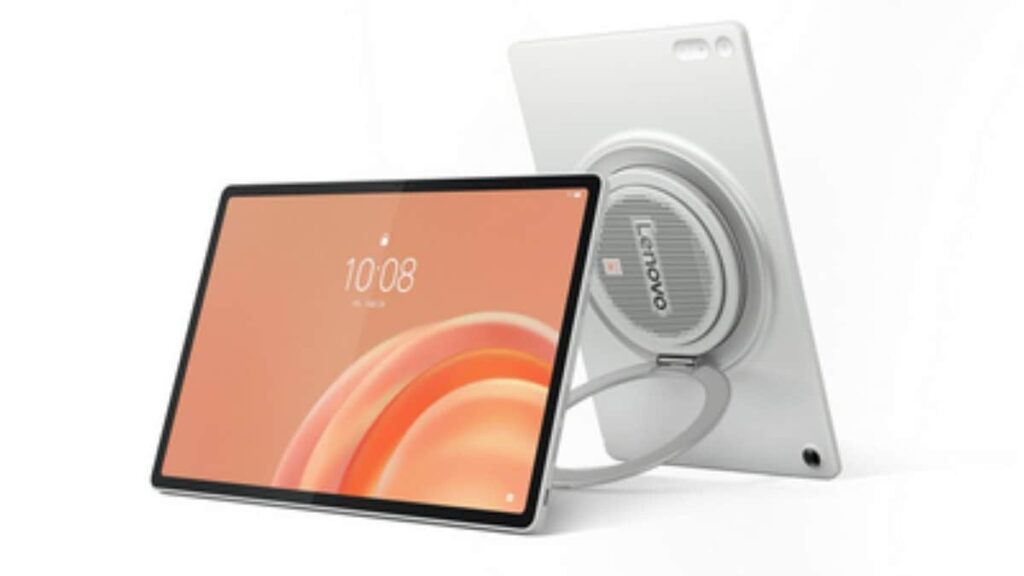
Table of Contents
A Shift Toward Media Consumption
Lenovo is doubling down on a specific, often overlooked segment of the tablet market: the home entertainment hub. The newly unveiled Lenovo Tab Plus Gen 2 isn’t trying to replace a laptop or compete with the raw processing power of the M-series iPads. Instead, it is positioned as a dedicated media machine, prioritizing acoustics and viewing angles over sheer computing muscle.
The standout feature is the audio array. Lenovo has integrated a nine-speaker system engineered by JBL, a significant jump in hardware that suggests the company wants this device to function as a standalone speaker when not in use. While most tablets rely on quad-speaker setups that often struggle with bass or stereo separation, the Tab Plus Gen 2 aims for a more immersive, 360-degree soundstage.
This audio focus is complemented by a hardware quirk that is surprisingly practical: a built-in 360-degree rotating kickstand. By allowing for a wide-angle tilt and seamless transitions between portrait and landscape modes without requiring a third-party folio case, Lenovo is addressing the clunky ergonomics that typically plague larger Android tablets.
Under the Hood: The Dimensity 7400 Strategy
Powering the device is the MediaTek Dimensity 7400 SoC. While not a flagship chip, the 7400 is designed for efficiency and steady performance in multitasking environments. In a move that signals a commitment to longevity, Lenovo is shipping the device with Android 16. This is a notable jump, placing the device ahead of many current competitors in the mid-range bracket.
The commitment to software support is equally aggressive for this price point. Lenovo has confirmed two full OS upgrades, meaning the device will officially see Android 18, backed by security patches extending through 2030. This long-term support window transforms the Tab Plus Gen 2 from a disposable media player into a viable long-term investment for users who don’t upgrade their hardware every two years.
The device is available in four memory configurations to suit different budgets: 6GB+128GB, 8GB+128GB, 8GB+256GB, and a high-end 12GB+256GB variant. Given the nature of Android’s memory management, the 8GB and 12GB models will likely be the sweet spot for those utilizing the tablet for light productivity alongside streaming.
Display and Endurance
The visual experience is centered around a 12.1-inch 2.5K (1,600×2,560 pixels) IGZO panel. IGZO (Indium Gallium Zinc Oxide) technology is particularly useful here, as it typically offers better power efficiency and higher mobility than standard amorphous silicon. With a 120Hz refresh rate and a peak brightness of 800 nits, the screen is well-equipped for HDR10 and Dolby Vision content, making it a legitimate competitor for streaming services.
To keep the large panel powered, Lenovo has packed in a 10,200mAh battery. While the capacity is generous, the 45W fast charging is a necessary inclusion; without it, a battery of this size would take several hours to top up using standard chargers.
Market Positioning and Pricing
The Lenovo Tab Plus Gen 2 enters the market with a starting price of $399.99 in the US. The European market sees a slightly higher entry point at EUR 479.01. This pricing places the device squarely in the “prosumer” mid-range, sitting above budget tablets but remaining well below the premium pricing of the Samsung Galaxy Tab S series.
By focusing on the synergy between the JBL audio, the IGZO display, and the physical kickstand, Lenovo is targeting the “kitchen counter’ or “bedside table” use case—where the device serves as a secondary screen for music, recipes, and video playback rather than a primary work tool.