Impulse Space Secures $500 Million to Scale Hardware Engineering Over AI Automation
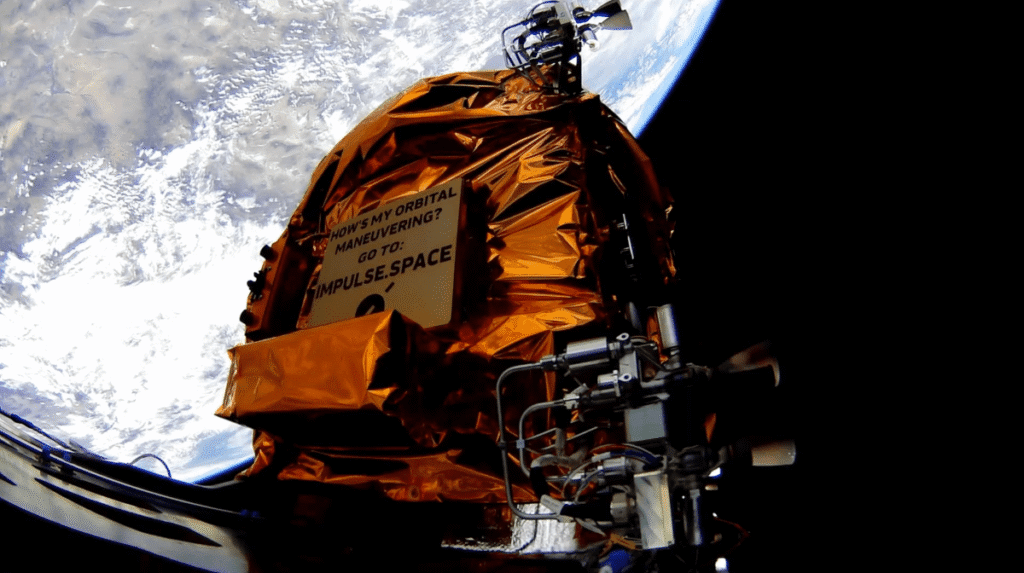
Table of Contents
A High-Stakes Bet on Physical Engineering
In an era where venture capital is overwhelmingly flowing into large language models and generative software, Impulse Space is doubling down on the tangible. The startup, founded by legendary SpaceX propulsion engineer Tom Mueller, has closed a $500 million Series D funding round aimed at a goal that feels almost counter-cultural in the current tech climate: hiring more humans.
The investment round was led by 137 Ventures and BANNER VC, with significant participation from heavy hitters including Founders Fund, Lux Capital, and Linse Capital. The capital injection is earmarked for a massive talent expansion, with plans to bring on as many as 200 new employees to accelerate the development of its orbital infrastructure.
The timing of the raise coincides with a strategic pivot in U.S. national security, as the Department of Defense and the U.S. Space Force shift toward “tactically responsive space”—the ability to deploy and maneuver assets in orbit on short notice to counter adversarial threats. Impulse is positioning itself as the primary logistics provider for this new era of orbital warfare and surveillance.
The Architecture of In-Space Mobility
Impulse isn’t building rockets to leave Earth; it is building the “last-mile delivery” systems for when satellites arrive in space. The company is currently advancing two primary platforms: Mira and Helios.
Mira is a highly maneuverable spacecraft designed specifically for the U.S. Space Force, providing the agility required for complex orbital shifts. Helios, meanwhile, serves as a high-energy transport vehicle, capable of ferrying satellites from the lower orbits where they are typically dropped off by commercial launchers to the higher, more strategic orbits required for specific missions.
According to President and COO Eric Romo, the new funding will be used to ramp up the build-and-test cycle. For Impulse, the priority is moving from digital blueprints to the test stand as quickly as possible.
Why LLMs Can’t Build Turbo Pumps
The most striking aspect of Impulse’s growth strategy is its skepticism toward the current AI hype cycle regarding hardware. While the company’s software teams utilize AI-assisted coding tools to speed up iteration, Romo argues that deep learning is fundamentally ill-equipped for the rigors of aerospace engineering.
Romo, who joined SpaceX as its 13th employee in 2003, recalls a time when computer simulations were rudimentary. “I considered it success if I got within 20% of the right answer, because the simulations were just not that good,” Romo noted. While simulation fidelity has improved, he contends that there is no algorithmic substitute for the physical act of building and breaking hardware.
The bottleneck, according to Romo, is data. Unlike the trillion-token datasets used to train GPT-4 or Claude, the most critical engineering data—such as the precise specifications for a high-performance turbo pump seal—is not floating around the open internet. It is locked in proprietary silos or exists only in the minds of veteran engineers. This “data gap” makes AI a poor substitute for a seasoned propulsion expert.
Operational Hurdles and the Talent War
Scaling a workforce of 200 engineers in the current market is a daunting task. To compete with the gravity of Los Angeles and Seattle, Impulse has expanded its footprint, recently opening an office in Colorado to tap into the region’s deep aerospace talent pool.
This expansion comes at a critical juncture for the company’s hardware. The Mira spacecraft, which flew its third mission late last year, faced a significant setback when a navigation system failure caused the vehicle to deplete its propellant prematurely. The incident highlights the volatility of orbital operations, where a single software glitch can render a multi-million dollar asset useless.
Impulse is now preparing for its next Mira mission, with a launch targeted before the end of the year. With $500 million in the bank and a growing roster of engineers, the company is betting that the path to orbital dominance is paved with carbon fiber and liquid oxygen, not just neural networks.