HP Bets on Nvidia’s RTX Spark ‘Superchip’ for Next-Gen OmniBook Ultra and X Laptops
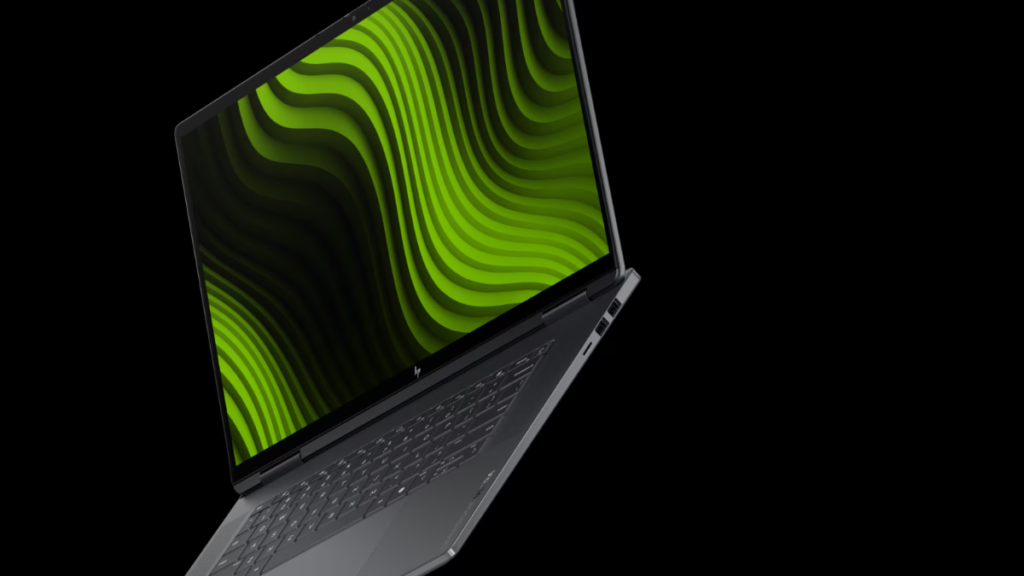
Table of Contents
A Shift Toward the ‘Superchip’ Architecture
The traditional divide between the CPU, GPU, and NPU in laptop architecture is blurring. During Nvidia’s GPU Technology Conference (GTC), the company unveiled the RTX Spark, a piece of silicon Nvidia is calling a “superchip.” Unlike typical discrete GPU setups, the RTX Spark is a highly integrated System-on-a-Chip (SoC) that fuses the Grace series CPU, a dedicated NPU, a modem, and a GPU into a single package.
The strategic goal here isn’t just raw speed, but the enablement of complex, on-device AI personal agents. By consolidating these components, Nvidia aims to reduce the latency involved in moving data between different processors, which has historically been a bottleneck for real-time AI interactions. This move puts Nvidia in direct competition with Qualcomm’s Snapdragon X Elite and Apple’s M-series, both of which have championed the SoC approach to maximize efficiency and AI performance per watt.
HP’s New Hardware Play
HP was among the first to announce hardware utilizing this new silicon, unveiling the 2026 iterations of the OmniBook Ultra 16 and OmniBook X 14. According to HP, these machines will be the thinnest laptops in the world to feature the RTX Spark superchip—a claim that suggests Nvidia has managed to significantly lower the thermal and power footprint of its high-performance silicon.
While full technical specifications remain under wraps, the focus is clearly on the “AI practitioner.” The OmniBook X 14 is positioned as the portable powerhouse for developers and creators, while the Ultra 16 caters to those needing more screen real estate for complex workflows. HP has also hinted that this architecture will migrate into a new line of compact desktops, suggesting a broader ecosystem shift toward RTX Spark across their professional product lines.
Targeting the ‘Setup Friction’
One of the most interesting aspects of the announcement is HP’s focus on the software environment. It isn’t just about the chips; it’s about the toolchains. Samuel Chang, HP’s Senior Vice President, emphasized that these devices are designed to eliminate “setup friction.”
For developers, this means pre-configured environments and open-source toolchains that allow them to deploy AI agents without spending hours on driver configurations or library dependencies. By pairing a specialized SoC with a tailored software stack, HP is attempting to move the OmniBook line from a general-purpose consumer laptop to a specialized edge-development workstation.
The Market Gap and Availability
The industry is currently in a race to define what an “AI PC” actually is. For months, the conversation has revolved around Copilot+ and basic NPU benchmarks. However, the RTX Spark approach suggests a shift toward more autonomous, agentic AI that doesn’t rely on the cloud for every request. This would theoretically offer better privacy and offline capability, which is a critical requirement for the developers HP is targeting.
HP has not yet released pricing for the OmniBook Ultra 16 or OmniBook X 14, stating that costs will be revealed “closer to availability.” The devices are expected to hit select global markets later this year. Given the specialized nature of the Grace-based CPU and the integration of the RTX GPU, these are likely to sit at a premium price point, competing with the high-end MacBook Pro and Dell XPS lines.