Google I/O Pivot: Gemini Spark and ‘Ask YouTube’ Signal a Shift Toward Autonomous AI Agency
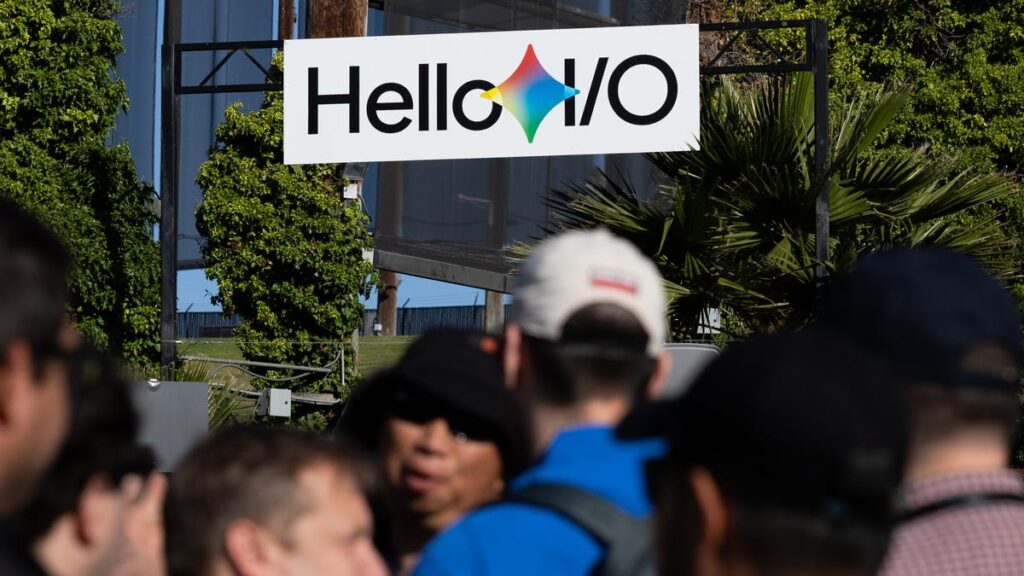
Table of Contents
Moving From Chatbots to Autonomous Agents
For the past year, the AI race has been defined by the ‘prompt and response’ loop. You ask a question, the LLM provides an answer. But at the latest Google I/O in Mountain View, the narrative shifted. Google is no longer just building assistants; it is building agents. The centerpiece of this strategy is Gemini Spark, a personal AI agent designed to operate asynchronously in the background.
Unlike traditional chatbots that require a manual trigger, Gemini Spark is designed to be ‘always on.’ By integrating deeply with the Google Workspace ecosystem—Gmail, Docs, and Chat—Spark attempts to bridge the gap between information retrieval and actual execution. For example, instead of simply reminding you that a deadline is approaching, Spark can synthesize data from a series of project documents and draft a weekly status email to a team, or cross-reference a guest list in Sheets to send follow-up RSVPs via Gmail.
This positions Google in direct competition with Anthropic’s ‘Computer Use’ capabilities and Microsoft 365 Copilot. While Spark rolls out to a limited set of testers immediately, the rollout strategy is tiered: Beta access hits Google AI Ultra subscribers in the U.S. next week, with a wider Chrome integration slated for later this summer.
Solving the ‘Search’ Problem in Video
One of the most practical applications unveiled is Ask YouTube. For years, searching for a specific piece of information within a 20-minute tutorial has been a matter of guesswork and scrubbing through a timeline. Ask YouTube changes this by allowing users to pose hyper-specific queries—such as “how to change the oil on a 2019 Subaru Outback”—and receiving a direct answer that jumps the playback head to the exact second the information is mentioned.
This isn’t just a search improvement; it is a fundamental change in how Google indexes video content. By leveraging multimodal AI to ‘understand’ the visual and auditory components of a video, Google is turning YouTube into a structured database of knowledge rather than just a repository of clips. Premium members in the U.S. aged 18 and up can currently access the feature, with a broader rollout expected shortly.
The War on AI Misinformation: SynthID Goes Mainstream
As synthetic media becomes indistinguishable from reality, Google is doubling down on provenance. The company announced that SynthID, its invisible watermarking system, is expanding beyond the Gemini app and into Google Chrome and Google Search. This move allows users to utilize the ‘Circle to Search’ feature to verify if an image or audio clip was generated by AI.
Notably, Google is not doing this in a vacuum. CEO Sundar Pichai highlighted partnerships with OpenAI, Nvidia, and ElevenLabs to create a cross-industry standard for transparency. This collaboration suggests a rare moment of alignment among AI titans, acknowledging that the erosion of digital trust is a systemic risk that no single company can solve alone.
Writing and Wearables: The Next Frontier
In the productivity space, Docs Live is attempting to solve the ‘blank page’ problem. Rather than generating a generic essay based on a prompt, Docs Live is designed to take fragmented, spoken, or written ‘ramblings’ and structure them into coherent professional writing. By pulling context from a user’s Drive and Chat history, the tool aims for a level of personalization that generic LLMs currently lack. Access will be restricted to the AI Pro ($20/month) and Ultra ($100-$200/month) tiers starting this summer.
Finally, Google’s foray into smart glasses indicates a desire to move AI off the screen and into the physical world. While the hardware impressed early testers with its seamless integration of existing phone apps, the ‘privacy hurdle’ remains the primary concern. Shahram Izadi, Google’s head of XR, confirmed that the devices include bystander LED indicators to signal active recording, but admitted that the company still needs to ‘raise the bar’ regarding data privacy. Full details on the privacy framework are expected at a dedicated fall event.