Google Quietly Rolls Out ‘Preferred Sources’ to Combat AI Summary Noise
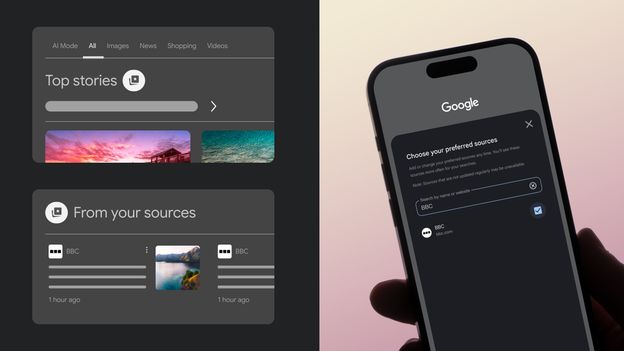
Table of Contents
The Battle for the Fold
For years, the Google Search experience has been a tug-of-war between algorithmic relevance and user intent. However, the recent aggressive integration of AI Overviews has shifted the landscape, often pushing organic publisher links further down the page in favor of synthesized summaries. In a subtle but significant pivot toward user agency, Google is rolling out a “Preferred Sources” feature that allows users to manually curate which publishers take precedence in their search results.
The tool is designed to solve a specific problem: the dilution of trust. As AI-generated content floods the index, users are increasingly seeking “known quantities”—legacy media outlets, niche expert blogs, or specific industry journals—that they know provide verified reporting. By allowing users to mark a site as a preferred source, Google is essentially creating a personalized whitelist that influences the ranking of the “Top Stories” carousel and other news-adjacent modules.
How the Preference Engine Works
Unlike a traditional bookmark or a follow on a social platform, Preferred Sources act as a signal to the Google Search ranking algorithm. When a user selects a publication, such as the BBC or a specific tech journal, Google increases the weight of that entity within the “from your sources” section of the search results. This doesn’t necessarily guarantee a #1 spot for every query, but it significantly boosts the visibility of that source within the Top Stories ecosystem across both desktop and mobile interfaces.
The implementation is designed to be frictionless. Users can manage these preferences through their account settings or via a direct interaction during a live search. When a user encounters a “Top Stories” module, a starred card icon now appears, allowing for a quick-add action. Once the source is toggled on, the search page refreshes to reflect the new priority, applying that preference to all subsequent queries associated with that Google account.
Strategic Implications for Publishers
This shift is particularly interesting when viewed through the lens of the current publisher crisis. With the rise of “zero-click searches,” where users get their answer from an AI summary without ever clicking through to the source, publishers are losing critical traffic. A mechanism that allows users to explicitly request a specific publisher’s content could provide a lifeline for high-authority sites that have a loyal, direct-seeking audience.
However, this also creates a new divergence in the web. We are moving away from a universal search index toward a fragmented, personalized discovery experience. If a significant portion of a user’s results is driven by their own manual preferences, the “discovery” aspect of search—finding a new, high-quality source you didn’t know existed—may be diminished in favor of an echo chamber of trusted brands.
Integration and Accessibility
To activate the feature, users must be signed into a Google account, as the preferences are tied to the user’s identity profile rather than the browser cache. This ensures that a preference set on a mobile device persists when the user switches to a desktop environment.
While Google has not released specific data on how this affects overall click-through rates (CTR) for publishers, the move aligns with a broader trend in software design: giving users a “manual override” when the automation feels too intrusive or inaccurate. In an era of generative AI, the ability to say “I trust this specific human organization over the AI’s summary” is a powerful utility.