Gigabyte’s Aero X16 Price Drop Makes it a Rare Mid-Range Powerhouse with 32GB RAM
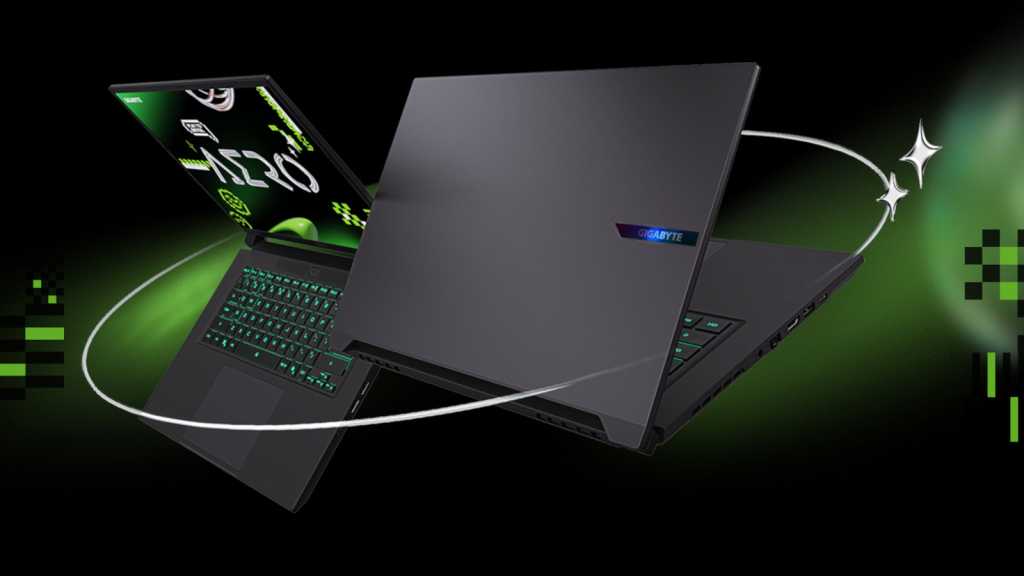
Table of Contents
A surprising shift in mid-range value
In a market where manufacturers typically gatekeep high memory capacities behind “Pro” or “Extreme” price tiers, Gigabyte has shifted the goalposts with a steep price correction for the Aero X16. Currently listed at $1,389.99—down from an original MSRP of $1,999.99—the machine is positioning itself as a high-value target for users who need more than the standard 16GB of RAM without spending two thousand dollars.
While the laptop has frequently hovered around the $1,800 mark in recent months, this specific drop represents a genuine pivot in its market positioning. It moves the Aero X16 from a niche creator-laptop into a territory where it competes directly with budget-focused gaming rigs, despite packing hardware that usually demands a premium.
Balancing efficiency with raw power
Under the hood, the Aero X16 utilizes the AMD Ryzen AI 7 350. This chip is designed more for efficiency and thermal management in thin-and-light chassis than for raw, multi-threaded brute force. However, when paired with the NVIDIA RTX 5070 laptop GPU, the system hits a specific sweet spot for enthusiast gamers and digital artists. The synergy here allows the laptop to maintain a relatively slim profile without immediately throttling under heavy loads.
The most compelling aspect of this specific SKU is the 32GB of DDR5 RAM. As modern titles and creative suites like Adobe Premiere and DaVinci Resolve become increasingly memory-hungry, 16GB is rapidly becoming the absolute floor. Seeing 32GB at this price point is rare. Crucially, Gigabyte has not soldered this memory to the board; both the RAM and the 1TB SSD are user-replaceable, providing a level of longevity and serviceability that is disappearing from modern ultrabooks.
The display trade-off
The Aero X16 features a 16-inch panel with a resolution of 2560×1600. At roughly 189 PPI, it isn’t the sharpest display on the market, but it serves the 16:10 aspect ratio well for both productivity and gaming. It is an IPS panel, which means it offers the color accuracy and viewing angles necessary for semi-professional work, though it lacks the infinite contrast ratios and deep blacks found in the OLED panels used in higher-end Razer or ASUS ROG Zephyrus models.
For the majority of users, the display is a fair trade-off. It is responsive and vibrant enough to justify the RTX 5070’s output without pushing the total cost of the machine back toward the $2,000 mark.
The battery bottleneck
The primary caveat remains the power draw. Despite the efficiency of the Ryzen AI processor, the Aero X16 struggles with endurance. Gigabyte’s marketing claims of 12 hours of battery life are optimistic and generally only achievable under extremely light loads with dimmed brightness.
Real-world telemetry suggests a more grounded reality: users can expect roughly 9 hours during mixed-use productivity and video playback. However, the moment the RTX 5070 engages for gaming, that window shrinks dramatically to around 2 hours. For anyone intending to use this as a portable gaming station, the power brick will need to be a permanent companion.
Competitive positioning
At $1,389.99, the Aero X16 is a formidable competitor. It weighs just 4.19 pounds, making it significantly more portable than the chunky “desktop replacement” laptops that often occupy this price bracket. While it doesn’t offer the prestige of an OLED screen or marathon battery life, it provides the three things that actually matter for performance: a modern GPU, ample RAM, and a chassis that doesn’t require a suitcase to transport.