The Lens of 2026: Analyzing the Intersection of Political Collapse and Drone Artistry
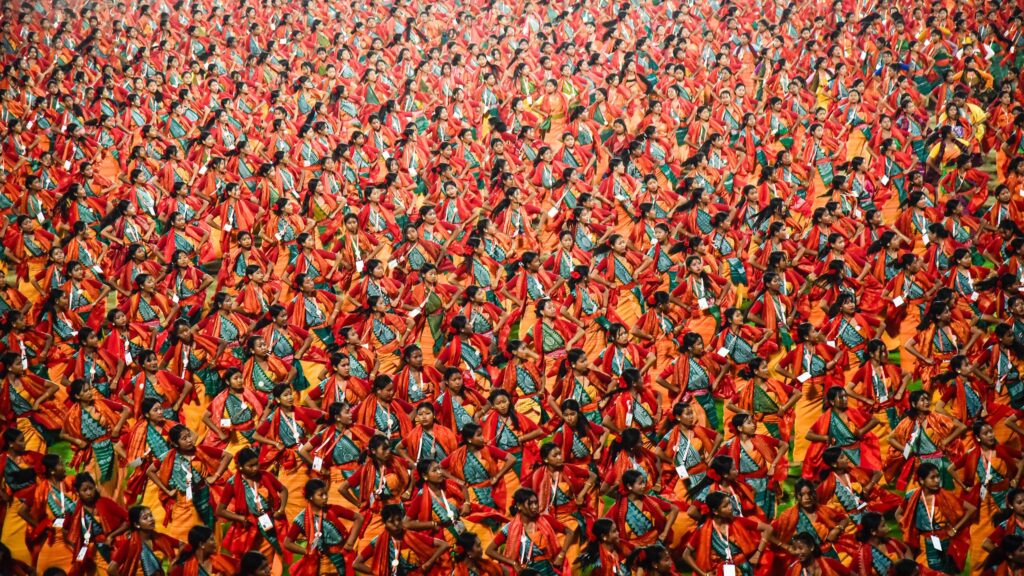
Table of Contents
The Weight of the Frame
Photography in 2026 is increasingly defined by a tension between raw, unplanned historical documentation and the hyper-calculated precision of modern imaging technology. As BBC Culture recently curated its mid-year selections of the most impactful images, two specific photographs emerged as case studies in this dichotomy: one capturing the collapse of a political dynasty, the other pushing the boundaries of scale and coordination through aerial tech.
The first image, which lacks the polished symmetry of a studio shot but possesses an undeniable gravitational pull, depicts ousted Venezuelan President Nicolás Maduro and his wife, Cilia Flores, arriving in Manhattan under DEA custody. For those tracking the geopolitical instability of the region, the image is less about art and more about the finality of a regime. Maduro’s thirteen-year tenure (2013–2026) was marked by a devastating economic spiral and a humanitarian crisis that displaced millions. To see him—a man who long projected an aura of untouchability—rendered powerless in the back of a US government vehicle is a visceral moment of historical closure.
From a technical standpoint, the photo doesn’t rely on complex lighting or daring angles. Its value lies in its provenance. In an era of generative AI and deepfakes, the authenticity of a captured moment in custody serves as an immutable record. It is a reminder that while we have shifted toward highly curated digital aesthetics, the most valuable images remain those that document the unexpected shifts of power.
The Architecture of Scale
Contrast this with the BBC’s selection of a record-breaking aerial shot from Guwahati, India. The image captures approximately 10,000 Bodo dancers in traditional attire, synchronized for the “Butterfly Dance” at Sarusajai Stadium. The result is a sprawling, organic tapestry of color and movement that eventually secured a Guinness World Record.
This image represents the current peak of consumer and professional drone application. The ability to map such a vast human collective into a single, coherent composition requires not just a steady hand, but sophisticated GPS stabilization and high-resolution sensors capable of maintaining clarity across a massive field of view. The dancers merge into a singular entity, turning a stadium into a canvas. It is a triumph of coordination—both human and technological.
However, the image raises a recurring debate in modern photography: the line between documentation and choreography. While the scale is breathtaking, some critics argue that such highly staged events risk becoming “visual spectacles” rather than photographs with a narrative arc. When compared to nominated works from the Travel Photography Awards, which often prioritize a candid connection between the subject and the environment, the Bodo dance image feels more like a technical achievement than a storytelling one.
The Evolving Role of the Image
These two images illustrate the split personality of visual media in 2026. On one side, we have the gritty, essential work of press photography that anchors us in reality. On the other, we have the soaring capabilities of drone technology that allow us to see the world from perspectives previously reserved for satellite imagery.
The juxtaposition of Maduro’s arrival in New York and the synchronized colors of India’s Bodo dancers suggests that the “best” photos of the year aren’t necessarily those with the best composition, but those that evoke the strongest reaction—whether that be a sense of justice served or a sense of awe at human scale. As we move into the second half of the year, the industry continues to grapple with how to balance these technical leaps with the fundamental need for authentic storytelling.