Lenovo Bets on Modular Hardware and Foldable Gaming at MWC 2026
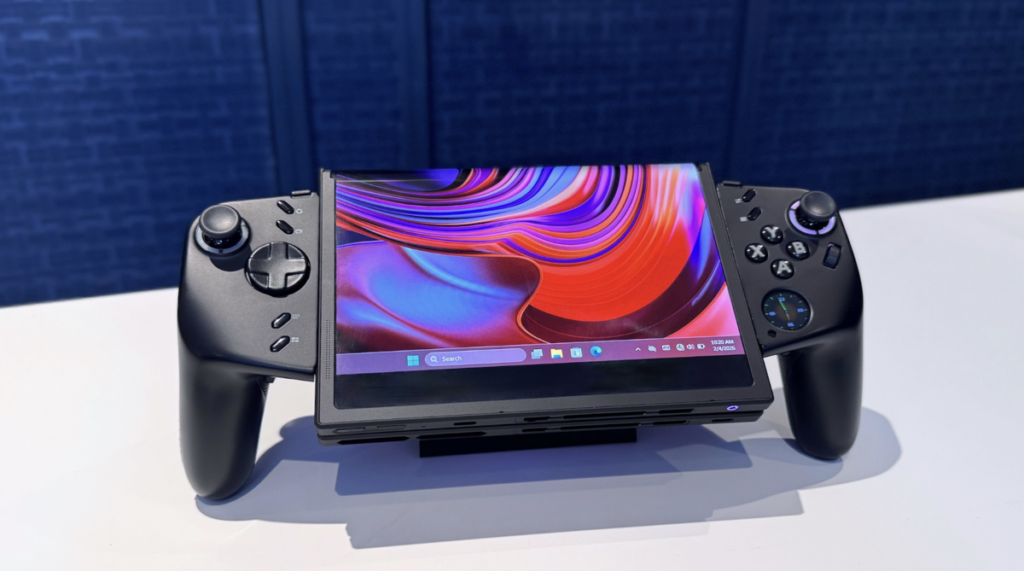
Table of Contents
Beyond the Laptop: Lenovo’s Pivot Toward Experimental Form Factors
Lenovo has arrived at Mobile World Congress 2026 with a hardware blitz that suggests the company is no longer content with merely refining the clamshell laptop. Following a dominant showing at CES, the PC giant is using Barcelona as a playground for a series of high-risk, high-reward concepts that blur the lines between handhelds, tablets, and workstations.
The centerpiece of the show is undoubtedly the Legion Go Fold Concept. While leaks had already begun to circulate, the physical unit reveals a device attempting to solve the eternal struggle of handheld gaming: screen real estate. The device features a 7.7-inch POLED display that unfolds into an expansive 11.6-inch canvas. Unlike previous foldable attempts, Lenovo has integrated a detachable wireless keyboard, effectively transforming the handheld into a compact Windows laptop. Under the hood, the prototype utilizes an Intel Lunar Lake chip paired with 32GB of RAM, suggesting that Lenovo is targeting a performance tier capable of handling AAA titles in a foldable chassis.
The Push for Sustainable, Modular Computing
Perhaps more significant for the long-term trajectory of the industry is the ThinkBook Modular AI PC Concept. In an era where planned obsolescence is the norm, Lenovo is experimenting with a Framework-inspired approach to hardware. The device allows users to swap out ports on the fly and features a detachable secondary display and keyboard that can be swapped based on the user’s specific workflow.
The technical implementation relies on integrated pogo-pin connectors for power and data transfer, creating a flexible system where the screen can act as a standalone second monitor via a built-in kickstand. This move toward modularity aligns with Lenovo’s recent efforts to improve repairability, such as the “Space Frame” design seen in the ThinkPad X1 Carbon Gen 14 Aura Edition. By making internals more accessible, Lenovo is signaling a shift toward extending the lifecycle of enterprise hardware.
Mainstream Refinements and 3D Innovation
While the concepts steal the spotlight, Lenovo is also updating its core consumer line. The new Yoga 9i 2-in-1 Aura Edition is the standout here, now powered by the Intel Core Ultra Series 3. In a rare move of listening to user feedback, Lenovo has re-added the headphone jack and reduced the overall weight. The device ships with a Yoga Pen Gen 2, featuring a magnetic case that unlocks a dedicated “Canvas mode” for digital artists. The Yoga 9i will hit shelves in May with a starting price of $1,949.
For the creative professional, the Yoga Book Pro 3D Concept introduces a dual-display setup that utilizes eye-tracking technology to render 3D objects without the need for glasses. Powered by an Nvidia GeForce RTX 5070, the machine is a clear play for the 3D modeling and architectural sectors, featuring snap-on pads that trigger context-specific touch menus on the lower screen.
The Ambient AI Ecosystem
Rounding out the announcements are two distinct entries into the “AI Companion” market. The AI Work Companion is a discreet, clock-like device designed to manage schedules and monitor screentime to combat burnout. In contrast, the AI Workmate is a more expressive, anthropomorphic device designed for the enterprise. It utilizes local on-device AI processing to scan documents, generate presentations, and project content onto surrounding surfaces using a flexible, lamp-like neck.
Lenovo also confirmed that its Qira personal AI agent will expand to over 20 devices in the coming weeks, suggesting that the hardware diversity on display at MWC is intended to serve as the physical interface for a broader, unified AI software layer.


