DJI Osmo Pocket 4P Debuts With Dual-Camera Array to Challenge Insta360’s Market Grip
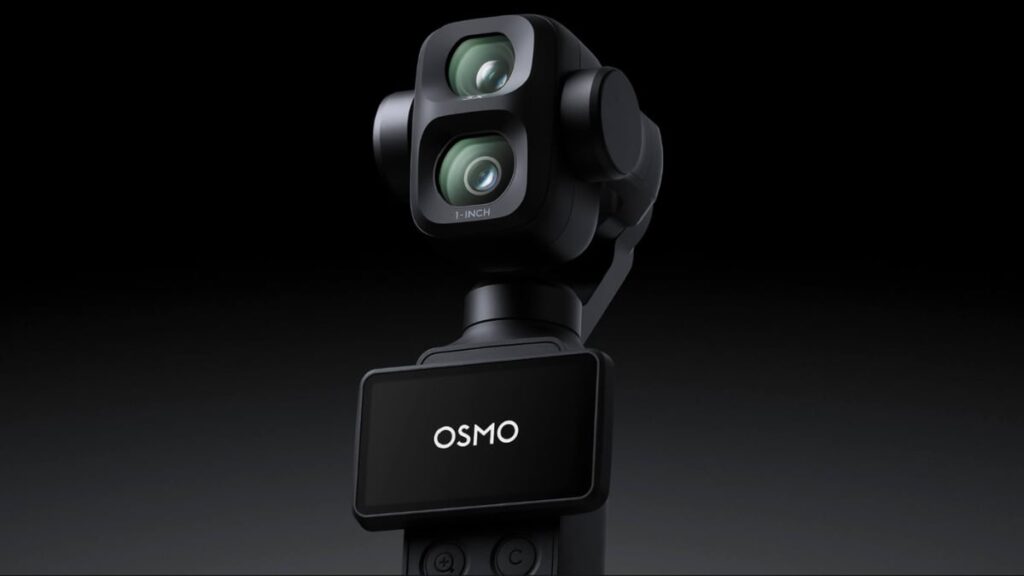
Table of Contents
A strategic shift in pocket cinematography
DJI has officially expanded its handheld imaging lineup with the launch of the Osmo Pocket 4P. While the Pocket series has traditionally relied on a single, high-quality sensor paired with a mechanical gimbal, the 4P marks a significant architectural shift. The device now sports a dual-camera system, introducing a dedicated mid-telephoto lens alongside its primary 1-inch wide-angle sensor.
This hardware pivot appears to be a direct response to the evolving needs of solo creators and a strategic move to counter the recent release of the Insta360 Luna Ultra. By adding a second focal length, DJI is attempting to solve the “digital crop” problem common in pocket cameras, allowing vloggers to achieve tighter shots without sacrificing the image quality associated with a 1-inch sensor.
Technical breakdown: Beyond the gimbal
The core appeal of the Osmo Pocket 4P remains its mechanical stability. The three-axis gimbal is back, but it is now powered by a more refined iteration of DJI’s tracking software. The new Smart Follow 8.0 is designed to handle more complex movements, reducing the “lost target” glitches that occasionally plagued previous versions during fast-paced movements or when subjects momentarily stepped out of frame.
For those leaning into professional post-production, the 4P introduces D-Log 2 recording. This updated color profile provides a wider dynamic range and more flexible grading options, bridging the gap between a consumer-grade vlogging tool and a professional cinema camera. The inclusion of built-in storage also suggests DJI is optimizing for quick-start workflows, reducing the reliance on high-speed microSD cards for short-form social content.
Pricing and bundle structures
The device is launching in China first, with two primary configurations. The standard bundle is priced at CNY 3,799 (approximately $525 / ₹53,200). This package includes the camera body, a flash attachment, a threaded grip, and a carrying case.
For users requiring a full production kit, DJI is offering a Vlog Kit for CNY 4,299 (approximately $595 / ₹60,200). This expanded bundle is notably more comprehensive, integrating the DJI Mic Mini 2 transmitter—a crucial addition given that audio is often the weakest link in handheld videography—along with a fill light module, remote control, and a mini tripod.
Market positioning and availability
The Osmo Pocket 4P arrives in two finishes: Black and Pearl White. Currently, pre-orders are limited to DJI’s official channels and authorized retailers within China. Global pricing and shipping dates have not yet been disclosed, though DJI typically rolls out international availability within several weeks of a domestic launch.
By diversifying the lens array, DJI is moving the Pocket line away from being a mere “stabilized webcam” and toward a pocketable multi-cam rig. The success of the 4P will likely depend on how well the software manages the transition between the wide and telephoto lenses; if the switch is seamless, DJI may have effectively neutralized the versatility advantage currently held by some of its competitors in the action-cam space.