Samsung bets on ‘AI Soccer Mode’ to drive mid-year TV sales with aggressive hardware bundles
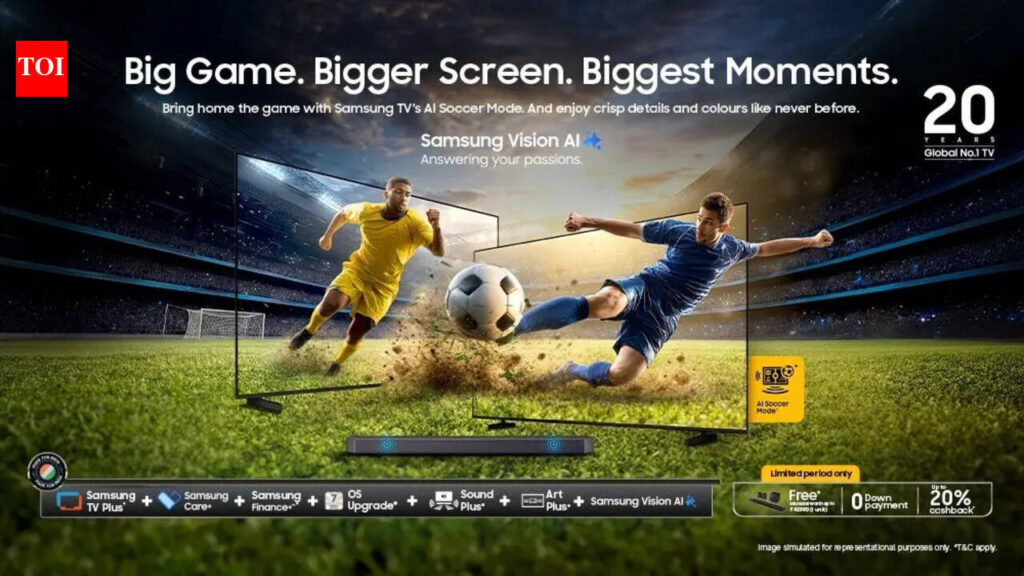
Table of Contents
The bid for the perfect match
Samsung is attempting to solve one of the most persistent frustrations for sports fans: the inconsistent quality of live broadcasts. With the launch of its new ‘AI Soccer Mode,’ the company is pivoting from general image enhancement to a hyper-specific, sports-centric processing engine designed to eliminate the motion blur and washed-out turf often seen during high-speed matches.
The feature isn’t just a preset. According to Samsung’s technical briefing, AI Soccer Mode utilizes a dedicated neural processing unit (NPU) to identify the ball in real-time, applying localized sharpening and motion interpolation that differs from the rest of the frame. This prevents the ‘soap opera effect’ often associated with standard motion smoothing, while ensuring that a fast-moving ball doesn’t leave a ghostly trail across the screen.
Beyond the pixels: The hardware push
Recognizing that software alone rarely drives a hardware upgrade mid-cycle, Samsung is pairing the AI rollout with an aggressive incentive program. The company is offering free soundbars with the purchase of select Neo QLED and OLED models, a move clearly intended to capture the home cinema market ahead of major international tournaments.
The synergy here is intentional. The AI Soccer Mode doesn’t stop at the visuals; it includes an audio layer that dynamically adjusts the soundstage to prioritize crowd noise and commentator clarity based on the action on screen. By bundling the soundbars, Samsung ensures that the hardware can actually deliver the spatial audio required to make the ‘stadium experience’ feel authentic.
Market timing and the cashback strategy
The timing of this release—mid-June—is a calculated strike. Samsung is leaning into the seasonal demand for larger screens during summer sports peaks, utilizing a tiered cashback system to lower the barrier to entry. While the specific cashback percentages vary by region, the strategy is a transparent effort to clear out 2025 inventory while seeding the market with AI-capable 2026 sets.
This puts Samsung in a direct skirmish with LG and Sony, both of whom have leaned heavily into ‘Game Mode’ and ‘Cinematic’ presets. By branding a specific ‘Soccer Mode,’ Samsung is attempting to own a vertical of the viewing experience, targeting a demographic that cares less about 4K HDR peaks and more about the fluidity of a 90-minute match.
Technical trade-offs
Industry analysts suggest that while AI-driven object tracking improves clarity, it can occasionally introduce artifacts during rapid camera pans—a common hurdle for NPU-based upscaling. However, Samsung claims that the updated algorithms in the 2026 lineup have reduced these glitches by nearly 30% compared to previous iterations.
For the end-user, the value proposition is straightforward: a bundled audio solution and a software suite that promises to make a standard cable feed look like a curated broadcast. Whether the AI’s ability to ‘track the ball’ is a genuine leap or a clever marketing wrapper for existing motion interpolation remains to be seen, but the aggressive bundling makes the upgrade an enticing prospect for the average sports enthusiast.