ASUS Expands Indian Chromebook Lineup with New CM-Series Detachables and Laptops
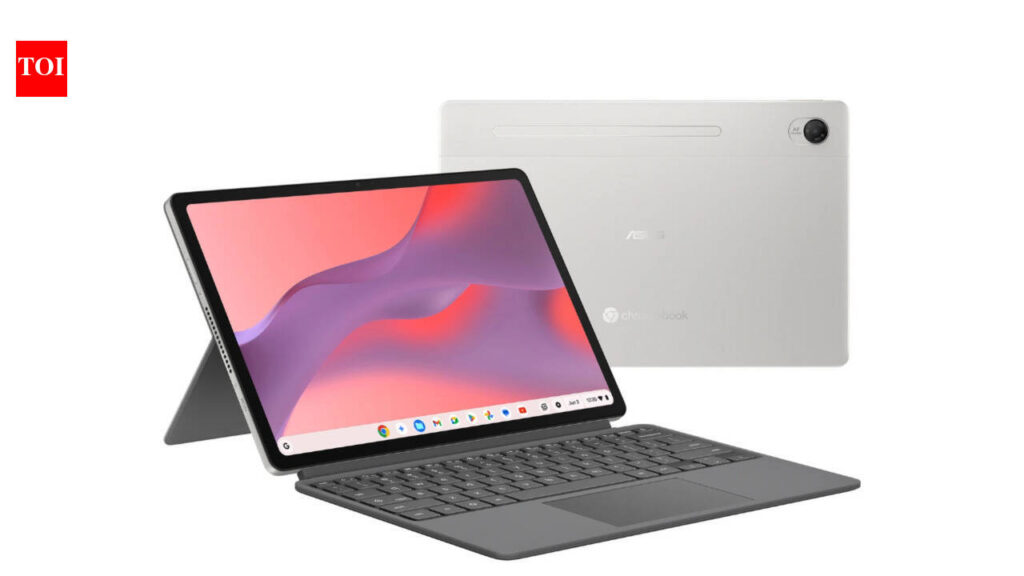
Table of Contents
A Strategic Push Into the Education Sector
ASUS has officially expanded its footprint in the Indian computing market with the launch of three new ChromeOS devices: the CM32 Detachable, the CM14, and the CM15. Starting at Rs 26,990, the new lineup signals a clear attempt by the Taiwanese hardware giant to capture the growing demand for affordable, cloud-centric computing among students and remote workers in India.
The move comes at a time when ChromeOS is attempting to shed its image as a “basic” browser-based system, evolving instead into a viable alternative for productivity through deeper integration with Google’s AI tools and Android app compatibility. By diversifying the form factors—offering both a detachable tablet and traditional clamshell laptops—ASUS is hedging its bets across different user personas, from the casual media consumer to the focused student.
The CM32 Detachable: Flexibility for the Budget Learner
The centerpiece of the affordable end of the spectrum is the CM32 Detachable. Designed for those who prioritize portability and versatility, the CM32 functions as both a tablet and a laptop. It features a detachable keyboard that allows users to switch modes quickly, making it an attractive option for digital note-taking and light media consumption.
Technically, the CM32 focuses on efficiency over raw power. While the specific processor variants vary by SKU, the device is built to handle the lightweight nature of ChromeOS without sacrificing battery life. The inclusion of a touchscreen is standard here, providing a more intuitive interface for those moving away from traditional Windows or macOS environments.
Scaling Up: The CM14 and CM15
For users who require a more traditional typing experience and larger screen real estate, ASUS has introduced the CM14 and CM15. These models move away from the detachable gimmickry in favor of a sturdy, traditional chassis designed for long hours of productivity.
The CM14 serves as the mid-range bridge, balancing portability with a keyboard layout that doesn’t feel cramped. The CM15, meanwhile, targets users who need a larger display for multitasking—essential for those who frequently use split-screen views to manage Google Docs, Sheets, and browser tabs simultaneously. Both models leverage the efficiency of the ARM-based or low-power Intel architectures typically found in the CM series, ensuring that fans aren’t roaring during a quiet classroom session.
Technical Trade-offs and Market Positioning
At the Rs 26,990 starting price point, these devices aren’t competing with high-end MacBook Airs or premium Windows ultrabooks. Instead, they are positioned directly against entry-level laptops from HP and Acer, as well as high-end Android tablets. The primary value proposition here is the seamlessness of the Google ecosystem; for a user already embedded in Drive, Gmail, and Meet, the friction of switching OSs is minimal compared to the cost savings.
However, the success of this rollout will depend on how well ASUS can communicate the value of ChromeOS to a market that has traditionally viewed “cheap laptops” as synonymous with low-end Windows machines. The shift toward web-based applications means that the hardware specs—which would be considered meager for Windows—are more than sufficient for a fluid ChromeOS experience.
Availability and Pricing
The new CM-series Chromebooks are expected to be available through major e-commerce platforms and ASUS authorized retail partners across India. With pricing tiered across the three models, ASUS is effectively covering the spectrum from the ultra-budget student market to the small-business owner looking for a dependable, low-maintenance secondary device.