Xiaomi Launches POCO Pad C1: A Pragmatic Budget Tablet Betting on the Snapdragon 6s
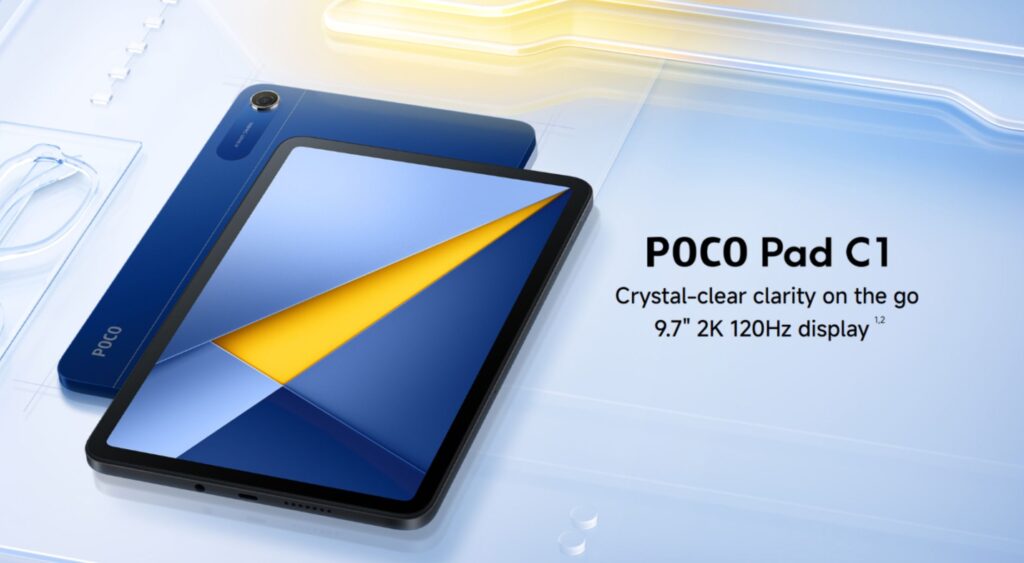
Table of Contents
The Entry-Level Pivot
Xiaomi has officially expanded its tablet portfolio with the global debut of the POCO Pad C1. While the industry has spent the last year racing toward high-end OLED panels and desktop-class processing, the C1 is a calculated pivot toward the pragmatic consumer—those who need a dependable media consumption device without the $500 price tag.
The POCO Pad C1 arrives at a time when budget tablets are often plagued by sluggish performance and poor screen quality. Xiaomi is attempting to solve this by pairing a surprisingly sharp 2K display with a modest but efficient chipset, positioning the device as a bridge between basic e-readers and high-performance workstations.
Display Performance and Build
The centerpiece of the C1 is its 9.7-inch IPS panel. In a move that separates it from many of its entry-level competitors, Xiaomi has equipped the screen with a 120Hz refresh rate and a 2K resolution. This suggests that while the device isn’t intended for heavy video editing, the UI animations and scrolling will feel fluid, mimicking the experience of more expensive slabs.
Brightness is another area where the C1 tries to punch above its weight. With a peak brightness of 500 nits and a boosted 600 nits for outdoor visibility, the device should remain legible in varied lighting conditions. To cater to the ‘bedtime browsing’ crowd, the display carries TUV Rheinland certification for flicker reduction and low blue light emissions, a standard now expected in the modern display landscape.
Physically, the tablet maintains a slim profile. At 7.4 mm thick and weighing in at 406 grams, it avoids the bulkiness that often plagues budget tablets. The metal chassis provides a tactile rigidity that makes the device feel more like a premium product than its projected sub-$300 price point would suggest.
Under the Hood: The Snapdragon Trade-off
The internal architecture is where the C1 makes its most significant compromises. It is powered by the Qualcomm Snapdragon 6s Gen 2, a 4G-capable processor designed for stability rather than raw power. Paired with 6GB of RAM and 128GB of internal storage, the device is clearly optimized for ‘light’ multitasking—think PDFs, web browsing, and streaming apps like Netflix or Disney+.
Notably, the C1 is shipping with HyperOS 3.0. The integration of AI features like ‘Circle to Search’ and Google Gemini brings a layer of modern utility to the hardware, allowing users to interact with the web more intuitively despite the limited processing overhead. For those needing more space for offline media, the inclusion of a microSD slot supporting up to 2TB of expansion is a critical addition that high-end tablets have largely abandoned.
Battery and Connectivity
Powering the experience is a 7600 mAh battery. While the 18W charging speed is modest by today’s standards—meaning users should expect a slow top-up process—the efficiency of the Snapdragon 6s allows for impressive longevity. Xiaomi claims up to 15 hours of continuous video playback, a figure that aligns with the device’s intended use as a portable cinema.
In a move that will please audiophiles and legacy users, the POCO Pad C1 retains the 3.5mm headphone jack. Combined with dual speakers, the device is well-positioned as a dedicated media hub. The camera setup is utilitarian: an 8MP rear sensor and a 5MP front-facing camera. These are sufficient for occasional video calls or scanning documents, but they aren’t intended for any serious photography.
While regional pricing has not been fully disclosed across all markets, early indicators suggest the device will retail for well under $300, making it a competitive alternative for students and casual users who find the iPad or Samsung Galaxy Tab series prohibitively expensive.