UNESCO Heritage Site Under Fire: Russian Strikes Hit Kyiv Pechersk Lavra Monastery
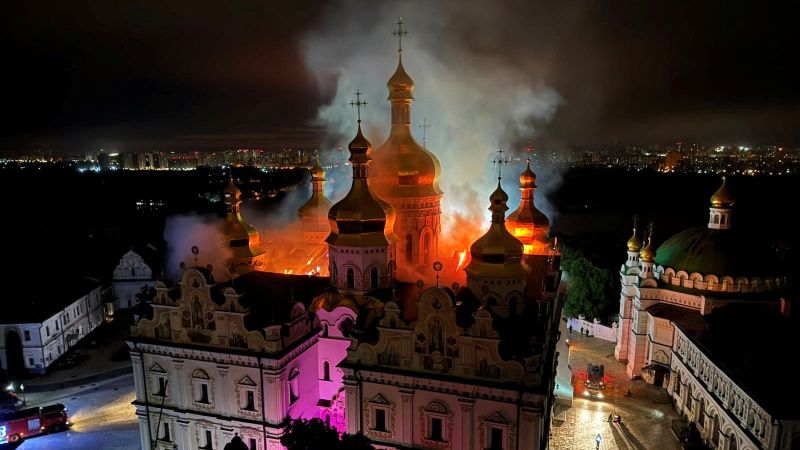
Table of Contents
A Millennium of History Under Fire
The heart of Kyiv is currently grappling with the aftermath of a devastating overnight offensive. The Kyiv Pechersk Lavra, a spiritual cornerstone of Eastern Orthodox Christianity and a UNESCO World Heritage site, has been struck by Russian missile and drone fire. Images emerging from the scene show plumes of smoke and active fires billowing from the towers and domes of the Dormition Cathedral, one of the most sacred spaces in the monastery complex.
- Immediate Impact: Fires reported at the Dormition Cathedral; extensive damage to historic structures.
- Human Cost: At least four confirmed dead and over 20 wounded in Kyiv; additional casualties reported in Kharkiv.
- Infrastructure: Approximately 140,000 households in northern Kyiv are without power.
- Cultural Status: The site was already listed as ‘World Heritage in Danger’ by UNESCO in 2023.
The strike occurred early Monday, June 15, 2026, as part of a broader wave of attacks targeting both military and civilian infrastructure. Tetyana Berezhna, Ukraine’s Minister of Culture, confirmed the damage in an official statement, while Metropolitan Epiphanius of Kyiv and All Ukraine described the event as a crime against humanity, history, and faith.
The Cultural Significance of the Kyiv Pechersk Lavra
To understand why this strike is viewed by the international community as more than a tactical military move, one must consider the scale of the Lavra. Founded in the 11th century, the monastery is not merely a collection of buildings but a complex network of surface churches and vast underground cave systems where saints have been interred for nearly a thousand years. UNESCO describes the complex as a “masterpiece of Ukrainian art,” blending Byzantine and Baroque architectural influences.
The Dormition Cathedral, which bore the brunt of the current damage, is the center of the monastery’s spiritual life. The destruction of such a site is often interpreted by historians and cultural anthropologists as “mnemocide”—the intentional erasure of a people’s collective memory and identity. By targeting a site that defines the origins of the Kyivan Rus’, the strikes target the very lineage of Ukrainian statehood.
Technical Analysis of the Infrastructure Collapse
The attack was not limited to the monastery. According to Mayor Vitaliy Klitschko, the precision and scale of the strikes targeted the northern energy sector, plunging 140,000 homes into darkness. This pattern is consistent with previous Russian strategies of “winterization” or infrastructure degradation, where energy grids are neutralized to hinder civilian resilience and logistical movement.
Reports from the ground indicate a combination of cruise missiles and one-way attack drones (Shahed-type). These assets are often launched in waves to saturate air defense systems (like the Patriot or IRIS-T systems deployed in Kyiv), allowing a small percentage of munitions to penetrate the inner defense perimeter and hit high-value targets, whether those targets are power substations or historical monuments.
The Geopolitical Backdrop: Trump, Zelensky, and Putin
The timing of this escalation is particularly poignant. These strikes follow high-level diplomatic movements involving the United States. President Volodymyr Zelensky recently confirmed conversations with U.S. President Donald Trump regarding the cessation of hostilities. Simultaneously, the Kremlin confirmed that Trump had spoken with President Vladimir Putin on Sunday.
Military analysts suggest that such escalations often precede diplomatic negotiations, serving as a means for the aggressor to secure more leverage or “facts on the ground.” By striking a high-profile cultural target and crippling the power grid, Moscow may be attempting to signal that the cost of continued resistance remains high, even as the U.S. administration explores peace frameworks.
Comparing the Impact: Kyiv vs. Kharkiv
While the world’s attention is fixed on the flames at the Lavra, the tragedy extends beyond the capital. In Kharkiv, Interior Minister Ihor Klymenko reported at least five deaths and five injuries following Russian bombardments. Kharkiv, due to its proximity to the Russian border, has faced a more sustained and visceral artillery onslaught, whereas Kyiv’s damage is often characterized by high-impact missile strikes on strategic and cultural nodes.
| Metric | Kyiv Impact | Kharkiv Impact |
|---|---|---|
| Human Casualties | 4+ dead, 20+ wounded | 5+ dead, 5+ wounded |
| Cultural Damage | Severe (UNESCO site hit) | Widespread urban destruction |
| Power Grid Status | 140k households offline | Intermittent/Critical failures |
| Primary Weaponry | Missiles and Drones | Artillery and Glide Bombs |
What This Means for International Law and Heritage Protection
The 1954 Hague Convention for the Protection of Cultural Property in the Event of Armed Conflict explicitly prohibits the targeting of cultural heritage. The fact that the Kyiv Pechersk Lavra was already on UNESCO’s “World Heritage in Danger” list underscores the premeditated risk these sites face. The international community now faces a critical question: does the repeated targeting of such sites warrant a shift from “cultural monitoring” to “war crime prosecution” specifically for cultural genocide?
For the average citizen, this means that the war is no longer just about borders or political ideology, but about the physical erasure of a civilization’s architectural record. When a 1,000-year-old cathedral is damaged, that loss is permanent; restorations are approximations, not replacements of the original historical essence.
Frequently Asked Questions
Is the Kyiv Pechersk Lavra still open to the public?
Access is currently heavily restricted due to active fires and the ongoing security threat. Ukrainian emergency services are prioritizing the containment of fires and the safety of the complex’s spiritual and physical remains.
What does ‘World Heritage in Danger’ mean?
This is a status granted by UNESCO to sites that are threatened by serious and imminent danger, such as armed conflict or natural disasters. It allows for increased international funding and technical support for protection and restoration.
Why would Russia target a monastery?
While official Russian narratives often claim they target military objectives, critics and international observers argue that strikes on religious and cultural sites are designed to demoralize the population and erase Ukrainian national identity.
How many people were affected by the power outage in Kyiv?
Mayor Vitaliy Klitschko reported that approximately 140,000 households in the northern part of the city lost electricity following the strikes.
Who is the Metropolitan Epiphanius?
He is the primate of the Orthodox Church of Ukraine, serving as a spiritual leader for millions of Ukrainians and a vocal advocate for the protection of the country’s religious heritage.