U.S. Military Distances Itself from Israeli Strikes on Iran as Tehran Signals Tactical Pause
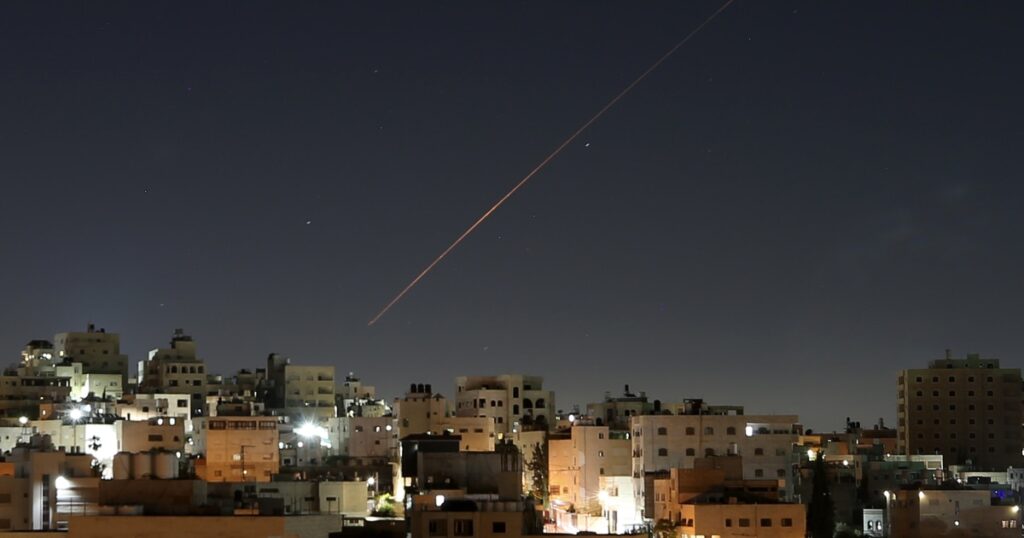
Table of Contents
Washington Clarifies Role in Regional Escalation
The United States military has explicitly denied any operational involvement in recent Israeli strikes directed at Iran. According to a senior U.S. official, the American military did not conduct strikes, nor did it cooperate in the execution of the offensive. This clarification comes as the region teeters on the edge of a broader conflict, following a volley of projectiles that saw the U.S. maintain a defensive posture without intercepting Iranian missiles.
The official noted that while CENTCOM Commander Adm. Brad Cooper has maintained consistent communication with senior Israeli military leadership, these interactions did not translate into joint combat operations. Crucially, U.S. intelligence assessments suggest that Iran did not target American personnel, assets, or installations during its retaliatory strikes, a detail that suggests a calculated effort by Tehran to avoid triggering a direct military confrontation with Washington.
Tehran’s ‘Suspension’ and the Proxy Equation
In a move that has sent ripples through global energy markets, the Khatam al-Anbiya Central HQ—Iran’s central military command—announced a “suspension” of its armed forces operations. While the statement frames the previous attacks as a “painful response” and a lesson for the “Zionist regime,” the pause is seen by analysts as a strategic signal. By avoiding strikes on U.S. bases or commercial shipping lanes in the Gulf, Tehran appears to be signaling that its aggression is specifically tied to the conflict in Lebanon rather than a desire for a total regional war.
However, this suspension is heavily conditional. The Iranian military warned that any continued hostile actions, particularly in southern Lebanon, would be met with “far more severe and crushing measures.” This underscores the central tension of the current crisis: Iran insists that any comprehensive peace deal must include the status of Lebanon and its proxy, Hezbollah, while the U.S. and Israel have pushed to keep the Lebanese theater as a separate operational issue.
Market Volatility and Diplomatic Maneuvering
The intersection of military movement and economic stability was immediately evident in the commodities market. Crude oil prices, which spiked by as much as 5.4% on fears of an all-out war, plummeted following Tehran’s announcement of a military pause. U.S. crude eventually settled with a modest 1.5% gain, while Brent crude retreated from a 5% climb to just 1.3%.
This volatility highlights the hypersensitivity of the energy sector to geopolitical headlines. Similarly, stock futures reacted positively to the news of a potential cooldown, with Nasdaq 100 futures rising 1.4% as investors breathed a temporary sigh of relief.
Behind the scenes, diplomatic channels are working at high velocity. Qatar, a critical U.S. ally and long-term mediator, has intensified its efforts. Prime Minister and Foreign Minister Sheikh Mohammed bin Abdulrahman bin Jassim Al Thani recently held talks with Iranian counterpart Abbas Araghchi to review mediation efforts between Washington and Tehran. This diplomatic track is operating in parallel with public assertions from President Donald Trump, who claimed via Truth Social that both Israel and Iran are seeking an “immediate ceasefire,” though no formal agreement has been ratified.
The European Perspective
The European Union has expressed grave concern over the cyclical nature of these escalations. Kaja Kallas, the bloc’s high representative for foreign affairs, told reporters in Brussels that the Middle East “does not need escalation.” Speaking during a meeting of E.U. defense ministers, Kallas emphasized the necessity for all parties to return to the negotiation table to prevent a localized spike in violence from evolving into a systemic regional collapse.
As Lebanon’s national news agency continues to report Israeli airstrikes in the south and sirens sound across northern Israel, the stability of the current “suspension” remains fragile. The lack of U.S. involvement in the strikes may provide a temporary diplomatic buffer, but the underlying strategic goals of the combatants remain fundamentally at odds.