The Tempo War: How High-Frequency Satellite Intel is Redefining European Border Security
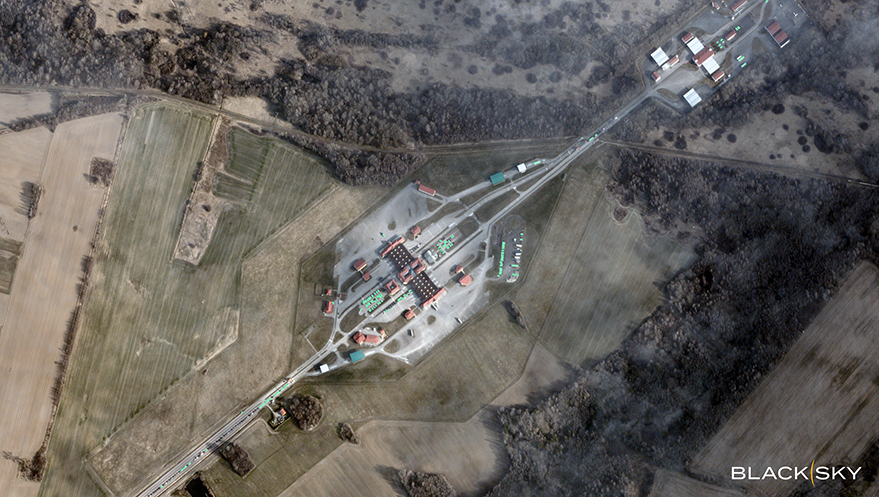
Table of Contents
Beyond the Static Line
For decades, border security was viewed as a game of geography—managing a static line through patrols, fences, and fixed sensor arrays. But across Europe, the nature of border activity has shifted. From the Mediterranean coasts to the eastern frontiers, movement is no longer linear or predictable. Staging areas for irregular migration or smuggling networks now disperse in hours; small watercraft alter routes based on real-time patrol gaps; and makeshift logistics hubs appear and vanish with surgical precision.
The critical bottleneck for national security organizations and ministries of the interior is no longer a lack of data, but the tempo of that data. In a landscape where a vehicle convoy can reposition between two traditional satellite passes, the ability to observe and react in near real-time has become the primary strategic advantage.
Compressing the Decision Cycle
This shift is driving a surge in the adoption of commercial space-based intelligence. Companies like BlackSky are moving the needle by focusing on high-frequency revisit rates rather than just raw resolution. While a single high-resolution image can tell a commander what happened yesterday, high-frequency monitoring tells them what is happening now.
At the tactical level, this allows for a drastic compression of the OODA loop (Observe, Orient, Decide, Act). By utilizing satellite constellations that provide hourly or daily revisits, agencies can detect anomalies—such as unusual concentrations of vehicles in non-transit corridors or the sudden emergence of temporary encampments—before they evolve into full-scale crises.
The integration of AI-enabled analytics is what makes this volume of data manageable. Rather than forcing human analysts to manually scan thousands of square kilometers of imagery, automated systems now flag and classify objects of interest. When an AI identifies a cluster of maritime vessels maneuvering outside established shipping lanes, the alert is pushed to commanders immediately, shifting the operational posture from reactive to proactive.
From Tactical Alerts to Pattern-of-Life Analysis
While immediate alerts handle the “now,” the true value of persistent monitoring lies in the accumulation of data over time. This allows security agencies to perform what is known as “pattern-of-life” analysis. By tracking how logistics nodes shift across weeks or months, planners can identify the underlying infrastructure of organized facilitation networks.
For example, if satellite data reveals that staging areas are moving in predictable cycles or that specific maritime approaches are seeing sustained pressure, ministries can reposition assets and personnel before a sector becomes overwhelmed. This reduces the reliance on fragmented ground reports, which are often delayed or biased by the limitations of local patrol visibility.
The Strategic Shift in Posture
At a higher level, this technology is changing how governments view sovereign risk and resource allocation. The ability to monitor border environments as dynamic systems—rather than fixed lines—allows for more informed diplomatic and operational decisions. When policymakers can see the development of infrastructure supporting illegal networks in real-time, they can apply pressure more effectively, whether through targeted interdiction or cross-border coordination with neighboring states.
The maturation of the commercial space sector has effectively democratized high-cadence intelligence. What was once the sole province of superpower military satellites is now accessible via commercial platforms. For European border agencies, this means the ability to maintain a persistent eye on critical nodes without the massive overhead of maintaining a government-owned constellation.
As border environments continue to evolve in complexity, the technical ability to maintain a high-tempo intelligence flow is no longer a luxury—it is a fundamental requirement for modern national security.