Biomedical Diplomacy or Strategic Extraction? Africa Braces Against Trump-Era ‘America First’ Health Deals
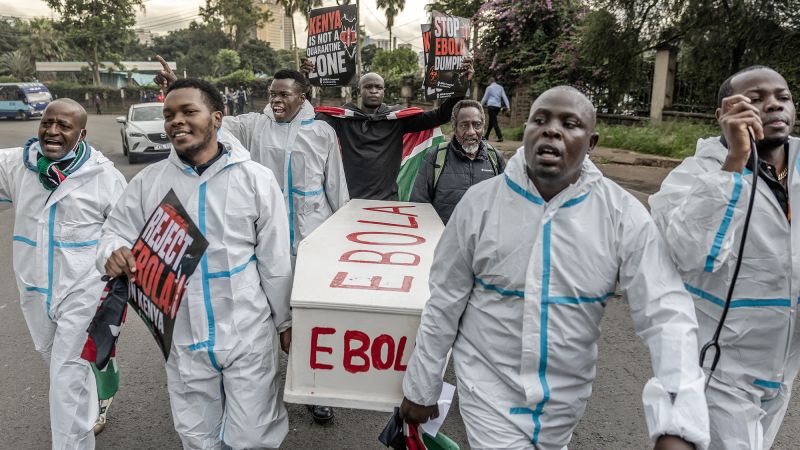
Table of Contents
The Nairobi Outcry
The chants echoing through the streets of Nairobi last week were not about economic policy or electoral disputes, but about biosecurity and sovereignty. “Kenya is not an American colony!” shouted protesters gathered to oppose a US-funded plan to build an isolation ward designed specifically for Americans exposed to Ebola abroad.
The proposal has ignited a firestorm of anxiety in a nation that has never recorded a single case of the viral hemorrhagic fever. While the nearest outbreaks are situated over 1,500 miles away in Uganda and the Democratic Republic of Congo (DRC), the prospect of importing a high-risk pathogen for the benefit of foreign nationals has created a profound sense of risk asymmetry. Critics argue that the facility essentially treats Kenya as a hazardous waste site for biological risks that the U.S. government is unwilling to manage on its own soil.
Despite a court order halting construction, President William Ruto has remained steadfast, framing the project as a moral obligation. Ruto argued that rejecting U.S. funding after decades of American aid would be “very inhuman.” However, this perspective is increasingly out of step with a growing nationalist sentiment. Rigathi Gachagua, Ruto’s former deputy and a vocal critic, described the arrangement as a “double standard,” questioning why the U.S. considers the risk acceptable in Nairobi but not in Washington D.C.
From Aid to Transactionalism
The tension in Kenya is a symptom of a broader shift in U.S. foreign policy. Since returning to office, President Donald Trump has pivoted away from the traditional humanitarian model championed by the now-dismantled U.S. Agency for International Development (USAID). In its place is the “America First Global Health Strategy,” which replaces broad-based aid with bilateral, transactional agreements.
For decades, USAID funded the backbone of the fight against HIV/AIDS, malaria, and tuberculosis across Africa. The new model focuses on “mutual benefit,” a phrase that many African leaders interpret as a euphemism for strategic extraction. Washington claims the goal is to reduce aid dependency; however, the terms attached to these new health packages are beginning to reveal a deeper interest in data and raw materials.
The Cost of the ‘Health Package’
The friction is perhaps most evident in Zambia, a global powerhouse in copper production. Last month, Foreign Minister Mulambo Haimbe expressed hesitation over a proposed $2 billion health package. The sticking point wasn’t the funding, but the fine print: the deal reportedly required “preferential treatment of US companies over Zambia’s critical minerals” and the sharing of sensitive citizen health data.
Copper is the bedrock of the green energy transition, essential for electric vehicles and power grids. By linking healthcare funding to mineral access, the U.S. is attempting to secure a supply chain that is currently heavily influenced by China. This “health-for-minerals” swap is increasingly viewed not as diplomacy, but as leverage.
Similar objections have surfaced in Zimbabwe and Ghana. Zimbabwean government spokesperson Nick Mangwana highlighted a worrying lack of reciprocity, noting that the U.S. is asking for long-term access to biological resources and data without guaranteeing that the resulting vaccines or treatments would be affordable or accessible to the populations providing the data.
The Strategic Pivot in the DRC
This pattern extends into the Democratic Republic of Congo, where the pursuit of stability in the mineral-rich east is being viewed through a lens of corporate interest. The region is home to massive deposits of coltan, an essential component for smartphones and advanced electronics. Activists, including Victor Tesongo of the AFC rebel coalition, argue that the U.S. cannot maintain the posture of a neutral peacebroker while simultaneously maneuvering for strategic access to the DRC’s tech-critical resources.
As Washington attempts to rewrite its relationship with the continent, it is finding that the era of unconditional aid is over, but the era of transactional deals may be premature. African nations are no longer viewing these agreements as generosity, but as contracts—and they are beginning to negotiate for better terms.