The ‘Silent Death’ Doctrine: How Ukraine is Scaling an Unmanned Army to Counter Russian Manpower
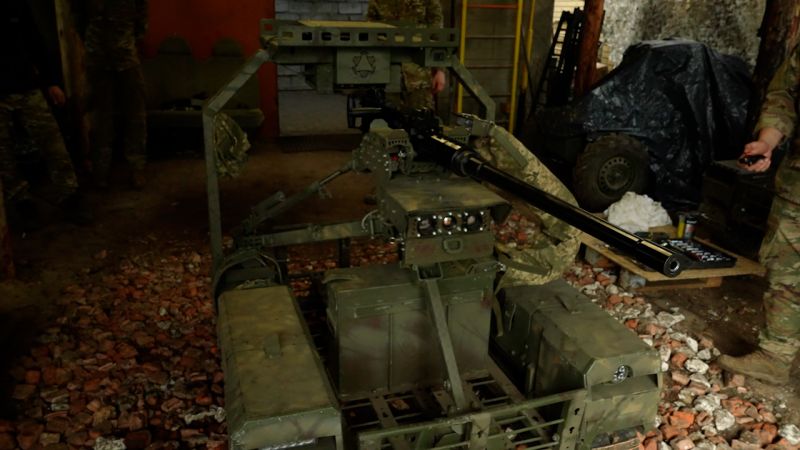
Table of Contents
The Shift to Remote Attrition
In a dimly lit underground bunker in eastern Ukraine, the sounds of war have been replaced by the hum of cooling fans and the clicking of mechanical keyboards. Here, veterans of some of the conflict’s bloodiest urban battles—men who survived the meat-grinders of Bakhmut and Avdiivka—now command the battlefield from ergonomic gamer chairs. They are not leading charges; they are managing livestreams.
Ukraine has fundamentally pivoted its tactical approach to combat a persistent manpower deficit and uncertain Western munitions deliveries. The result is a massive scaling of unmanned systems—ground robots, reconnaissance drones, and remotely piloted tanks—that are transforming the frontline into a laboratory for autonomous attrition. According to President Volodymyr Zelensky, this shift is already yielding results, with unmanned machines conducting roughly 22,000 missions since January. Most notably, Zelensky recently claimed the first capture of a Russian position achieved entirely through the coordination of robots and drones.
The Mechanics of ‘Silent Death’
For the Russian infantry, these machines have earned a grim moniker: “silent death.” The Ukrainian units utilize four-wheeled chassis carrying heavy explosive payloads. Unlike traditional artillery, which announces its presence with a whistle and a boom, these ground robots move with a low acoustic profile, often remaining undetected until they are within 10 meters of their target—well inside the lethal blast radius.
The operational logic is grounded in a brutal mathematical trade-off. The NC13 unit of the Third Assault Brigade reports that over 164 specific assaults, the use of robots provided the same tactical effect as deploying 2,300 troops. Given the attrition rates of urban combat, commanders estimate that using humans for these specific missions would have resulted in 1,000 casualties (killed or wounded). By substituting silicon and steel for soldiers, Ukraine is effectively preserving its remaining human capital while maintaining offensive pressure.
Overcoming the Electronic Fog
The transition to a robot-centric army has not been without technical friction. The battlefield in eastern Ukraine is currently one of the most contested electromagnetic environments in history. Electronic warfare (EW) and GPS spoofing are constant threats. Operators frequently report the loss of signal or the “spoofing” of vehicles like the Salamander 6, forcing them to navigate via manual plotting and pre-recorded daytime drone feeds.
This has shifted the value of the soldier from the rifleman to the technician. The new heroes of the front are people like Gora, a 22-year-old embedded hardware and software engineer. Her role is not to fire a weapon, but to optimize the communication mesh between vehicles and operators, ensuring that a signal loss doesn’t turn a sophisticated robot into an expensive piece of scrap metal.
The Strategic Objective
Kyiv’s broader strategy is now focused on high-volume attrition. By targeting a goal of 35,000 Russian casualties per month, Ukraine aims to force the Kremlin into politically volatile recruitment drives within Russia’s urban centers and middle class. This approach is supported by recent intelligence from the British spy agency GCHQ, which estimates total Russian deaths at approximately 500,000.
As the war evolves, the nature of combat is becoming increasingly detached. Mykola “Makar” Zinkevych, a unit commander, notes that while traditional war relied on discipline and individual skill, technology now dictates the outcome. From mounting Browning heavy machine guns onto tank tracks to deploying swarm-capable drones, Ukraine is betting that the side that iterates its software the fastest will ultimately hold the line.