The Omega Block: How a Rare Atmospheric Pattern is Pushing European Infrastructure to the Breaking Point
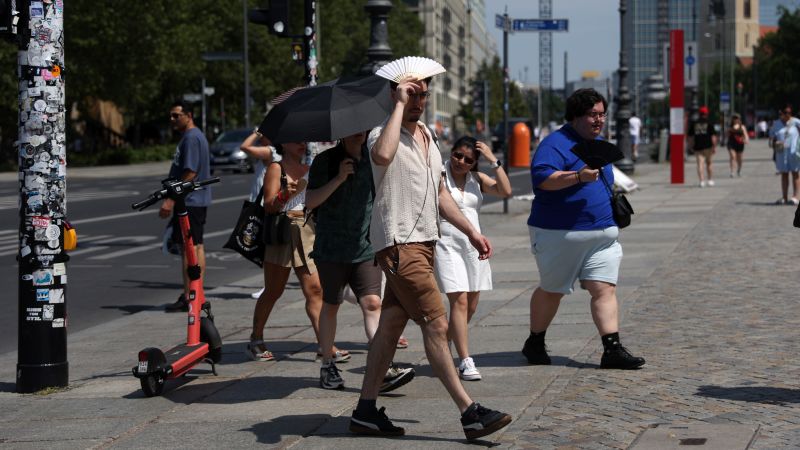
Table of Contents
The Atmospheric Trap
Europe is currently grappling with a phenomenon known as an Omega block—a high-pressure system that resembles the Greek letter Ω—which has effectively trapped a massive dome of hot air over the continent. Unlike transient weather fronts, this pattern stalls, forcing temperatures to climb relentlessly and preventing cooler Atlantic air from penetrating the mainland. The result is a systemic thermal shock that has seen Denmark record its highest temperature since measurements began in 1874, reaching 37°C north of Aarhus.
In Germany, the situation has escalated beyond mere discomfort. Preliminary data from the National Meteorological Service indicates a new national record of 41.3°C near Saarbrücken. While the human toll is evident in the rising hospitalization rates across France and Italy, the secondary effect is a cascading failure of critical physical and digital infrastructure not designed for these extremes.
Infrastructure Under Thermal Stress
The most immediate casualty of the heatwave has been the transport sector. Rail networks are particularly vulnerable to “track buckling,” where the steel rails expand under extreme heat, causing them to warp or bend. To mitigate the risk of derailment, German national rail operator Deutsche Bahn has been forced to allow customers to cancel long-distance travel without charge, effectively throttling capacity to reduce the load on the network.
The crisis extends to the road systems. In the region surrounding Hamburg, authorities were forced to partially close one of Germany’s busiest motorways after the asphalt literally split under the heat. This type of pavement failure highlights a significant gap in current urban engineering; most European roads were paved using materials rated for historical norms that are now being rendered obsolete by the increasing frequency of 40°C+ events.
The Energy Paradox and Hardware Demand
As temperatures peak, the European power grid is facing a dual-threat scenario: skyrocketing demand for cooling and decreased efficiency in power generation. Thermal power plants often struggle to operate at full capacity when the water used for cooling becomes too warm, while rail disruptions hamper the movement of energy-related logistics.
This environmental pressure has triggered a massive market shift in consumer electronics. Asian air conditioning manufacturers are reporting a surge in European sales, marking a pivot in a region that historically relied more on passive cooling and ventilation. However, this rapid adoption of energy-intensive cooling tech creates a feedback loop, placing further strain on local electrical grids already struggling with the heat.
The Climate Attribution Factor
Meteorologists and climate scientists emphasize that this is not a standard seasonal fluctuation. Analysis suggests that the current night-time temperatures—which prevent the environment and infrastructure from “resetting” or cooling down—are 100 times more likely due to human-induced climate change than they would have been just two decades ago. This lack of nocturnal cooling is critical; when asphalt and steel do not cool overnight, the heat accumulates, leading to the structural failures seen in the Hamburg motorway and the rail disruptions across North Rhine-Westphalia.
As the Omega block begins to shift and heavy thunderstorms are forecast for Sunday, the immediate crisis may ebb, but the structural vulnerabilities remain. The current event serves as a stress test for European technology and civil engineering, proving that the current standards for “extreme weather” are no longer sufficient for the new atmospheric reality.