The Psychology of Survival: How Four Men Navigated a Flooded Laotian Labyrinth
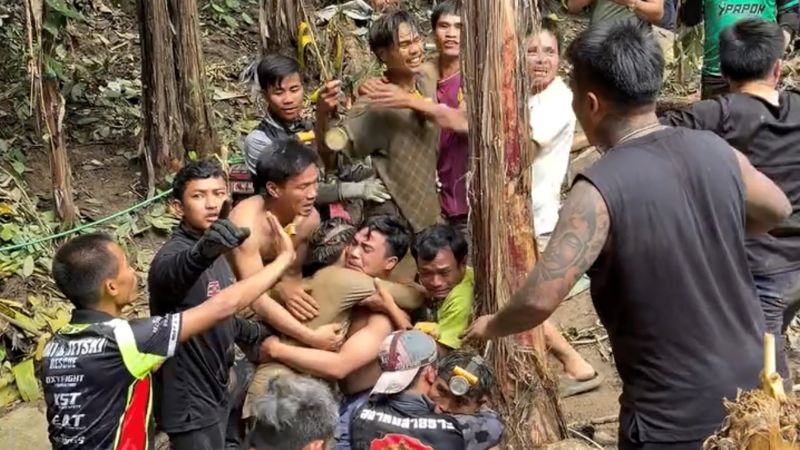
Table of Contents
The Anatomy of a Self-Rescue
For eleven days, four men existed in a state of sensory deprivation and extreme physiological stress, huddled together in the damp darkness of a flooded cave system in Laos’ Xaisomboun province. While a multinational team of elite divers and rescue experts worked from the surface, the survivors eventually did the unthinkable: they navigated a 260-meter (approximately 850 feet) subterranean labyrinth to reach the surface unaided.
The escape was not a choreographed operation but a desperate reaction to receding water levels. Navigating a distance equivalent to the height of a 78-story building, the men moved through passages that varied from wide, waterlogged chambers to suffocatingly tight crawls where oxygen was scarce. The survivors reported that in some sections, they were forced to dive through water at least a meter deep, while in others, they were squeezed into gaps barely the size of a human body.
The Physiological Toll of Subterranean Entrapment
The conditions inside the cave were a catalyst for rapid physical decline. Mee Singfamalai, a 23-year-old barber among the survivors, described a battle against plummeting temperatures and starvation. Without blankets or clothing suited for the humid but cold cave environment, the group survived by sleeping in a tight huddle, using collective body heat to stave off hypothermia.
Psychologically, the group relied on a singular focus: the drive to return to family. “I always believed I would survive. I had to make it back out to see my sisters and my mother,” Singfamalai told CNN from Long Tieng Hospital. This mental anchoring, combined with the sheer terror of isolation, provided the adrenaline necessary to attempt the crawl out after eleven days of near-total immobility.
The Economic Driver: Informal Mining in Laos
The incident highlights a growing and dangerous trend in the remote limestone and river basin regions of Laos. An informal mining economy has expanded as residents in impoverished provinces seek alternatives to scarce formal employment. Driven by rumors of gold deposits, the men entered the cave system—a high-risk environment—without professional diving equipment or geological training.
This lack of preparation turned a prospector’s venture into a disaster when heavy seasonal rains surged through the jungle, flash-flooding the cave and sealing the exit. For the survivors, the realization of the risk was absolute. When asked if he would ever return to the cave, Singfamalai stated, “Never. You would have to send me to death if you want to force me in.”
Technical Challenges and the Search for the Missing
Despite the successful self-rescue of four men and the prior extraction of a fifth via professional divers, the mission remains incomplete. Two other individuals, believed to have entered the cave system before the rescued group, remain missing. The search is now utilizing a mapping strategy informed by the survivors’ accounts.
The rescue operation, involving the Metta Tham Rescue Kalasin unit and divers with experience from the 2018 Thai cave rescue, is currently focusing on a newly discovered vertical shaft. Survivors indicated the existence of a significant air pocket further within the cave network, which rescuers hope may have served as a refuge for the missing pair. The operation continues to employ high-capacity pumps to manage water levels, though the treacherous terrain and muddy roads of the rainy season continue to hamper the deployment of heavy machinery.
As the rescued men recover in the hospital—some suffering from severe inflammation and pain—the focus shifts to the deeper, unexplored sections of the Xaisomboun limestone complex, where the margin for error is nonexistent.