DOJ Defends xAI’s Unpermitted Gas Turbines as Critical to National Security
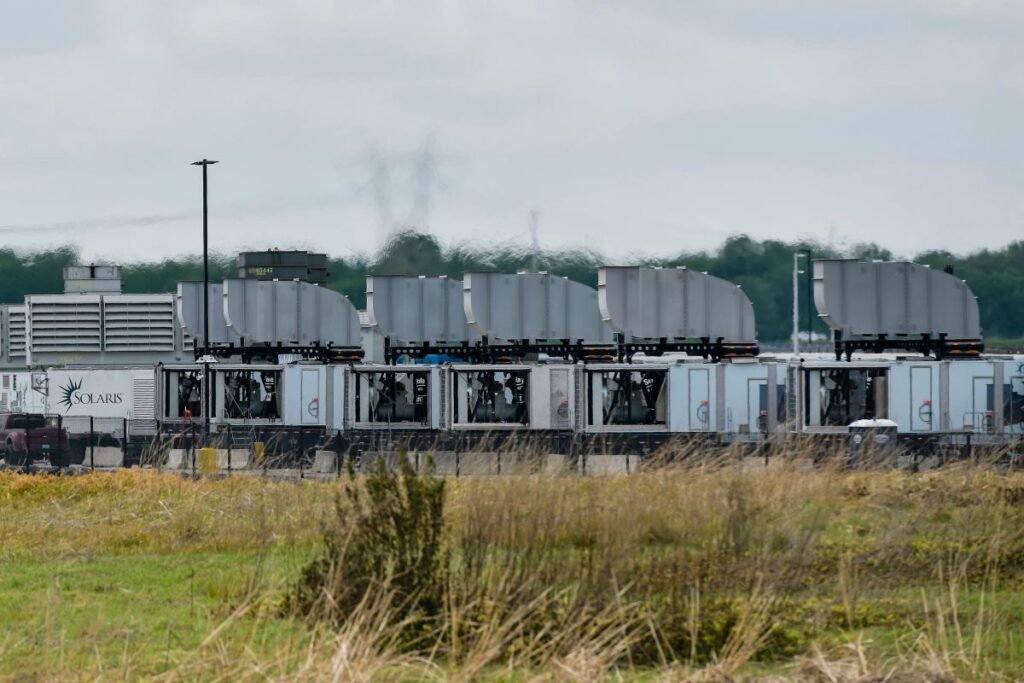
Table of Contents
The Collision of AI Ambition and Environmental Law
The Department of Justice (DOJ) has stepped into a high-stakes legal battle over the environmental footprint of artificial intelligence, siding with Elon Musk’s xAI in a dispute regarding the use of unpermitted natural gas turbines at its Memphis, Tennessee, data centers. The intervention transforms a local environmental dispute into a matter of federal strategic importance, with the DOJ arguing that shutting down these power sources would jeopardize American national security.
- Federal Intervention: The DOJ claims that xAI’s power infrastructure supports “mission-critical” military operations, specifically citing the Grok AI model.
- Environmental Conflict: The NAACP is suing xAI for using 57 “mobile” gas turbines to bypass Mississippi and federal air pollution regulations.
- Public Health Risk: Plaintiffs argue that emissions of PM2.5, formaldehyde, and nitrogen oxides (NOx) are exacerbating health crises in an already polluted region.
- Financial Scale: SpaceX filings indicate a planned $2.8 billion investment in further gas turbines over the next three years.
At the heart of the conflict is the Colossus and Colossus 2 data center complexes. To meet the staggering electricity demands of training massive neural networks, xAI has deployed dozens of natural gas turbines. The legal friction arises from how these turbines are classified: xAI maintains they are “mobile” units on trailers, which they claim grants them a one-year exemption from certain state air quality permits. However, the Southern Environmental Law Center (SELC) and the NAACP argue that because these units are fixed in place to provide constant power, they are legally “stationary sources” subject to rigorous federal Clean Air Act regulations.
The ‘National Security’ Gambit
The DOJ’s memorandum introduces a provocative new argument in the AI race: the link between raw compute power and kinetic military capability. According to the filing, the Grok AI model is one of four systems currently supporting operations for the Department of Defense. The DOJ explicitly linked AI capabilities to recent military strikes in Iran, suggesting that any interruption in the power supply to the Memphis facility could have immediate operational consequences.
This move signals a shift in how the U.S. government views AI infrastructure. No longer just a commercial venture, the scaling of LLMs (Large Language Models) is being framed as a strategic asset akin to energy reserves or semiconductor fabs. By labeling xAI’s energy bypass as a matter of “national, economic, and energy security,” the DOJ is effectively attempting to prioritize the speed of AI development over the enforcement of environmental statutes.
The Technical Tension: Mobile vs. Stationary Sources
To understand the legal deadlock, one must look at the technicality of stationary source emissions. In environmental law, a source is considered stationary if it is fixed in one location for a significant period. Stationary sources must undergo a permitting process that includes air quality impact assessments and the installation of scrubbers or filters to reduce pollutants.
xAI’s use of trailer-mounted turbines is a tactical choice. By keeping the equipment on wheels, the company attempts to utilize a regulatory loophole that allows temporary equipment to operate without full permitting for a limited window. The NAACP’s lawsuit challenges this, asserting that when 57 turbines are clustered together to power a permanent data center, the “mobile” designation becomes a legal fiction used to avoid the costs and time associated with environmental compliance.
The Human Cost: Air Quality in Memphis
While the DOJ focuses on geopolitical strategy, the NAACP focuses on the local biological impact. Memphis and its surrounding regions are already burdened by industrial pollution. The introduction of dozens of gas turbines has, according to the lawsuit, led to a measurable spike in three critical pollutants:
- PM2.5 (Fine Particulate Matter): Microscopic particles that penetrate deep into the lungs and bloodstream, linked to strokes and Alzheimer’s disease.
- Formaldehyde: A colorless, strong-smelling gas that is a known carcinogen.
- Nitrogen Oxides (NOx): Gases that contribute to the formation of ground-level ozone and smog, directly linked to asthma and cardiovascular disease.
The disparity between the high-tech promise of AI and the industrial reality of its power needs is stark. The training of a model like Grok requires megawatts of power that the existing Tennessee grid often cannot provide instantly. The result is a reliance on “bridge power”—in this case, fossil-fuel burning turbines—that places the environmental burden on the local community to accelerate a global product launch.
| Metric | Detail | Source |
|---|---|---|
| Current Turbine Count | 57 Units | NAACP/SELC Filings |
| Planned Investment | $2.8 Billion | SpaceX IPO Filing |
| Earmarked for ‘Mobile’ Units | $2 Billion | SpaceX IPO Filing |
| Critical AI Models | 4 (including Grok) | DOJ Memorandum |
The SpaceX Connection and Future Scaling
The operational overlap between xAI and SpaceX is critical. xAI is now integrated as a division of SpaceX, and this relationship is reflected in the financial planning. SpaceX’s IPO filings reveal a massive commitment to expanding this energy strategy, with billions of dollars allocated for additional gas turbines over the next three years.
This indicates that the Memphis situation is not an anomaly, but a blueprint. As AI companies race toward AGI (Artificial General Intelligence), the demand for electricity is outstripping the pace of grid modernization. If the DOJ successfully defends the use of unpermitted turbines under the banner of national security, it creates a powerful precedent: any AI company with a government contract could potentially bypass environmental laws by claiming their compute needs are essential to the state.
What This Means for the AI Industry
For the broader tech sector, this case highlights the “Energy Wall” facing AI development. While companies like Google and Microsoft have pivoted toward nuclear energy (such as the recent Three Mile Island deal for Microsoft), xAI is opting for a faster, more aggressive, and more polluting path. This creates a divergence in corporate strategy: “Green AI” versus “Accelerated AI.”
Practically, this means that data center zoning and environmental permits will become the primary bottlenecks for AI scaling. We are seeing a shift where the limiting factor for AI is no longer just GPU availability (the H100/B200 shortage), but rather the legal and physical ability to put power into the chips.
Analyzing the Legal Precedent
The DOJ’s stance is an unusual intervention in a civil suit brought by a civil rights organization. Typically, the Department of Justice focuses on whether a law was broken. In this instance, they are arguing that even if a regulation exists, the consequence of enforcing it (slowing down AI) is a greater risk to the nation than the consequence of ignoring it (local air pollution).
This “utilitarian” approach to national security suggests that the U.S. government views the AI race against global competitors as an existential conflict. However, this leaves a significant gap in accountability. If the “national security” label can be used to circumvent the Clean Air Act, it effectively removes the checks and balances intended to protect marginalized communities from industrial externalities.
Frequently Asked Questions
Are xAI’s turbines actually mobile?
While they are mounted on trailers, the NAACP argues they are functionally stationary because they are used as a permanent power source for the Colossus data centers, which would make them subject to stationary source emissions regulations.
What is the Colossus data center?
Colossus is the massive compute cluster used by xAI to train its Grok LLM. It consists of tens of thousands of Nvidia GPUs, requiring immense amounts of electricity that exceed standard local grid capacity.
Why does the DOJ care about Grok?
The DOJ claims that Grok and three other AI models are integrated into “mission-critical” military operations, including the planning and execution of strikes. Therefore, they argue that power interruptions would threaten national security.
What pollutants are being released in Memphis?
The turbines emit PM2.5, formaldehyde, and nitrogen oxides (NOx). These are linked to respiratory issues, cardiovascular disease, and in the case of formaldehyde, increased cancer risks.
How does this relate to SpaceX?
xAI is now a division of SpaceX. SpaceX’s financial filings show that they intend to spend billions more on these turbines to power their AI ambitions over the next few years.
Is this common for data centers?
Many data centers use backup diesel or gas generators. However, using them as a primary, continuous power source to bypass the grid while avoiding air permits is highly unusual and legally contentious.
The Convergence of Power and Politics
The resolution of the xAI turbine dispute will set a benchmark for how the United States balances its environmental obligations with its technological ambitions. If the courts side with the DOJ, it validates the idea that “AI supremacy” justifies a suspension of environmental protections. If the NAACP prevails, it will force AI developers to integrate sustainable energy solutions into their build-out timelines, potentially slowing the speed of deployment but ensuring public health compliance.
Ultimately, the Memphis case exposes the raw, physical cost of the digital revolution. The cloud is not ethereal; it is anchored in steel, gas, and emissions. As the DOJ continues to frame compute power as a weapon of war, the residents of Memphis remain the primary stakeholders in a gamble where the stakes are measured in both geopolitical dominance and lung capacity.