The New Geopolitics of Peace: Pope Leo XIV’s Spanish Address and the Failure of Digital Diplomacy
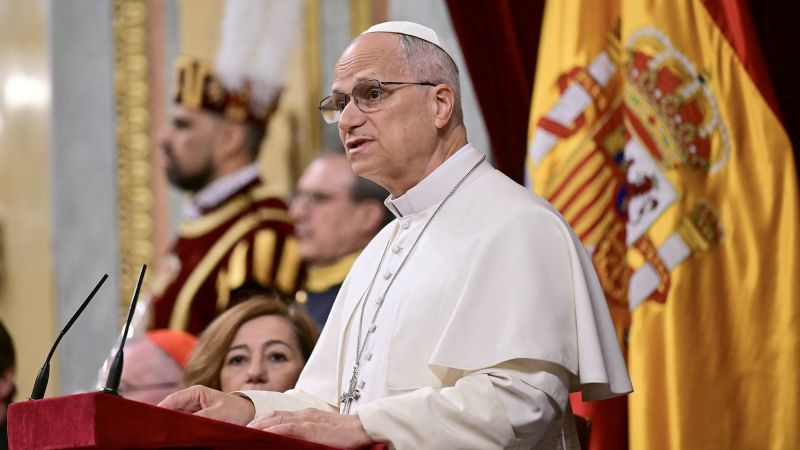
Table of Contents
A Historic Breach of Protocol in Madrid
In an unprecedented move that underscores the fragility of current global stability, Pope Leo XIV became the first pontiff to address the Cortes Generales. The speech, delivered before a joint session of the Spanish Parliament on Monday, was less a religious sermon and more a pointed critique of the modern state’s failure to maintain diplomatic channels in an era of hyper-polarization.
The timing of the visit is critical. The Pope’s arrival in Madrid coincides with the most severe escalation between Israel and Iran since the April truce, with both nations trading strikes that threaten to dismantle the precarious security architecture of the Middle East. Against this backdrop, Leo XIV framed war not as an inevitability of geopolitics, but as a systemic failure of human communication.
“Every war constitutes, ultimately, a painful defeat of the capacity to negotiate,” the Pope told the assembled political leaders. “It is a collapse of that shared conscience of humanity that recognizes bonds of justice between nations.”
The Friction of Alliances: Washington, Madrid, and the Vatican
The visit has highlighted a growing rift between the Vatican’s peace initiatives and the strategic posture of the United States. Pope Leo XIV, the first American-born pope, finds himself in a complex position, balancing his heritage with a vocal opposition to the ongoing conflict in the Middle East. This friction has manifested in public clashes with U.S. President Donald Trump, who has previously criticized the pontiff for his stance against the war in Iran.
In Spain, however, the Pope found a strategic ally in Prime Minister Pedro Sánchez. Sánchez, whose administration has frequently diverged from Washington and Tel Aviv regarding the Iranian conflict, has emerged as a primary defender of the Pope’s diplomatic approach. The relationship between Sánchez and the Vatican appears to be coalescing around a shared belief that the current trajectory of international law is being superseded by unilateral military action.
Beyond Borders: The Migrant Crisis and the ‘Dignity’ Framework
While the Middle East dominated the immediate context, Leo XIV expanded his critique to the internal stability of Europe. He explicitly warned against the rising tide of European arms spending, suggesting that the reallocation of capital toward weaponry is a symptom of a deeper spiritual and cultural crisis.
The Pope transitioned from geopolitical strife to the humanitarian fallout, arguing that the “inviolable dignity” of the person must be the bedrock of any legal system. This is not merely a theoretical point for the Vatican; it is the driver for the next leg of the Pope’s journey. Leo is scheduled to travel to the Canary Islands, a critical and often volatile entry point for migrants attempting to reach the European mainland.
“The affirmation of human dignity cannot remain abstract when so many people are forced to leave everything behind in search of peace, security and a future,” he stated, linking the tragedy of migration directly to the failures of the international order.
The Internal War: Disarming the Language of Politics
The Pope’s remarks also touched a nerve within Spain’s own fractured political landscape. With the rise of the nationalist-populist Vox party and ongoing corruption scandals surrounding the left-wing government, Spain has become a microcosm of the global polarization Leo XIV lamented.
He challenged the Spanish politicians to “disarm language,” suggesting that political pluralism is being replaced by a culture of disparagement. By calling for a “moral renewal,” the Pope attempted to bridge the gap between the chamber’s opposing factions, though his words were met with applause that may have masked deeper partisan divides.
The address concludes a phase of the visit that sought to reposition the Papacy as a mediator in a world where traditional diplomatic frameworks—and the international laws that support them—are increasingly viewed as optional by the world’s superpowers.