Israel and Iran Trade Ballistic Strikes as Regional Tension Escalates Despite U.S. De-escalation Efforts
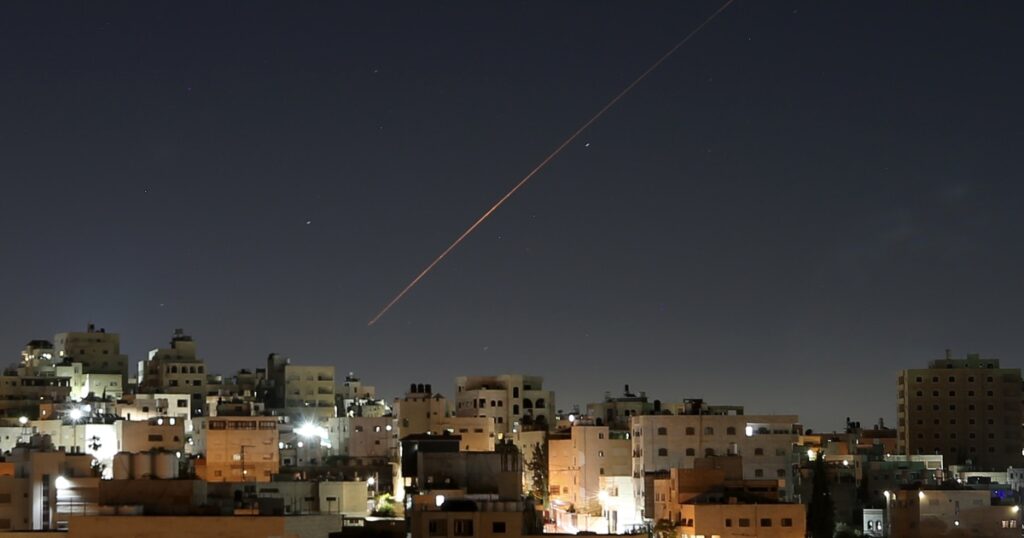
Table of Contents
A New Cycle of Escalation
The Middle East has entered a volatile new phase of direct confrontation as Israel and Iran traded ballistic missile strikes on Monday. The exchange, characterized by high-velocity weaponry and strategic targeting of military infrastructure, comes despite explicit efforts from the United States to curb Israeli retaliation against Tehran.
The Israeli Defense Forces (IDF) confirmed that defensive systems were activated to intercept a barrage of missiles launched from Iranian territory. While the IDF’s interception rates have historically been high, the sheer volume of the attack prompted emergency alerts across central and southern Israel, with citizens in affected areas ordered via cellular notifications to seek immediate shelter.
Strategic Targets and the IRGC’s Role
The Islamic Revolutionary Guard Corps (IRGC) claimed responsibility for the operation, stating that it targeted “key facilities” at two critical Israeli installations: the Nevatim Airbase in the Negev desert and the Tel Nof Airbase in the Central District. In a statement shared on X, an IRGC spokesperson asserted that the operation proved the “skies over the occupied territories” are under Iranian control.
According to Yechiel Leiter, Israel’s ambassador to the U.S., Iran deployed 11 ballistic missiles in the attack. Leiter emphasized that the scale of the aggression was intolerable, stating, “No self-respecting country in the world would tolerate such an attack.” This direct engagement marks a departure from the shadow war the two nations have played for decades, moving instead toward open, state-on-state kinetic warfare.
Israeli Counter-Strikes and Economic Targets
Israel responded with precision strikes targeting Iranian infrastructure. The IDF reported hitting several targets at a petrochemical facility in Mahshahr, located in southwestern Iran. This specific targeting suggests an Israeli strategy to degrade Iran’s economic and industrial capabilities without necessarily triggering a full-scale urban war.
Valiollah Hayati, the deputy governor for security affairs in Khuzestan Province, confirmed via the Fars news agency that parts of the facility were damaged, though official casualty figures have not yet been released. Meanwhile, the Tehran fire department reported that urban centers in the capital remained largely untouched, despite reports of early morning explosions in western districts.
The Houthi Factor and Red Sea Stability
The conflict has expanded beyond the Israel-Iran axis with the involvement of Yemen’s Houthi rebels. The Iran-backed group confirmed the launch of a missile barrage targeting the Jaffa area and issued a “complete and total ban” on Israeli-affiliated maritime navigation in the Red Sea.
While the IDF reported that missiles launched from Yemen were intercepted with no reported casualties, the Houthi declaration regarding the Red Sea poses a significant risk to global trade. The Red Sea is a critical artery for international shipping, and a renewed blockade or increase in attacks on commercial vessels could destabilize global supply chains and increase shipping costs.
Diplomatic Friction and U.S. Positioning
The timing of these strikes is particularly fraught given the current U.S. administration’s stance. President Donald Trump recently indicated in an interview with Axios that he would advise Israel against retaliating against Tehran, signaling a desire for stability as the U.S. navigates complex regional alliances.
The immediate impact on the ground for U.S. personnel was significant. The U.S. Embassy in Jerusalem ordered government employees and their families to shelter in place and closed its consular sections in Jerusalem and Tel Aviv on Monday. The security alert warned that “red alert” sirens could be activated at any moment, highlighting the precarious nature of the diplomatic umbrella currently covering the region.