The Kospi Paradox: Why Global Investors are Dumping Korean Tech During a Record Rally
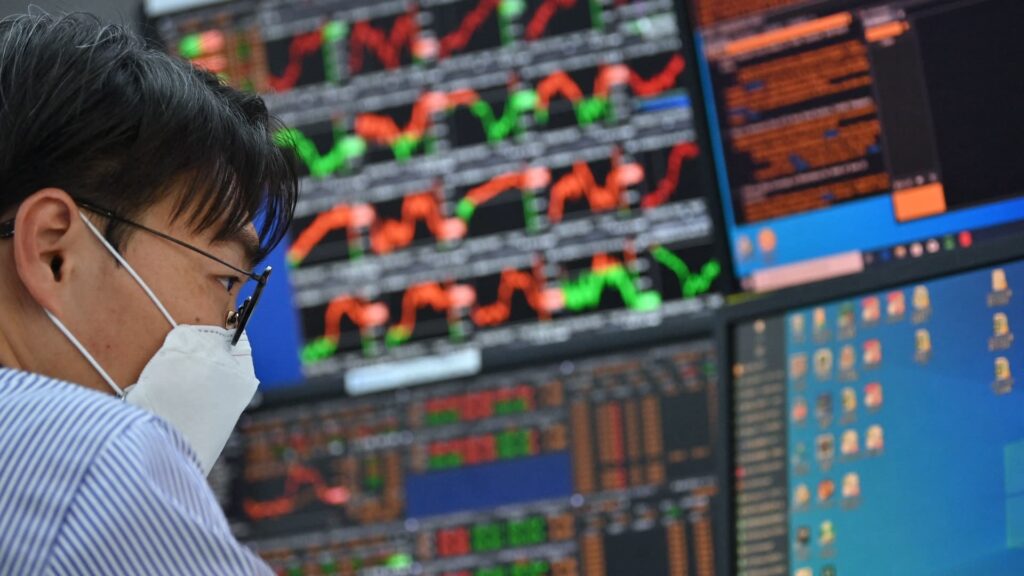
Table of Contents
A Counterintuitive Exodus
On the surface, the current movement in the South Korean equity market defies traditional investment logic. The Kospi has emerged as one of the global market’s standout performers this year, posting record year-to-date gains. Yet, while the index climbs, international investors are quietly heading for the exits. According to Korea Exchange data, overseas investors unloaded a net 1.24 trillion won (approximately $801 million) in Kospi-listed shares in a single session this week alone.
This isn’t a sudden panic sell-off, but rather a sustained trend. Goldman Sachs estimated that net foreign outflows from the Kospi reached roughly $62 billion by late May. The exodus has been particularly concentrated in the tech and automotive sectors—the very engines that have driven the rally.
The Mechanics of ‘Forced Selling’
To the casual observer, massive selling during a bull run suggests a lack of confidence in the underlying assets. However, institutional strategists argue the opposite: the selling is a direct result of the market’s success. This phenomenon, described by Nomura’s Asia-Pacific equity strategist Chetan Seth as “forced selling,” occurs when a market’s rapid ascent creates structural imbalances in global portfolios.
Most global active fund managers operate within strict risk and weighting limits based on emerging-market benchmarks. As Korean stocks—particularly semiconductor giants like Samsung Electronics and SK Hynix—surged, their relative weight within these indices increased. To avoid over-exposure and remain compliant with internal risk mandates, fund managers are forced to trim their positions, regardless of whether they believe the stock will continue to rise.
Nick Wilcox, managing director for discretionary equities at Man Group, notes that this is a structural pressure point. When a few mega-cap tech stocks dominate an index’s growth, investors often bump up against regulatory and internal restrictions on how much of a single company they can hold. In short, the rally has made the positions “too big to hold.”
The Rise of the Domestic Retail Giant
While foreign capital departs, a new force has stepped in to stabilize the market: the South Korean retail investor. The vacuum left by international funds has been filled by a massive wave of domestic buying. Wilcox estimates that retail inflows have hit approximately $70 billion this year, fueled by a surge in new brokerage account openings across the country.
This shift mirrors a trend previously seen in India, where a robust domestic investor base began to crowd out foreign institutional investors. This transition changes the DNA of the market, making the Kospi less sensitive to the whims of Wall Street and more reflective of domestic sentiment and local liquidity.
Concentration Risk and the AI Play
Despite the optimism, there is a growing undercurrent of concern regarding risk concentration. The current rally is not a broad-based recovery but is heavily skewed toward the AI-driven demand for high-bandwidth memory (HBM), which directly benefits SK Hynix and Samsung. If the AI hype cycle cools or if there is a stumble in the semiconductor supply chain, the market’s lack of diversification could lead to a sharp correction.
Nevertheless, major financial institutions aren’t sounding the alarm. Goldman Sachs recently raised its 12-month target for the Kospi to 12,000, forecasting an additional 37% upside. The prevailing view among analysts is that the current outflows are mechanical rather than fundamental. The “smart money” isn’t necessarily bearish on Korea; they are simply rebalancing their books after a historic run.