The Invisible Key: Why Android’s Move Toward UWB Digital Keys Is a Security Gamble
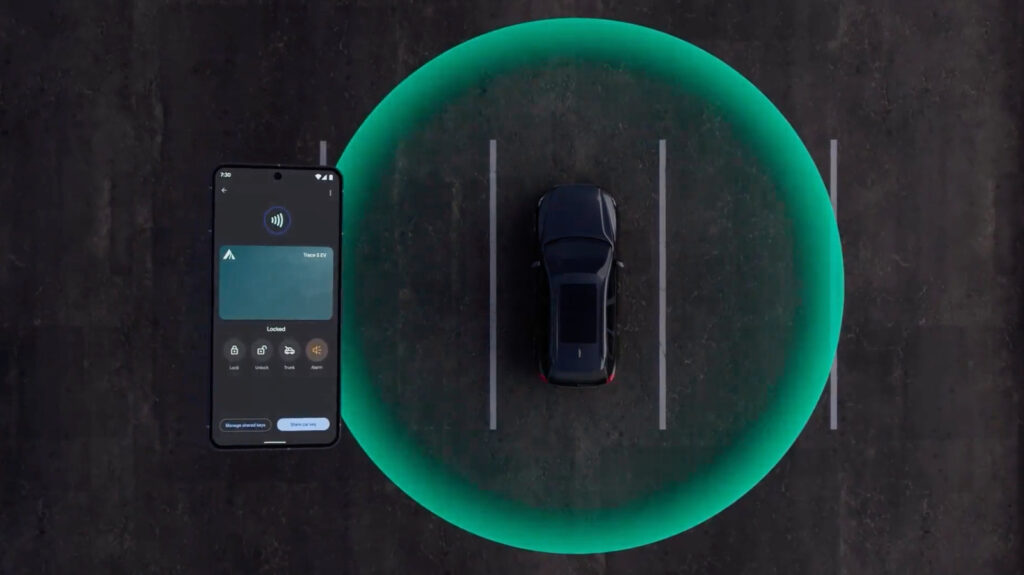
Table of Contents
Moving Beyond the Plastic Fob
For decades, the car key fob has been a static piece of hardware—a convenient but vulnerable token of ownership. But as the automotive industry pivots toward a software-defined future, the physical key is being relegated to a backup role. Google’s integration of digital car keys into Android 12 and subsequent versions marks a shift toward an ecosystem where your smartphone isn’t just a remote, but a cryptographically secure identity for your vehicle.
At its core, this isn’t just about the convenience of not carrying a keychain. It’s a fundamental change in how vehicles authenticate a driver. By leveraging Google Wallet, Android users can store digital credentials that allow them to unlock and start their cars via a secure wireless handshake. While Apple introduced its CarKey feature for iOS a year earlier, Google’s implementation focuses heavily on interoperability and the evolving standards set by the Car Connectivity Consortium (CCC).
The Tech Stack: Bluetooth, NFC, and the UWB Edge
Not all digital keys are created equal. Most early implementations relied on Bluetooth Low Energy (BLE) or Near Field Communication (NFC). NFC is the ‘tap-to-pay’ technology; it requires the phone to be physically touching or nearly touching the car’s reader—often found in the center console or door handle. While reliable, it lacks the ‘walk-up’ magic users expect.
The real game-changer is Ultra-wideband (UWB). Unlike Bluetooth, which estimates distance based on signal strength (which can be easily fooled), UWB uses time-of-flight measurements to determine the phone’s precise location relative to the car. This is the same technology powering Apple’s AirTags and Google’s Find My Device network.
This precision solves a critical security flaw: the relay attack. In a traditional relay attack, a thief uses a signal booster to ‘trick’ a car into thinking a key fob is nearby when it is actually inside the owner’s house. Because UWB measures the actual time it takes for a signal to travel, it is virtually impossible to spoof. The car knows exactly where the phone is, meaning it won’t unlock unless the authenticated device is physically within a few feet of the door.
Compatibility and the ‘Luxury Gap’
Despite the technical readiness of Android, the rollout remains fragmented. Support is currently concentrated in the premium and EV sectors. For instance, the Hyundai IONIQ 5 and IONIQ 5N, as well as Kia’s EV line (EV6, EV9), are early adopters. Luxury brands like BMW (X5) and Volvo (EX90) have also integrated the standard, alongside newer Rivian models released after 2025.
To utilize these features, hardware is the primary barrier. While basic NFC and Bluetooth functions work on most modern Android devices, the high-security UWB features require specific chipsets. Users with a Pixel 6 or newer, Samsung Galaxy S24 series, or high-end Motorola Razr models are best positioned to take advantage of this. If your device lacks UWB, you may still be able to unlock your car, but you lose the precise spatial awareness that prevents the aforementioned relay attacks.
The New Vulnerability Vector
Transitioning to a digital key doesn’t eliminate risk; it simply relocates it. The primary concern is no longer a lost set of keys, but a compromised device. If a thief steals an unlocked phone and the user has a weak passcode, they effectively have the keys to the kingdom. Furthermore, a dead battery or a catastrophic software glitch in Google Wallet could leave a driver stranded without a way to enter their vehicle.
Industry experts suggest a hybrid approach. Keeping a physical key or a digital key card as a backup remains the only foolproof fail-safe. For those prioritizing security over seamlessness, disabling ‘passive entry’—the feature that unlocks the car automatically as you approach—and requiring biometric authentication (fingerprint or face unlock) before the key becomes active is the most effective way to secure a digitally-keyed vehicle.


