The Engineering of Perfection: How Pilot’s Kire-Na Highlighter Solves a Problem You Didn’t Know You Had
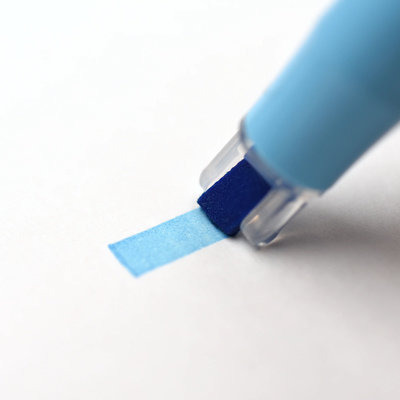
Table of Contents
The Pursuit of Frictionless Ink
In the world of consumer electronics, we talk about ‘friction’ in terms of clicks, load times, and gesture shortcuts. But in the analog world of Japanese stationery, friction is literal. For Pilot, the Japanese pen giant, the ‘friction’ wasn’t in the ink flow itself, but in the erratic way humans apply pressure to a chisel tip. The result of this inconsistency? Blotchy lines, ink pooling, and the dreaded bleed-through that ruins a page of notes.
The solution is the Kire-Na highlighter. At first glance, it looks like any other fluorescent marker. But a closer look at the nib reveals a surgical level of intervention: two small, strategic protrusions on either side of the chisel tip. These aren’t aesthetic choices; they are mechanical guides designed to regulate the angle and pressure of the user’s hand, ensuring the nib maintains a consistent contact point with the paper.
Six Years of Iteration
What makes the Kire-Na particularly interesting isn’t just the final product, but the obsessive timeline behind it. According to reports from Japanese stationery specialists like Bungu, the development process spanned six years. In an era where software is shipped in beta and patched later, Pilot spent over half a decade refining a plastic tip for a highlighter.
This level of ‘overdesign’ is a hallmark of the Japanese approach to Monozukuri (the art of making things). While a Western company might view a highlighter as a commodity—a low-margin tool where ‘good enough’ is the standard—Pilot treated the Kire-Na as a precision instrument. The goal was to remove the variable of human error from the equation entirely.
Why Precision Matters in a Digital Age
It is easy to dismiss a six-year development cycle for a highlighter as overkill, especially as more students and professionals migrate to tablets and styluses. However, the Kire-Na represents a broader philosophy of User Experience (UX) that is often missing from modern digital product design. It is the practice of identifying a micro-inconvenience—something so small that the user cannot even articulate it—and engineering it out of existence.
When a user experiences a blotch of ink, they don’t usually blame their own hand pressure; they blame the pen. By solving the physics of the grip, Pilot isn’t just selling ink; they are selling a guarantee of consistency. This focus on the tactile interaction between the tool and the medium is where the Kire-Na transcends being a simple office supply and becomes a case study in industrial design.
The Market for Obsession
The commercial success of such a niche innovation highlights the unique dynamics of the Japanese market. There is a deep, culturally embedded appreciation for high-spec stationery, where consumers are willing to pay a premium for tools that offer marginal, yet perceptible, improvements in performance. For Pilot, the investment paid off, with millions of units moving through the market as enthusiasts and professionals sought out the ‘perfect’ line.
For industrial designers and UX researchers, the Kire-Na serves as a reminder that the most impactful innovations often happen at the intersection of psychology and physics. By acknowledging that humans are inconsistent, Pilot created a product that makes us feel more precise.


