The Global Crackdown on Youth Social Media: Which Countries Are Banning Apps for Kids?
Table of Contents
A New Era of Digital Gatekeeping
The era of unrestricted internet access for minors is coming to an abrupt end. What began as a series of fragmented guidelines is rapidly evolving into a global movement of legislative mandates. From the stringent new laws in Australia to the ambitious proposals in the United Kingdom and across Europe, governments are no longer asking social media companies to protect children—they are demanding that the platforms be blocked entirely for those under a certain age.
This shift represents a fundamental change in how we perceive digital childhood. For two decades, the ‘terms of service’—often a checkbox claiming to be 13 years old—were the only barrier. Now, nations are treating social media access less like a consumer choice and more like a public health crisis, akin to regulating tobacco or alcohol. The primary drivers are well-documented: a surge in adolescent anxiety, the predatory nature of algorithmic amplification, and the pervasive threat of cyberbullying.
- Australia leads the charge: Implementing a landmark ban for under-16s with fines up to $49.5 million AUD for non-compliant platforms.
- Global Momentum: The UK, Canada, France, and several EU nations are drafting or implementing similar laws targeting the 14-16 age bracket.
- The Verification Gap: The central technical hurdle remains age verification; governments are moving away from ‘self-declaration’ toward biometric or government-ID checks.
- Digital Rights Concerns: Advocacy groups like Amnesty Tech argue that these bans may push children toward unregulated ‘dark’ corners of the web.
The Vanguard: Australia’s High-Stakes Experiment
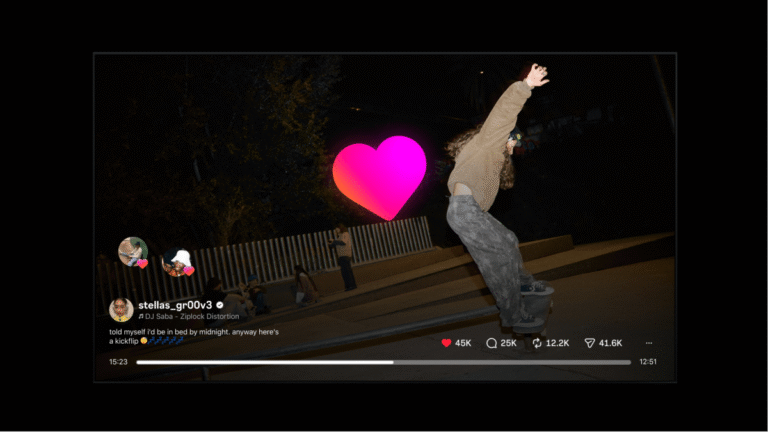
In December 2025, Australia shifted from deliberation to enforcement, becoming the first nation to implement a comprehensive ban on social media for children under 16. This is not a mere suggestion; it is a statutory requirement. The ban targets the heavy hitters: Facebook, Instagram, Snapchat, TikTok, X (formerly Twitter), Reddit, and Twitch. Notably, utility-based messaging like WhatsApp and educational-centric platforms like YouTube Kids remain exempt, reflecting a nuanced distinction between ‘social networking’ and ‘communication tools.’
The enforcement mechanism is designed to be punitive. Under the new framework, social media companies that fail to prevent under-16s from accessing their services face penalties of up to $49.5 million AUD (approximately $34.4 million USD). This creates a massive financial incentive for platforms to implement rigorous age-gating.
The Australian government has explicitly stated that simple date-of-birth entries are insufficient. The focus has shifted toward Age Verification (AV), a technical process where a third party or biometric system confirms a user’s age without necessarily compromising their full identity. However, the technical reality of implementing this at scale remains a point of contention between regulators and engineers.
The European and North American Response
The momentum is spreading across the West, with a clear pattern emerging: most governments are eyeing the 14-to-16-year-old window as the critical cutoff.
The United Kingdom’s Strategic Pivot
Prime Minister Keir Starmer announced on June 15 a plan to ban social media for children under 16. Similar to the Australian model, this includes the major algorithmic feeds of TikTok and Instagram. A unique addition to the UK’s approach is the regulation of AI. Starmer’s government is specifically targeting ‘romantic companion’ chatbots, requiring strict 18+ verification to prevent AI-driven grooming or emotional manipulation of minors.
France and the EU Landscape
France is moving aggressively with a bill supported by President Emmanuel Macron to ban social media for those under 15. The French approach is framed as a fight against ‘screen addiction,’ viewing the constant dopamine loop of short-form video as a psychological hazard. Similarly, Poland and Slovenia are drafting legislation to prohibit under-15s from accessing content-sharing networks, citing the need to protect the cognitive development of adolescents.
Canada’s Flexible Framework
Canada took a slightly different route in early June with a digital safety bill. While the core objective is a ban for under-16s, the Canadian legislation includes a ‘safe harbor’ provision. Social media giants can avoid the ban if they can prove to regulators that their internal safety policies are sufficient to protect young users. This creates a performance-based incentive for companies to innovate in safety rather than just blocking access.
Asia’s Digital Guardrails
The shift isn’t limited to Western democracies. In Southeast Asia, social media bans are being used as tools for both child protection and social stability.
- Indonesia: In March, the government announced bans for under-16s across a wide array of platforms, including Roblox and Bigo Live, recognizing that gaming-adjacent social spaces are high-risk areas for minors.
- Malaysia: Plans announced in November 2025 aim to restrict social media for under-16s, with implementation expected throughout the current year.
The Technical Battle: How Do You Actually Ban a Child?
The most significant point of failure for these laws is the Age Verification (AV) problem. For years, the ‘honesty system’ prevailed. To replace it, governments are considering three primary technical paths:
1. Document-Based Verification
Users must upload a government-issued ID. While accurate, this is a privacy nightmare. Storing millions of passports or driver’s licenses creates a ‘honeypot’ for hackers and raises concerns about government surveillance.
2. Biometric Age Estimation
Companies like Yoti use AI to analyze facial geometry to estimate age. While it doesn’t require an ID, it introduces concerns about algorithmic bias and the accuracy of ‘AI guesses,’ which can vary based on ethnicity and lighting.
3. Zero-Knowledge Proofs (ZKP)
This is the ‘gold standard’ for privacy. ZKPs allow a user to prove they are over 16 without revealing their actual birth date or identity to the platform. The verification happens via a trusted third party who sends a simple ‘Yes/No’ token to the app.
The Controversy: Protection vs. Privacy
Not everyone views these bans as a victory for child safety. Critics, including Amnesty Tech, argue that blanket bans are a blunt instrument for a complex problem. Their concerns center on three main pillars:
Digital Exclusion: For many marginalized youth, including LGBTQ+ teens in restrictive households, social media is a lifeline for community and support. A total ban removes these safe spaces.
The ‘VPN’ Effect: Tech-savvy teens will inevitably use Virtual Private Networks (VPNs) to bypass geographic and age-based blocks. This doesn’t remove the risk; it simply moves the children to less regulated, more dangerous versions of the internet where government oversight is zero.
Privacy Erosion: Implementing mandatory age verification requires the collection of massive amounts of biometric or identity data. Critics argue that the ‘cure’ (surveillance) may be worse than the ‘disease’ (social media addiction).
What This Means for the Ecosystem
For the average user, these laws will likely lead to a fragmented internet. We are moving toward a ‘tiered’ web where your experience is determined by your verified age. This will likely force social media companies to pivot their business models away from ‘growth at all costs’ toward ‘verifiable compliance.’
For parents, it shifts the burden of enforcement from the home to the state. While this provides a layer of systemic protection, it may create a false sense of security, as children find ways around the blocks.
Frequently Asked Questions
Will WhatsApp and iMessage be banned?
Generally, no. Most legislation, including those in Australia and the UK, distinguishes between ‘social media’ (algorithmic discovery and public posting) and ‘messaging services’ (direct communication with known contacts). WhatsApp and Signal are currently exempt in most proposals.
How will platforms verify age without an ID?
Platforms are experimenting with biometric face-scanning and ‘bank-grade’ identity verification. Some may use third-party verification services that confirm age without sharing the user’s full data with the social media company.
What happens if a company ignores the ban?
In Australia, the penalties are severe, reaching up to $49.5 million AUD. In other jurisdictions, companies may face daily fines or, in extreme cases, the complete blocking of their service within the country.
Can children still use YouTube?
Most bans target the main YouTube platform’s social features (comments, shorts). YouTube Kids is explicitly excluded from most bans because it is designed as a curated environment for children.
Do these bans apply to gaming platforms like Roblox?
Yes, in some regions. Indonesia, for example, has specifically included Roblox in its list of restricted platforms, acknowledging that the line between a ‘game’ and a ‘social network’ has blurred.
Summary of Global Restrictions
| Country | Age Limit | Status | Key Target |
|---|---|---|---|
| Australia | Under 16 | Implemented | Meta, TikTok, X, Snapchat |
| United Kingdom | Under 16 | Proposed (2027) | TikTok, Instagram, AI Chatbots |
| Canada | Under 16 | Bill Introduced | Flexible compliance models |
| France | Under 15 | Bill Passed (Lower House) | General social media |
| Denmark | Under 15 | Proposed (2026) | General social media |
| Greece | Under 15 | Announced (2027) | Algorithmic feeds |
| Indonesia | Under 16 | Implemented | TikTok, Roblox, YouTube |