UK Social Media Ban for Under-16s: Implementation, Enforcement, and the Battle Over Digital Privacy
Table of Contents
A New Digital Frontier: The UK’s War on Adolescent Social Media Use
Prime Minister Keir Starmer has signaled a drastic shift in the United Kingdom’s approach to digital safety, announcing a sweeping ban on social media use for children under 16. This policy aims to decouple early adolescence from the algorithmic pressures of platforms like TikTok, Instagram, and Snapchat, moving beyond simple guidelines toward a hard legal mandate.
The move is not merely a suggestion for parents but a regulatory requirement that will place the burden of proof on the platforms themselves. While the government intends for the ban to be operational by next spring, the technical and ethical hurdles of implementing such a restriction are substantial, sparking a debate between child safeguarding and the fundamental right to digital privacy.
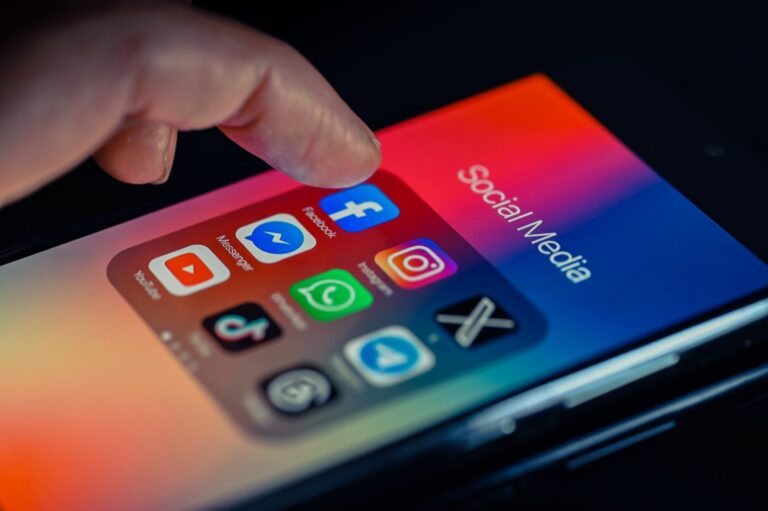
- Scope: The ban targets algorithm-driven social feeds including TikTok, Instagram, X, and Facebook; messaging apps like WhatsApp and Signal are currently exempt.
- AI Restrictions: New rules specifically target “romantic companion” AI chatbots, mandating strict 18+ age verification.
- Timeline: The government expects the ban to be in effect by the spring of 2026.
- Primary Goal: Reducing exposure to addictive design features (like infinite scroll) and mitigating cyberbullying and mental health declines.
The Scope of the Ban: What is Restricted and What Isn’t?
To understand the UK social media ban for under 16, it is necessary to distinguish between social networking platforms and direct communication tools. The government is specifically targeting “attention-economy” platforms—those that utilize algorithmic discovery and public feeds to keep users engaged.
Platforms explicitly mentioned in the regulatory scope include TikTok, Snapchat, Instagram, Facebook, and X. These services share a common architectural trait: the curated feed. By banning these, the UK government hopes to eliminate the “infinite scroll” mechanism that Starmer argues is designed to lock children into loops of consumption that disrupt sleep and social development.
The Messaging Loophole
Interestingly, the ban does not currently extend to end-to-end encrypted messaging services such as WhatsApp and Signal. This distinction is critical. The government views these as utilities for communication rather than engines for consumption. However, this creates a complex regulatory grey area: if a 14-year-old cannot use Instagram but can use WhatsApp, the “social” aspect of their digital life is restricted, but their ability to coordinate via private groups remains intact.
The AI Component: Romantic Chatbots
In a surprising addition to the announcement, the government is targeting the emerging sector of AI companionship. “Romantic companion” chatbots—AI entities designed to simulate emotional or romantic relationships—will be strictly limited to users 18 and older. This reflects a growing concern among psychologists regarding the impact of simulated intimacy on the development of real-world social skills in adolescents.
The Technical Challenge: How Will This Actually Be Enforced?
The most contentious aspect of the ban is not the intent, but the execution. For years, the “honest declaration” of age (clicking a box that says “I am over 13”) has been the industry standard, and it has failed spectacularly. To make this ban meaningful, the UK must move toward robust Age Verification (AV) technologies.
There are three primary methods currently under consideration, each with significant trade-offs:
1. Biometric Age Estimation
Companies like Yoti use AI to estimate age based on a face scan. Unlike facial recognition, which identifies who you are, age estimation analyzes skin texture and facial geometry to determine how old you are. While more private, it is not foolproof and can be deceived by high-quality filters or images.
2. Third-Party Identity Document Verification
This involves uploading a passport or driver’s license to a secure third-party provider. While highly accurate, this creates a massive honeypot of sensitive data. Privacy advocates argue that requiring children to upload government IDs to access digital spaces is a disproportionate intrusion.
3. Credit Card or Banking Verification
Linking an account to a verified financial instrument. However, this method is inherently biased against lower-income families or children who do not have access to banking services, potentially creating a digital divide.
| Method | Accuracy | Privacy Risk | User Friction |
|---|---|---|---|
| AI Face Estimation | Moderate | Low | Low |
| Govt ID Upload | High | High | High |
| Financial Verification | High | Moderate | Moderate |
What This Means for Different Stakeholders
The practical implications of this ban vary wildly depending on who is navigating the digital ecosystem.
For Parents
For the 83% of parents who believe the risks of social media outweigh the benefits, this represents a shift in the “burden of policing.” Instead of parents fighting a daily battle against their children’s screen time, the legal responsibility shifts to the platforms. If a company allows an under-16 to access a restricted feed, the company—not the parent—will be liable for fines.
For Adolescents
The impact will likely be two-fold. While some may find relief from the pressure of the “highlight reel,” others will migrate to VPNs (Virtual Private Networks) to spoof their location to a country without such bans. This “cat-and-mouse” game between teens and regulators is a well-documented phenomenon in the gaming and streaming industries.
For Tech Companies
Platforms like Meta and ByteDance face a massive operational headache. They will need to redesign their onboarding flows for the UK market. More importantly, they face significant financial risk; the UK’s Online Safety Act already provides the framework for heavy fines for non-compliance, and this ban will likely be enforced through similar mechanisms.
The Global Trend: The “Australia Effect”
The UK is not acting in a vacuum. This movement follows a global trend of treating social media as a public health issue rather than a neutral tool. Australia recently led the charge with similar restrictive legislation, and countries like France, Canada, and Denmark are in various stages of developing their own frameworks.
This suggests a shift in the global consensus: the era of “permissionless innovation” in the attention economy is ending. Governments are increasingly viewing the algorithmic curation of content as a predatory practice when applied to developing brains. By aligning with Australia and other EU-adjacent nations, the UK is attempting to create a “safety bloc” that can collectively force Big Tech to change its core product design.
Critical Analysis: Is a Blanket Ban Effective?
While the government frames this as “giving kids the childhood they deserve,” many digital rights experts argue that a blanket ban is a blunt instrument for a surgical problem. The primary criticism is that it ignores digital literacy. By banning the platforms, the state may be preventing children from learning how to navigate these spaces safely under adult guidance.
Furthermore, there is the risk of “darker” migration. When children are banned from regulated, mainstream platforms, they often move to unmoderated, niche forums where the risks of grooming and extreme content are far higher than on a curated Instagram feed. The “Forbidden Fruit” effect may simply push under-16s deeper into the anonymous corners of the internet where safety tools do not exist.
Comparing Mental Health Data
The government’s push is grounded in the observed correlation between the rise of smartphone ubiquity (circa 2012) and the spike in adolescent anxiety and depression. However, critics argue that social media is a symptom of broader systemic issues—such as a lack of physical community spaces and academic pressure—rather than the sole cause.
Frequently Asked Questions
Will the UK social media ban apply to YouTube?
Yes, the current proposal includes YouTube, as it utilizes a curated recommendation algorithm to drive engagement. However, educational content and “YouTube Kids” may be treated differently depending on the final regulatory guidelines.
Can children under 16 still use WhatsApp or Signal?
Yes. Messaging services that are primarily used for direct, one-to-one, or group communication without a public-facing algorithmic feed are currently exempt from the ban.
How will the government verify the age of users?
The government has not yet finalized the exact method, but it is expected to mandate a combination of AI-driven age estimation and third-party identity verification to ensure platforms aren’t relying on simple self-declaration.
What happens to existing accounts of 13-15 year olds?
It is expected that accounts belonging to users under 16 will either be suspended or transitioned into a highly restricted “child mode” that removes the algorithmic feed and public discovery features.
Is it illegal for a child to use social media if their parents allow it?
The ban is directed at the platforms, not the children. The legal penalties will be levied against the companies that fail to prevent under-16s from accessing their services, rather than the minors themselves.
Closing the Digital Gap
The UK’s decision to impose a social media ban for under-16s marks one of the most aggressive regulatory interventions in the history of the internet. By treating the “infinite scroll” as a public health hazard, the Starmer government is attempting to fundamentally rewrite the contract between Big Tech and the next generation.
Whether this leads to a genuine improvement in adolescent mental health or simply fuels a surge in VPN usage and underground digital communities remains to be seen. What is certain, however, is that the UK has set a precedent that will likely force social media companies to rethink their global age-verification strategies, moving away from the era of “click-to-agree” and toward a future of verified digital identity.