Lenovo Floods MWC 2026 With Modular PC Concepts and a Foldable Legion Handheld
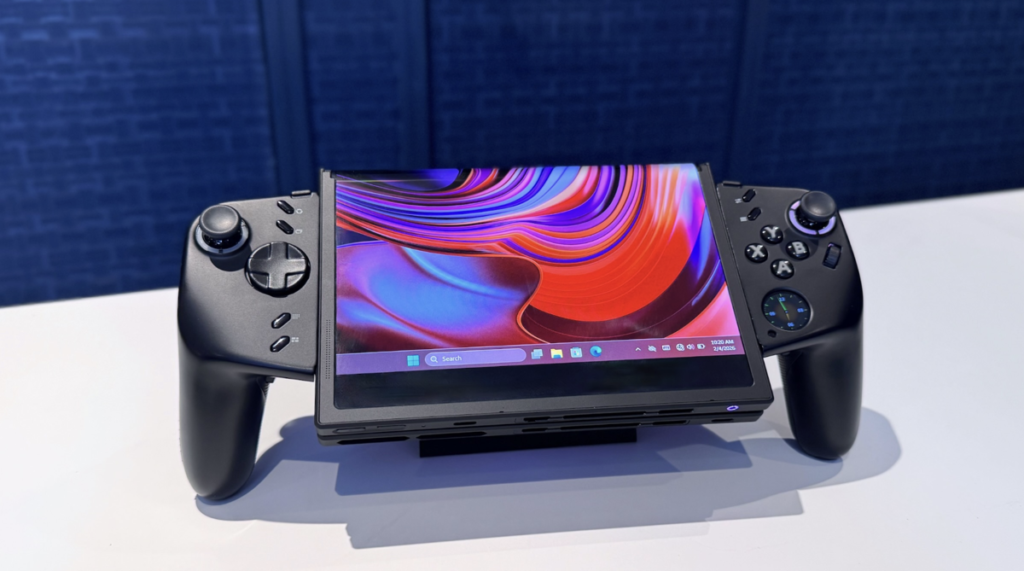
Table of Contents
A Strategic Pivot Toward Modularity and Flexibility
Lenovo has arrived at Mobile World Congress (MWC) 2026 with a hardware offensive that signals a clear shift in its product philosophy. While the company continues to dominate the volume market with traditional laptops, its latest showcase in Barcelona is less about iterative updates and more about challenging the rigid form factors of the modern PC. From a foldable gaming handheld to a modular workstation, Lenovo is betting that the next phase of computing is defined by adaptability.
The centerpiece of the exhibition is the Legion Go Fold Concept. Following a series of leaks, Lenovo has confirmed a prototypical handheld that attempts to bridge the gap between a portable console and a full-fledged laptop. The device features a 7.7-inch POLED display that unfolds into a massive 11.6-inch canvas. Unlike previous foldable experiments, this device is designed for productivity; it includes a detachable wireless keyboard that transforms the handheld into a clamshell Windows machine. Under the hood, it runs on Intel’s Lunar Lake architecture with 32GB of RAM, suggesting that Lenovo is treating this as a viable product path rather than a mere tech demo.
Pushing the Boundaries of Visual and Physical Design
Beyond gaming, Lenovo is doubling down on specialized creator tools with the Yoga Book Pro 3D Concept. This dual-display machine utilizes eye-tracking technology to render 3D objects without the need for specialized glasses. Powered by an Intel Core Ultra 7 and an Nvidia GeForce RTX 5070, the device targets professional 3D artists. A notable addition is the set of snap-on tactile pads for the lower touchscreen, allowing creators to trigger specific menus without obstructing their view of the 3D workspace.
Perhaps the most significant long-term play, however, is the ThinkBook Modular AI PC Concept. In an industry often criticized for planned obsolescence, Lenovo is introducing a Framework-inspired approach to the enterprise sector. The concept allows users to swap ports and replace the keyboard or secondary display via pogo-pin connectors. This move toward a “circular” hardware economy aligns with the company’s recent focus on repairability, seen earlier this year in the Space Frame design of the ThinkPad X1 Carbon Gen 14 Aura Edition.
Refining the Core Lineup
While the concepts steal the spotlight, Lenovo is also updating its commercial staples. The new Yoga 9i 2-in-1 Aura Edition serves as the flagship consumer offering, debuting in May for $1,949. It features an Intel Core Ultra Series 3 chip and a refined chassis that brings back the much-requested headphone jack. The device also introduces a new Canvas mode, enabled by a magnetically attached Yoga Pen Gen 2.
The enterprise side of the house is seeing a refresh across the T-Series ThinkPads, which now feature improved repairability and upgraded 5MP cameras. Lenovo is also expanding its AI ecosystem by integrating the Qira AI agent across more than 20 devices, moving AI from a software layer to a deeply integrated hardware experience.
The Rise of the Desk Companion
To round out the event, Lenovo introduced two tabletop AI prototypes: the AI Work Companion and the AI Workmate. The former is a discreet, clock-like device designed to manage schedules and prevent burnout through screen-time monitoring. The latter, the AI Workmate, is a more anthropomorphic device capable of local AI processing, document summarization, and spatial projection. By moving AI processing to dedicated desk hardware, Lenovo is attempting to reduce the cognitive load on the primary PC while maintaining an always-on productivity assistant.