The Endurance Gap: Testing Hypershell’s New Exoskeletons in the Grand Canyon
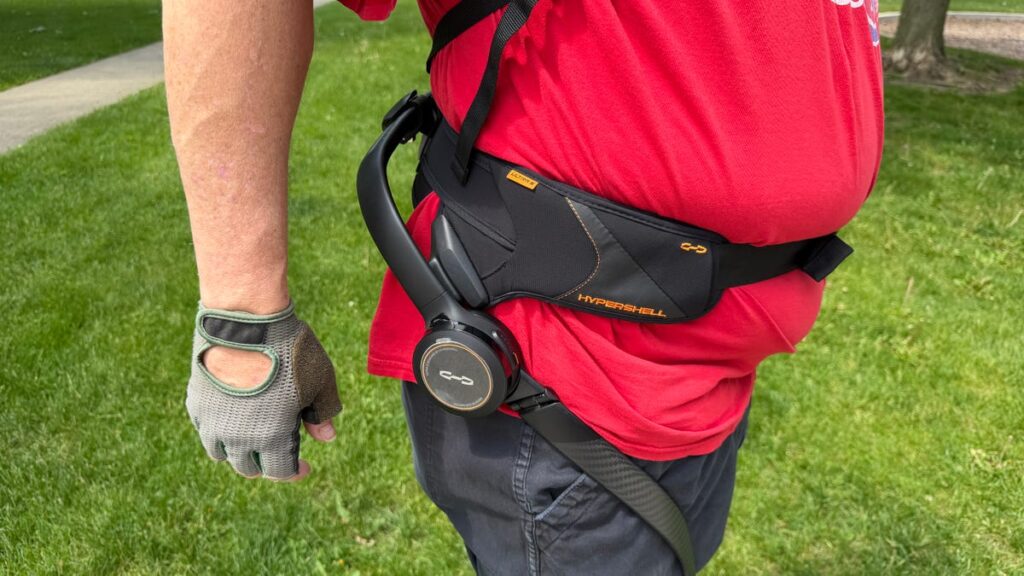
Table of Contents
Beyond the Superhero Fantasy
Walking the rim of the Grand Canyon is a humbling experience for any hiker, but for those dealing with chronic mobility issues, the challenge is compounded. In an attempt to bridge that gap, Hypershell has released a new suite of wearable robotics designed to augment human movement. The flagship of this lineup, the X Ultra S, promises to alleviate the physical toll of trekking through demanding terrain. However, real-world testing suggests that while the hardware is impressive, the gap between ‘robotic assistance’ and ‘superhuman ability’ remains wide.
The core value proposition of the Hypershell series isn’t about granting a person the ability to leap mountains, but rather what Chief Product Officer Angus Fan describes as “endurance extension.” For a user with spinal stenosis—a condition that narrows the spinal canal and puts pressure on the nerves—the goal isn’t necessarily speed, but the ability to sustain activity without debilitating pain or premature exhaustion.
Hardware and Integration
The X Ultra S is a study in lightweight materials, utilizing carbon fiber and titanium to keep the total weight under five pounds. This is a critical design choice; adding significant mass to a user who is already struggling with mobility would be counterproductive. The system centers around a waist-mounted battery pack that powers two motorized arms buckling to the legs. These arms are adjustable to accommodate different frames, though the device is optimized for a specific weight class—typically topping out around 227 pounds according to official specifications.
The biomechanics are straightforward: the motors provide a push-assist during the descent and a lift-assist during the ascent. When you lift your leg, the machine reduces the perceived weight of the limb; when you push down, the motors provide additional torque. It is a subtle augmentation rather than a motorized vehicle for the body.
The Practical Friction of Wearables
Despite the engineering polish, the X Ultra S introduces several ergonomic compromises. The battery pack, situated in the small of the back, creates a physical barrier that makes sitting or leaning back virtually impossible. For those using the device for long-distance travel, this means car rides and breaks become awkward affairs requiring a rigid, upright posture.
Similarly, the thigh straps and motor housing render traditional front and lower cargo pockets inaccessible. Users must adapt their clothing—opting for chest-mounted vests or different pocket configurations—to maintain access to essentials like phones or water bottles while the exoskeleton is engaged.
Software Control and Versatility
The system is managed via a Bluetooth-connected app, though basic operations are handled by a physical button on the right hip. Hypershell has implemented four distinct modes to cater to different user needs:
- Eco and Hyper: These modes vary the level of power assistance, with Hyper providing the maximum torque for steep climbs.
- Transparent: An idle state that allows the user to move naturally without motor intervention.
- Fitness: A counter-intuitive mode that provides resistance, turning the hike into a strength-training exercise.
The unit is powered by a 5,000-mAh battery capable of supporting a range of approximately 30 kilometers (18.6 miles), and the inclusion of a spare battery suggests Hypershell is targeting serious outdoor enthusiasts and those on multi-hour excursions.
The Verdict on Mobility
The launch of the X Ultra S, alongside the more affordable X Max S ($1,499) and X Pro S ($999), signals a move toward the consumerization of exoskeletons. Yet, the experience in the Grand Canyon highlights a recurring theme in wearable tech: the difference between technical capability and biological reality. The device does not ‘cure’ disability or erase the exhaustion of a 100-foot climb, but it does shift the threshold of when that exhaustion hits.
For the average hiker, it is an interesting gadget for endurance. For those with mobility limitations, it is a tool that can extend a window of activity, provided the user is willing to accept the ergonomic trade-offs of wearing a titanium frame on their hips.