The Battle Against Warping: Why the 3D Printing ‘Brim’ Remains Essential Despite the Push for Plug-and-Play
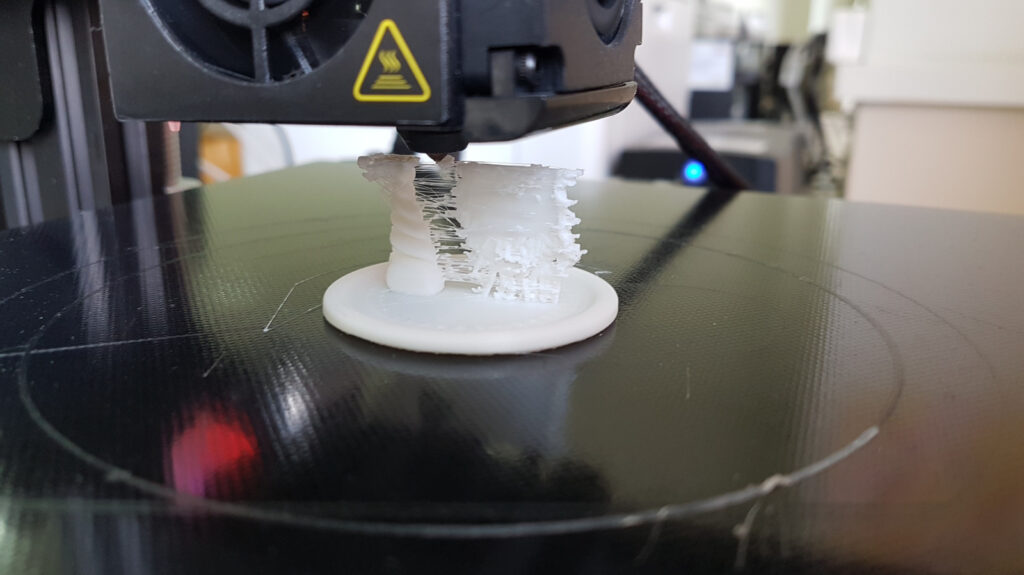
Table of Contents
The invisible struggle for first-layer perfection
In the world of additive manufacturing, the most critical moment of a print isn’t the complex geometry of the roof or the intricate detail of a miniature—it is the first few millimeters of contact with the build plate. For many hobbyists and engineers, the ‘first layer’ is where prints go to die, often succumbing to the dreaded phenomenon of warping, where the plastic curls upward as it cools, peeling the model off the bed and turning a multi-hour project into a plastic bird’s nest.
While modern slicer software and auto-bed leveling sensors have reduced the frustration, the fundamental physics of thermal contraction remain. This is where the ‘brim’ comes into play. Named for its resemblance to the edge of a hat, a brim is a single-layer thick flat area that extends outward from the perimeter of the part, effectively increasing the surface area of the print’s footprint without adding the bulk of a full raft.
Brims vs. Rafts vs. Skirts: Deciphering the Adhesion Toolkit
To the uninitiated, these three terms are often used interchangeably, but in a professional workflow, they serve distinct mechanical purposes. A Skirt is the most basic: a loop of filament printed around the object but not touching it. It doesn’t provide adhesion; instead, it acts as a ‘purge’ to ensure the extruder is pressurized and flowing consistently before the actual part begins.
A Raft is a thick, multi-layered platform that the entire part sits upon. While rafts provide the most secure grip and can compensate for an uneven build plate, they are filament-hungry and often leave a scarred, rough finish on the bottom of the model that requires significant sanding. Comparing 3D printer platforms often reveals that high-end PEI sheets have made rafts less necessary than they were a decade ago.
The Brim occupies the middle ground. It attaches directly to the edges of the model, creating a wider base of support. By expanding the contact point between the plastic and the bed, the brim resists the internal stresses that pull the corners of a print upward. It is particularly critical when working with high-shrinkage materials like ABS or Nylon, which are notorious for warping as they transition from melt temperature to room temperature.
The Trade-off: Precision vs. Post-Processing
Despite the stability a brim provides, it isn’t a universal solution. The primary drawback is aesthetic and temporal. Because the brim is physically fused to the model, it must be manually removed using a deburring tool, hobby knife, or sandpaper. On a small gear or a functional bracket, this is a negligible task. However, on a large-scale architectural model or a piece with intricate interlocking base geometries, a brim can be a liability.
If the base of a print features tight tolerances—such as puzzle-piece joints or recessed channels—the brim can bleed into these areas, fusing parts together and ruining the mechanical function of the object. Furthermore, for those focused on the bottom-line cost of production, the ‘filament tax’ of brims adds up. While a single brim uses far less material than a raft, across a fleet of industrial printers running 24/7, those extra millimeters of plastic translate into higher operational costs and more waste.
When to bypass the brim
Experienced operators generally avoid brims when the model has a naturally large, flat base. If the geometry already provides sufficient surface area for the plastic to grip the bed, adding a brim only adds unnecessary post-processing time. Additionally, if the bottom surface is intended to be a visible, polished part of the final product, the scarring left by a brim removal can be distracting.
Ultimately, 3D printing remains far from a ‘plug-and-play’ experience. The decision to use a brim is a calculated risk: do you risk a total print failure due to warping, or do you accept the extra ten minutes of sanding and the cost of a few extra grams of PETG? For most, the insurance policy of a well-calibrated brim is a price worth paying.