The Architecture of Movement: Robert Moor’s ‘On Trails’ Explores the Intersection of Nature and Network
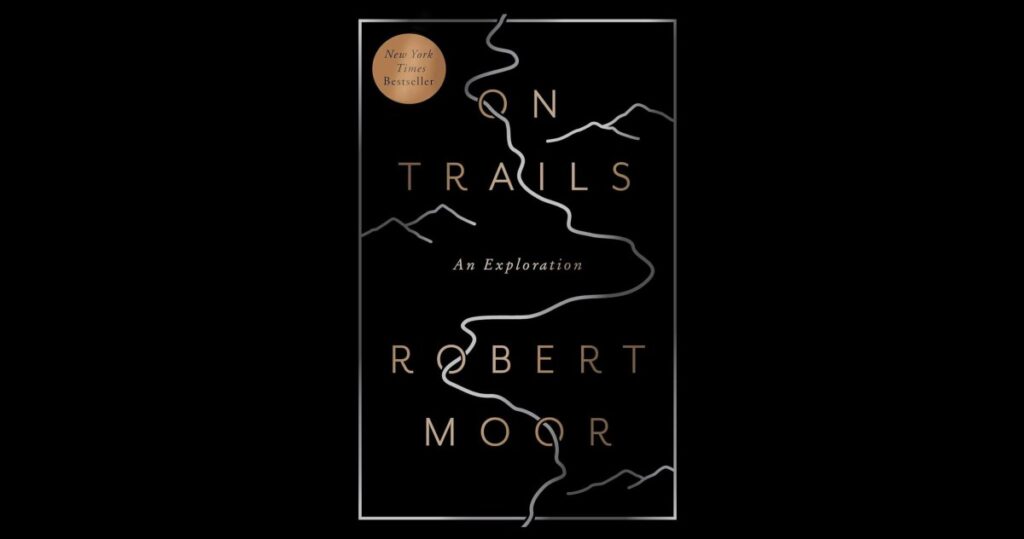
Table of Contents
Beyond the Backpacking Memoir
At first glance, Robert Moor’s On Trails: An Exploration appears to be another entry in the crowded genre of thru-hiking memoirs. It begins with the familiar tropes: the decision to tackle the Appalachian Trail, the visceral struggle against the elements, and the search for solitude in the wilderness. However, those expecting a linear travelogue will find that Moor is playing a much more complex game with his narrative.
The book opens with a scene of atmospheric intensity, detailing a storm on a ridge where the line between the sublime and the horrific thins. It is a moment of genuine literary quality, but it serves as a gateway to something broader. Moor isn’t merely interested in the act of walking; he is interested in the concept of the path—how a line carved into the earth by an animal or a human becomes a blueprint for everything from colonization to the global routing of data.
Connecting the Biological and the Digital
The transition from the physical to the conceptual happens rapidly. By the second chapter, Moor pivots from the rugged terrain of Newfoundland to the intricate, chemical-driven world of ant trails. He examines the precise vocabulary of movement, dissecting how different words for ‘lines’ shape our understanding of direction and intent.
This obsession with connectivity eventually leads the narrative into the realm of technology. Moor draws a surprising but effective parallel between the physical trails of the wilderness and the invisible architecture of the modern world. He spends a significant portion of the work exploring the ‘proto-internet’ envisioned by engineer Vannevar Bush in 1945, linking the associative nature of human memory and the way we navigate information to the way we navigate a forest.
The realization that our fiber optic cables are, in essence, the modern version of game trails—optimized paths of least resistance—transforms the book from a nature study into a meditation on infrastructure. Moor suggests that whether we are talking about a shepherd’s path in the highlands or a high-speed data corridor under the Atlantic, the fundamental logic of the ‘trail’ remains the same: it is the physical manifestation of a desire to get from point A to point B as efficiently as possible.
A Polymathic Approach to Storytelling
What makes On Trails stand out is its refusal to stick to a single tone. Moor moves fluidly between poetic observations of nature and the self-deprecating humor of a man who once managed to misplace an entire flock of sheep. He balances these anecdotes with rigorous intellectual inquiry, quoting poet Gary Snyder and analyzing the scarring effect of colonial boundaries on the landscape.
This disjointedness is intentional. The book reflects the very subject it describes—a winding path that branches off into a thousand different tributaries. One moment you are learning about the biological imperative of pheromone trails, and the next you are considering the philosophical implications of how digital networks have rewritten our spatial awareness.
While the book is available in digital formats, the tactile nature of the subject matter makes a physical copy feel almost mandatory. There is a certain irony in reading a meditation on the physical world through a backlit screen, a tension that Moor himself seems to acknowledge through his exploration of our increasingly mediated relationship with the environment.
Ultimately, On Trails is less about the destination of a hike and more about the hidden networks that bind the natural and artificial worlds. It is a reminder that even in our most high-tech era, we are still following the ancient logic of the path.